



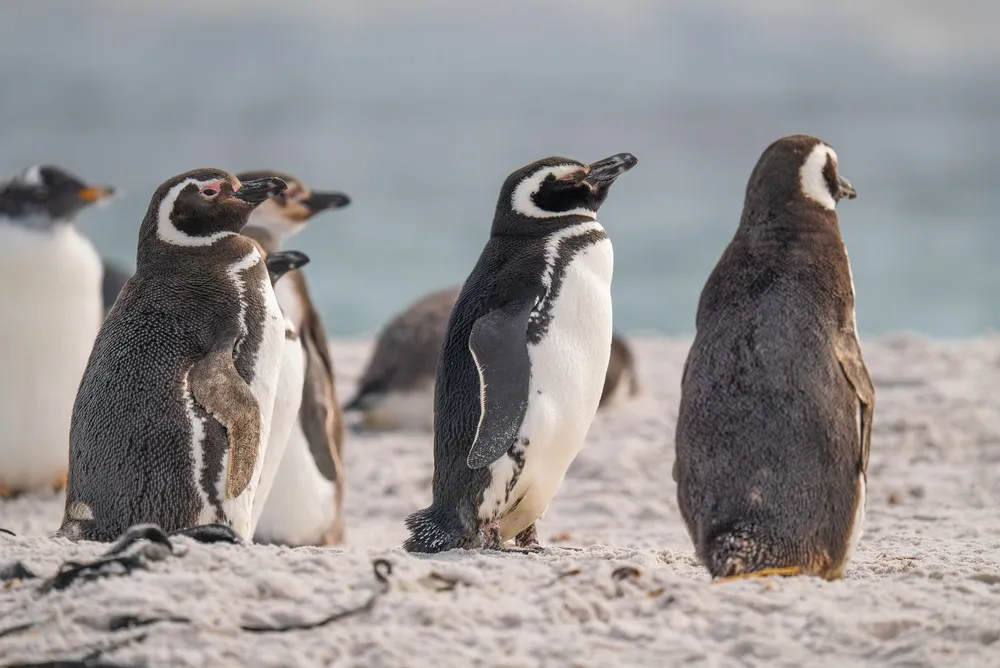
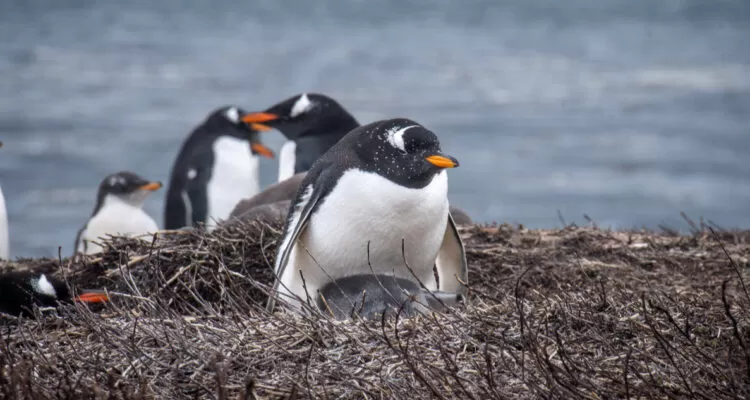
An international team of biologists led by researchers from Chile managed to identify the first new penguin species described in over a century. The discovery corresponds to the Pygoscelis kerguelensis, a hidden lineage within the known gentoo penguins.
The new species inhabits the Kerguelen Islands, a remote archipelago located in the Indian Ocean north of Antarctica. There, the extreme climatic conditions and geographic isolation favored a unique evolutionary process over thousands of years.
The discovery was made possible thanks to a comprehensive genomic analysis conducted by specialists from the University of Los Lagos, the University of California, Berkeley, and associated scientific centers from Chile and other countries.
Additionally, the researchers concluded that three other gentoo penguin subspecies should also be considered independent species due to their profound genetic and adaptive differences.
How they identified the new species
For decades, scientists debated whether gentoo penguins really corresponded to a single species or if there were differentiated lineages hidden under a similar appearance.
To resolve this question, the team sequenced the complete genome of 64 individuals from ten colonies distributed in different southern and subantarctic regions.
In addition, the specialists compared vocalizations, feeding behaviors, reproductive periods, and physical characteristics, including variations in coloration and physiological adaptations. The results showed that the populations evolved differently according to the environmental conditions and the availability of food in each island or marine region.
While the southern gentoo penguin developed genes associated with heat conservation and fat storage in polar environments, other populations adapted their metabolism to warmer and saltier waters.
A species adapted to extreme ecosystems
The new Pygoscelis kerguelensis represents an example of speciation driven by geographic isolation and ecological differences between southern hemisphere archipelagos.
Researchers argue that the permanence of these birds near their breeding colonies limited their movements and favored very specific local adaptations.
In the Falkland and Martillo Islands, for example, some populations developed greater muscular and cardiac capacity to travel long distances in search of food. In contrast, the species present in Crozet, Marion, and Macquarie evolved in less cold oceanic environments, with genetic changes linked to thermal and saline tolerance.
The research also opens new doors to study how penguins respond to emerging threats such as avian flu and ocean warming.
The ecological value of this new species
The identification of the Pygoscelis kerguelensis provides key information to understand how species evolve in isolated and fragile ecosystems like Antarctica and subantarctic regions.
Moreover, the discovery will allow for the design of more precise conservation strategies, as recognizing independent species helps to better assess their population risks and environmental needs. Scientists warn that many subantarctic colonies face increasing threats from climate change, commercial fishing, and the arrival of invasive species.
In islands governed by countries like Chile, France, Australia, New Zealand, South Africa, and the Netherlands, habitat loss could particularly affect the smaller and more isolated populations.
Since these penguins have little capacity to migrate to new territories, any environmental alteration can seriously compromise their future survival and the ecological balance of southern ecosystems.



