



Deep within the Historic Sanctuary of Machu Picchu, a scientific discovery rekindles awe for the biodiversity of the Andes. A team of Peruvian researchers identified a new genus and species of semiaquatic rodent, which they named Incanomys mayopuma, an animal adapted to the streams and mountain forests of southern Peru.
With gray fur and nearly invisible ears, this small creature inhabits about 2,800 meters above sea level. The species was recorded in Wiñaywayna, an area that is part of the ecological corridor managed by the Peruvian government to conserve its natural heritage.
The discovery reinforces the idea that there are still unknown species in seemingly explored ecosystems. Protected natural areas, besides conserving emblematic landscapes, function as living laboratories that reveal new pieces of the evolutionary puzzle.
The ecological value of the Sanctuary grows with each discovery and underscores the urgency of protecting these spaces against the advance of mass tourism and climate change.
 New species of rodent discovered in Machu Picchu, Peru. Photo: Alexánder Pari.
A millennia-old corner with secrets to be discovered
The Incanomys mayopuma represents a unique evolutionary lineage, exclusive to the Peruvian territory. The name, inspired by the Incan legacy and the environment of Machu Picchu, highlights the connection between culture and nature that characterizes this region.
Despite its exposure to international tourism, Machu Picchu continues to reveal secrets. This new rodent demonstrates that the natural wealth was not entirely inventoried and that there is still much to be discovered beneath its lush forests and crystal-clear waters.
The discovery also highlights local science. Researchers from Peruvian universities led this expedition, expanding the catalog of endemic fauna in the country and contributing to its positioning as a reference in biological research.
Finally, the case of Incanomys mayopuma boosts the call to strengthen the conservation of habitats in the Andes. The protection of these spaces not only safeguards species but also keeps alive the natural and cultural heritage of one of the most emblematic regions of the continent.
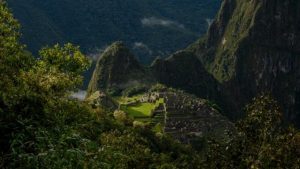 Machu Picchu became the stage for a new discovery.
What does the discovery of a new species imply?
The discovery of new species in ecosystems represents an invaluable opportunity to deepen knowledge about the planet’s biodiversity. Each identified species allows for the reconstruction of evolutionary relationships, better understanding of ecological dynamics, and detection of possible indicators of environmental health.
Furthermore, these species often play key roles in their habitats, such as pollination, seed dispersal, or natural pest control. Knowing their existence helps to assess the balance of ecosystems and design more effective conservation strategies.
Discovering new species can also have scientific, medicinal, and cultural implications. Many contain compounds yet unexplored with pharmacological potential or technological applications. Therefore, protecting the natural spaces where they inhabit becomes urgent, as habitat loss threatens to erase species even before they become known.


