



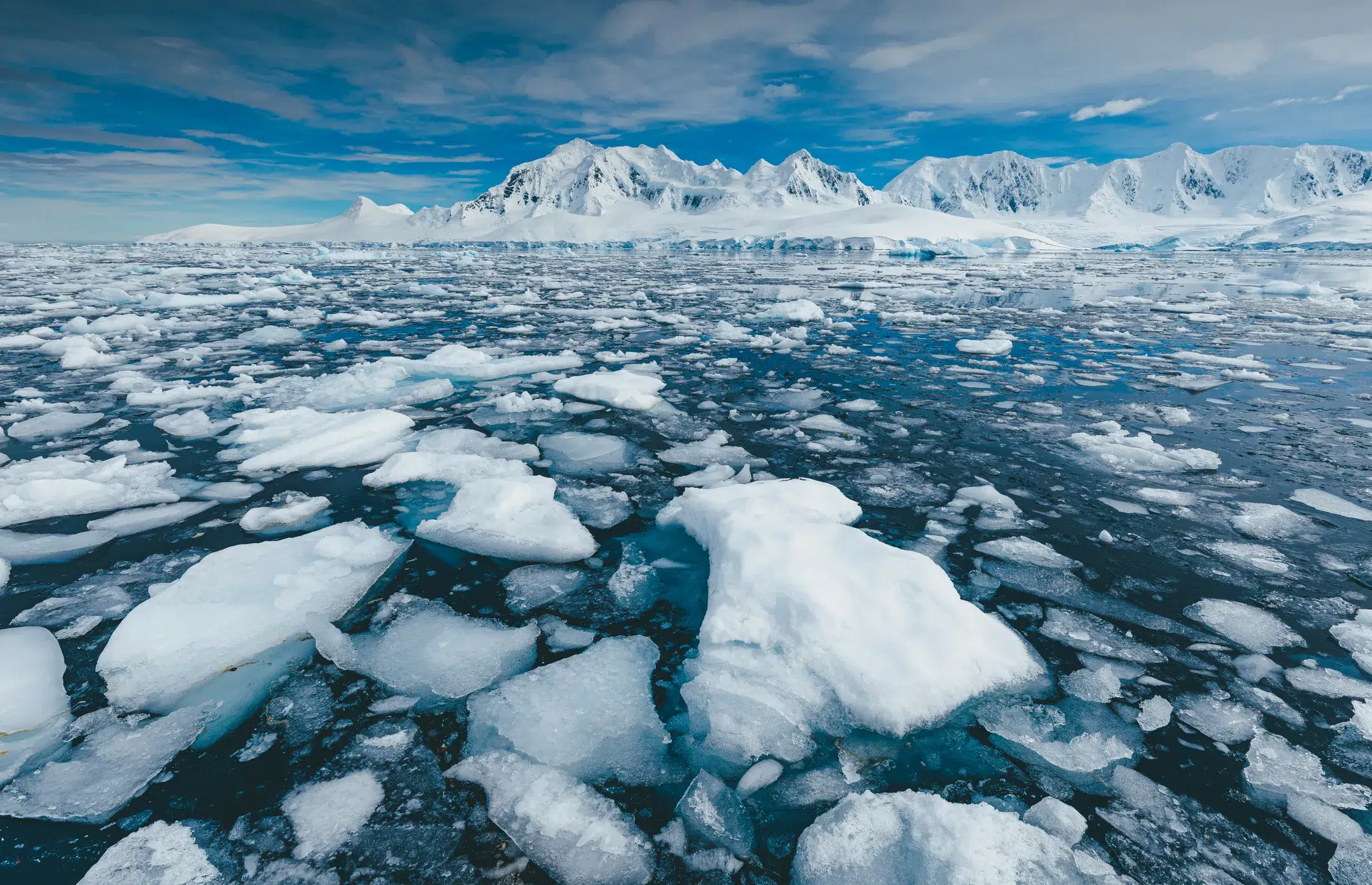
A recent study published in Geophysical Research Letters shows that the melting of Antarctic ice shelves is not only dependent on the ocean but also on the atmosphere. Researchers managed to reconstruct how an intrusion of warm and humid air, combined with intensified atmospheric turbulence, triggered a strong surface melting episode over the Ross Ice Shelf, one of the largest on the planet.
The finding is based on the innovative use of a network of GNSS satellites and 13 stations installed on the shelf, which allowed transforming positioning signals into remote sensors of air conditions.
The 2016 Episode
In January 2016, the Ross Ice Shelf experienced an unusual event: the melting occurred on the upper surface, associated with the inflow of warm and humid air from the Southern Ocean. The recorded atmospheric turbulence was four times greater than normal, which would have favored the mixing of air masses and aggravated surface melting.
This result shifts part of the classical explanation—centered on the ocean heat that erodes the base of the shelves—towards atmospheric dynamics.
How the GNSS Technique Works
Satellite navigation systems like GPS are usually used for mapping and positioning. In this case, researchers took advantage of the delay introduced by water vapor in the propagation of signals.
- In a stable atmosphere, the distribution of moisture is homogeneous.
- In a turbulent atmosphere, this distribution becomes irregular, and the differences are recorded in the GNSS signals.
Thus, scientists were able to quantify the intensity of the turbulence and link it directly to the melting episode.
Implications for Sea Level
The Ross Ice Shelf acts as a buttress for the continental ice, slowing the flow towards the ocean. If it loses stability, the mass discharge from Antarctica is altered, accelerating sea level rise. Therefore, understanding how ocean, ice, and atmosphere interact is crucial for projecting future scenarios.
Remote Monitoring and Safety
The technique offers practical advantages:
- It allows monitoring remote and dangerous regions without the need to install classic meteorological instrumentation.
- It reduces human risks by avoiding direct operations on the ice.
- It can be extended to other polar systems, such as the Greenland ice sheet.
The MIT Haystack is already working on complementary instrumentation, such as the Seismo-Geodetic Ice Penetrator (SGIP), capable of recording vibrations and small ice “earthquakes.”
The study demonstrates that the melting of Antarctic ice shelves is not just an oceanic phenomenon but also an atmospheric one. The combination of warm air, humidity, and turbulence can trigger surface melting episodes with global consequences. Thanks to GNSS satellites, it is now possible to monitor these invisible dynamics in real-time, providing unprecedented clues to understand and anticipate changes in the polar climate system.



