



The Austral University of Chile (UACh) announced the definitive prohibition of the forced swim test, an experiment questioned for its cruelty and lack of scientific validity.
The measure was made official through Resolution No. 10/2026 and communicated by Rector Egon Montecinos to PETA, an organization that celebrated the decision and urged other institutions to follow the same path.
What does the test consist of?
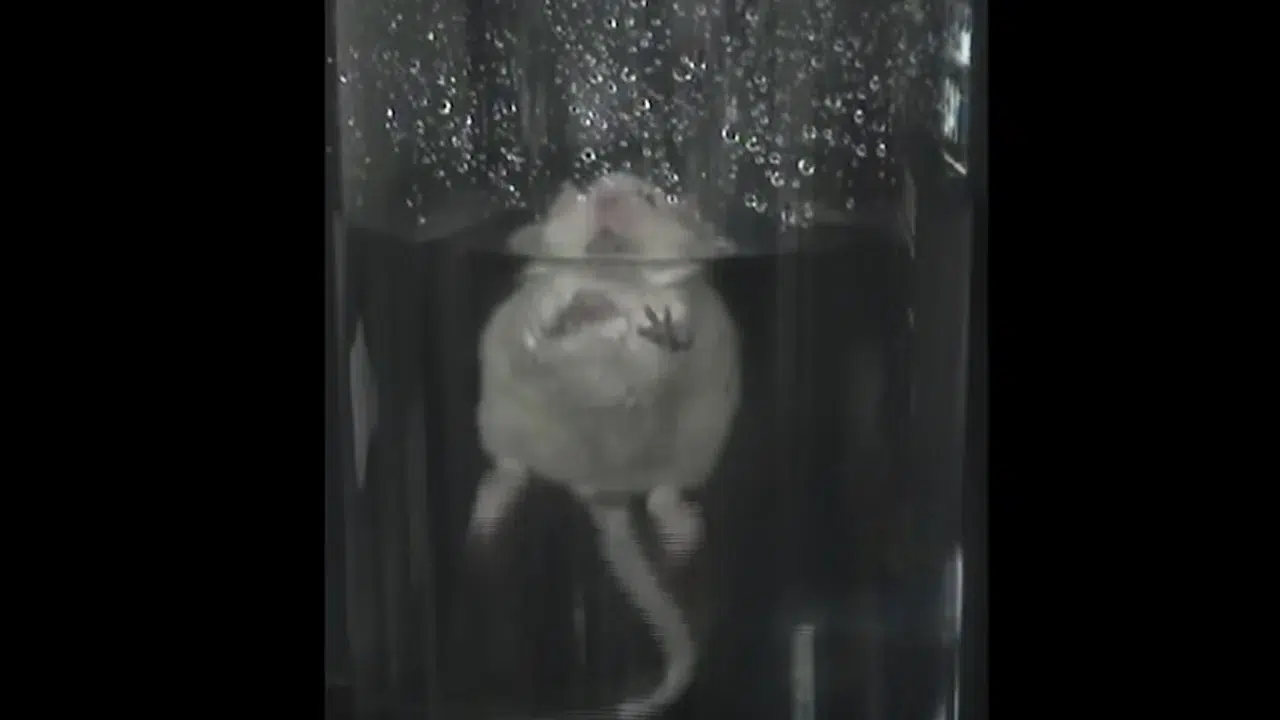
The forced swim test was historically used to evaluate antidepressant drugs in rodents:
- Procedure: the animal is placed in a cylinder with water from which it cannot escape.
- Observation: after attempting to escape, the animal adopts a floating posture.
- Traditional interpretation: immobility was considered a sign of “learned helplessness” or depression.
However, numerous scientists argue that floating is a survival strategy to conserve energy, not an indicator of depression.
Controversies and scientific debate
The test has been criticized for:
- Scientific validity: it is considered an unreliable predictor for human treatments.
- Ethics and animal welfare: it subjects animals to high levels of stress and fear.
- Institutional stance: agencies like the NIMH in the U.S. and several pharmaceutical companies have stopped using it.
Advances in Latin America
The UACh is the second university in the region to formally prohibit this practice, after the University of the Valley in Colombia (2023). This change reflects a growing social and academic rejection of animal experimentation in tests of dubious relevance.
More precise and ethical alternatives
The transition to modern methods is supported by three pillars:
- Lack of translational precision: biological differences between species cause many drugs to fail when transitioning from animals to humans.
- Ethical concerns: animal suffering and euthanasia generate social rejection and international regulations.
- Availability of alternative methods: cell cultures, organoids, 3D bioprinting, tissue on chips, and AI-based computer simulations.
The 3 Rs principle
The scientific community promotes the principle of the 3 Rs:
- Replacement: use computer models or cell cultures instead of live animals.
- Reduction: employ the minimum number of animals necessary.
- Refinement: minimize pain and discomfort by improving living conditions and procedures.
Even the FDA in the United States no longer mandatorily requires animal testing before moving to human clinical trials, reflecting a paradigm shift towards cruelty-free science.
The prohibition of the forced swim test at UACh marks an ethical and scientific milestone in Latin America. This step not only protects animals from unnecessary suffering but also drives the transition to more reliable methods aligned with human biology.
The decision reinforces the idea that future research should be innovative, ethical, and cruelty-free.


