



A cigarette butt thrown on the ground seems like a minor waste. However, when it comes into contact with water, it triggers an immediate process of silent pollution that reaches rivers and urban streams.
Research from the University of Buffalo shows that the filters release plastic microfibers as soon as they get wet. Thus, pollution begins in seconds, not months.
That’s why streets, gutters, and drainage systems become direct routes to aquatic ecosystems.
Filters of cigarettes: camouflaged plastic
Although many confuse them with paper, the filters are made of cellulose acetate, a modified plastic. Each butt contains thousands of compacted strands in a water-fragile structure.
During consumption, those fibers retain nicotine, tar, and heavy metals. Then, upon disposal, they release plastic and toxins simultaneously. Thus, a brief action leaves an environmental footprint that persists for years.

Water as a trigger for pollution
The first contact with moisture weakens the cohesion of the filter. Without the need for pressure, the fibers begin to detach and disperse into the environment.
Moreover, rain and urban runoff accelerate the process. Each storm reactivates the release of microplastics into rivers and lakes. In this way, a single butt can repeatedly pollute with each water cycle.
Impact on urban rivers and aquatic fauna
The urban rivers are often the first recipients of these microfibers. There, fish, insects, and crustaceans ingest them accidentally.
Although there are not always immediate visible effects, constant exposure weakens the ecosystems. The adhered toxins exacerbate the biological damage.
Thus, pollution progresses gradually, eroding environmental resilience without generating early warnings.
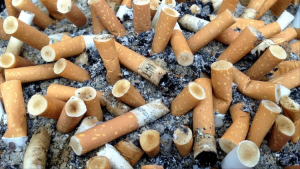
How to properly dispose of cigarette butts
The most effective way to reduce this impact is to prevent butts from reaching the ground. Using portable ashtrays is a simple and accessible solution.
In public spaces, always disposing of them in appropriate containers prevents water from carrying them to drains and rivers.
Additionally, completely extinguishing the butt before disposal reduces fire risks and facilitates its waste management.
Urban prevention and collective decisions
Placing visible ashtrays near stops, squares, and commercial areas decreases the abandonment of butts. In turn, keeping storm drains clean limits their entry into the water system.
These measures cost less than cleaning contaminated rivers. Therefore, prevention is key in facing a massive and everyday problem.
Understanding that a butt is not minor waste allows us to rethink habits and protect water before the damage becomes irreversible.



