



In the Patagonian steppe, the guanacos caught in barbed wire fences are a deadly barrier that causes the death of approximately 27,000 guanacos each year.
To combat this alarming number, the conservation team of Patagonia National Park, in Santa Cruz, has implemented a plan to restore the migratory routes of this emblematic species.
Interrupted millennia-old routes 🏜️
The barbed wire fences, ubiquitous in the Patagonian landscape, mark property boundaries for people, but for wildlife they are walls that interrupt ancestral movements. The guanaco, the largest herbivore in the region, evolved by moving between the high plateaus in summer and the lowlands in winter to survive extreme climates.
With the expansion of livestock farming and the construction of roads, these mass migrations became fragmented. “Many individuals lost the ability to move long distances to survive,” explains Emanuel Galetto, director of the conservation team at Patagonia National Park. “That is why our work first focused on understanding those migratory routes and then on maintaining them”.
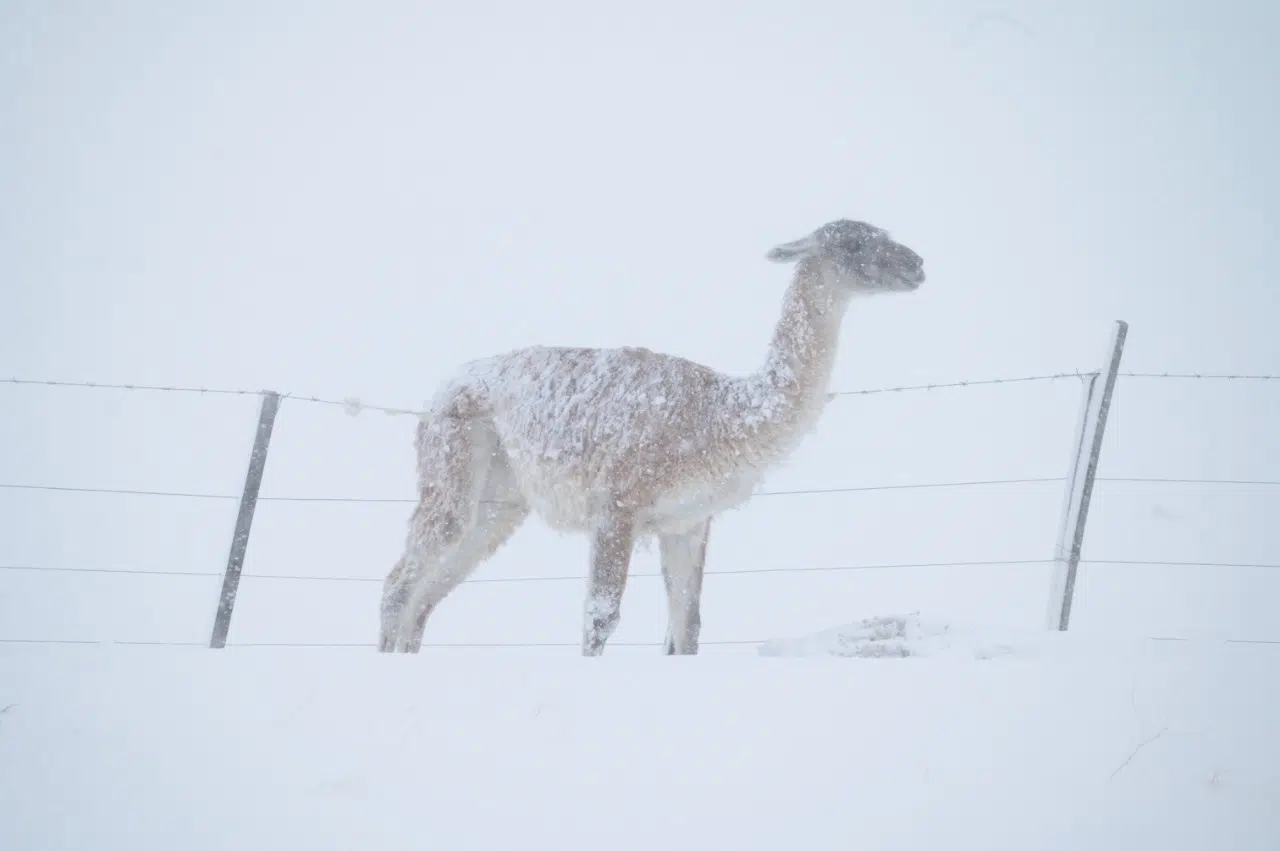
The problem worsens in years of intense snowfall. “The guanacos are stopped by the barriers of wire and die of hunger and cold because they cannot reach the pastures,” warns Galetto. Studies confirm that the highest concentration of accidents occurs during the migration months: April and May (when they descend from the plateaus) and August and September (when they return to climb).
A simple and effective solution 🛠️
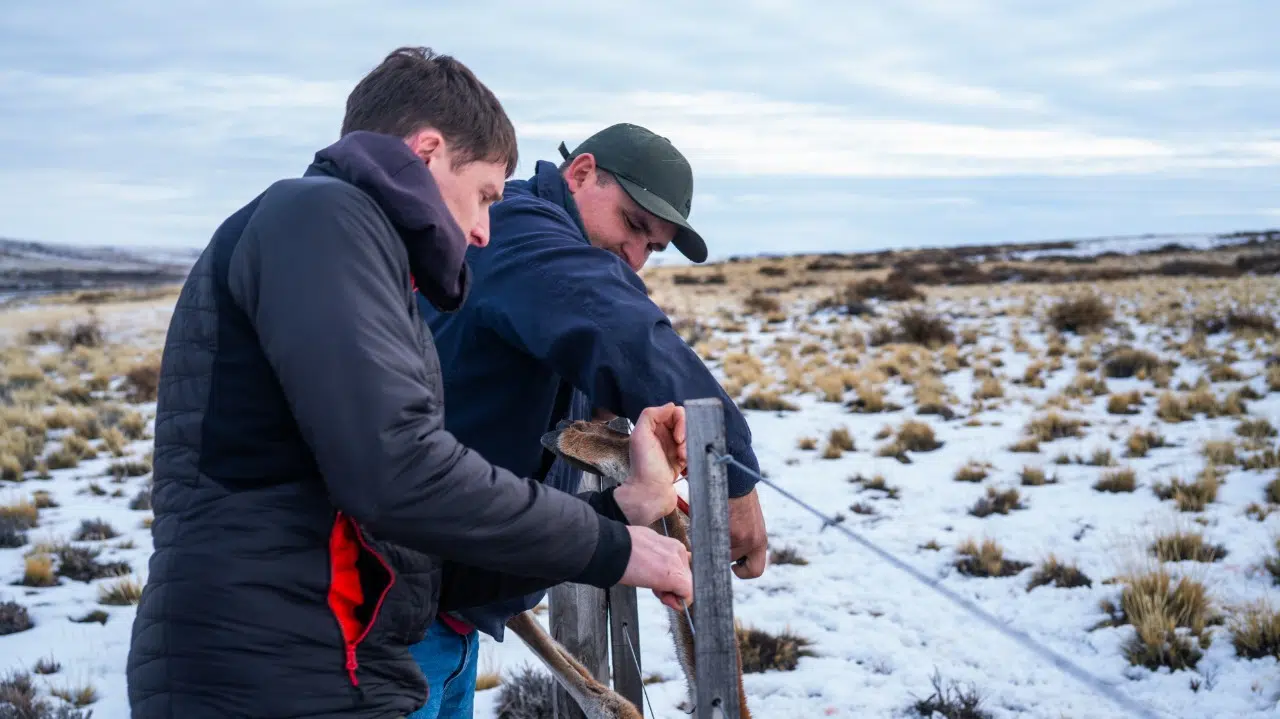
To address this crisis, the team at Patagonia National Park has taken concrete measures. In recent years, they have managed to remove 52 kilometers of internal fences and have modified another 48 kilometers.
The modification is a simple but vital measure: it involves removing the last strand of wire from the fence so that the final height is less than one meter twenty, allowing the animals to pass more safely. “The magnitude of the problem is alarming,” Galetto reiterates, pointing out that the fences act as invisible walls that reduce the chances of species survival.
Measuring the impact of guanacos on fences for the future 📊
To validate the effectiveness of these adaptations, the team conducts scientific monitoring. Once a month, they cover 22.5 kilometers of modified fences and compare the results with another 22.5 kilometers that remain untouched. Although the study is ongoing, it is already perceived that these actions could be reducing the mortality of guanacos due to entanglement in the park.
The challenge now is to sustain and expand the removal of fences in critical areas, as Galetto concludes, “the fences and roads not only affect the guanaco, they are barriers for hundreds of species of mammals that need to move. Resolving this is essential for the future of Patagonian wildlife“.



