



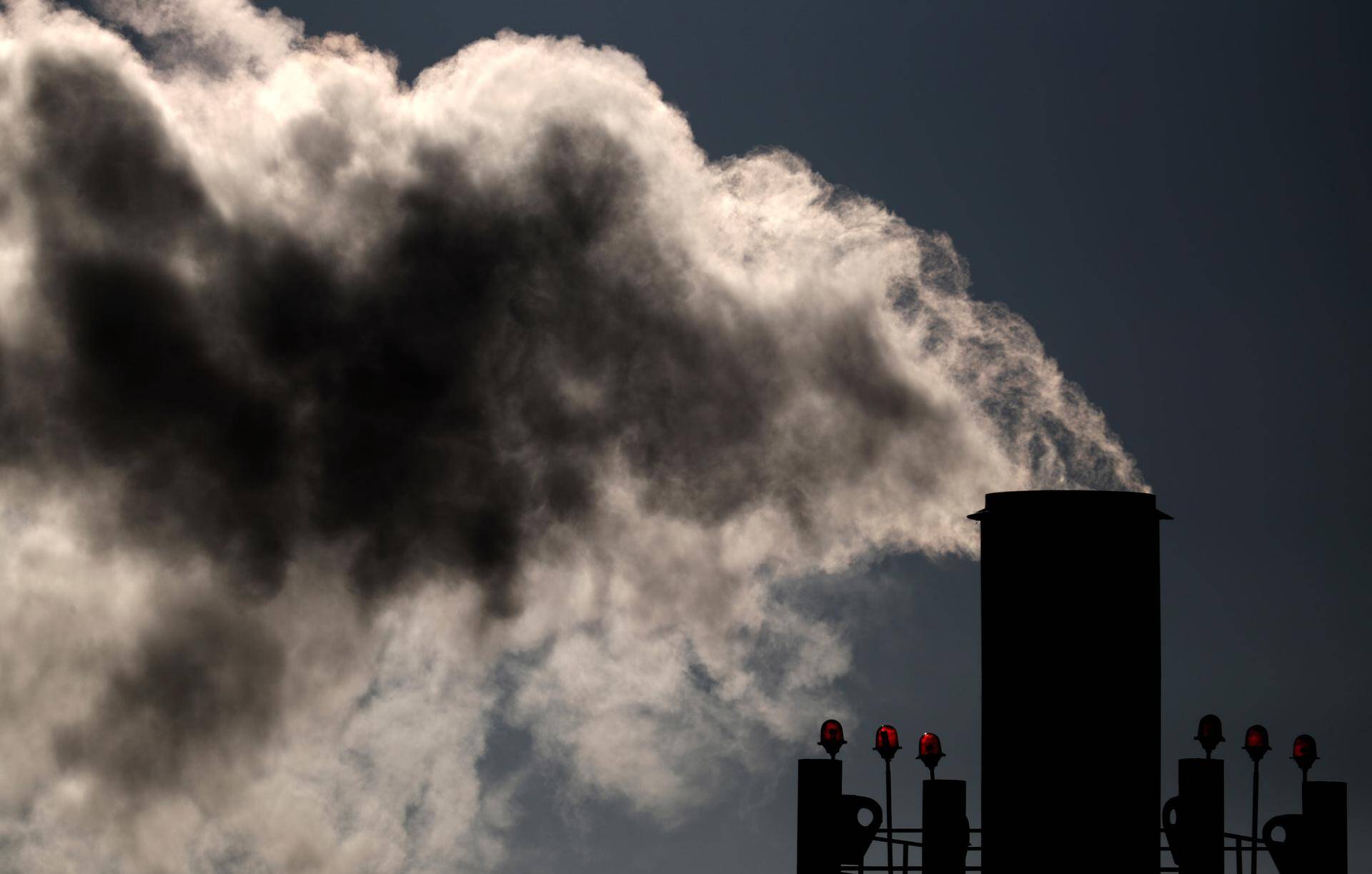
More than 70 scientists from 56 institutions in 17 countries, including lead authors of the IPCC, published the fourth update of the key indicators of the climate system. The study confirms that 2025 was the third hottest year ever recorded, with global greenhouse gas emissions at an all-time high.
Experts point out that global warming reached 1.37 °C in 2025 and could exceed the threshold of 1.5 °C in just four years, driven mainly by human activities.
Main Findings
- Record emissions: 56.8 billion tons of CO₂ equivalent in 2024, primarily from fossil fuels.
- Atmospheric concentrations: 425.6 ppm of CO₂, 1936.3 ppb of methane, and 339.4 ppb of nitrous oxide in 2025.
- Accelerated warming: historical rate of 0.27 °C per decade.
- Extreme temperatures: the average maximum on land reached 1.92 °C in the last decade.
- Sea level: record of 23 cm since 1901, with a rise rate of 1.8 mm per year and increasing acceleration.
Marine Heatwaves
The update incorporated a new indicator: the days of marine heatwaves.
- They have tripled since 1991.
- In 2025, 65 days of marine heatwaves were recorded.
- These phenomena affect marine ecosystems, food production, coastal economies, and the carbon exchange between ocean and atmosphere.
Professor June-Yi Lee warned that marine heatwaves also intensify extreme weather events on land.
Risks for Communities and Ecosystems
The rise in sea level and marine heatwaves increase coastal flooding and threaten the livelihoods of populations in low-lying areas.
Dr. Aimée Slangen from NIOZ emphasized that even seemingly small variations have severe consequences for ecosystems and human communities.
Urgent Call to Action
Researcher Chris Smith from the International Institute for Applied Systems Analysis warned that many climate data sets are at risk due to lack of funding. Without continuity in observations, future assessments will be more difficult, just when urgent measures against climate change are needed.
Scientists insist that emission reductions must be immediate and sustained. Although CO₂ remains the main driver of warming, the decrease in sulfur aerosols is exposing the full effect of greenhouse gases.
The report confirms that the climate system continues to warm rapidly and that impacts are already visible on land and oceans.
Exceeding the 1.5 °C threshold is getting closer, requiring coordinated international actions to reduce emissions, protect ecosystems, and ensure the continuity of scientific data.



