



A new study revealed a concerning habit of tropical crickets that exacerbates microplastic pollution.
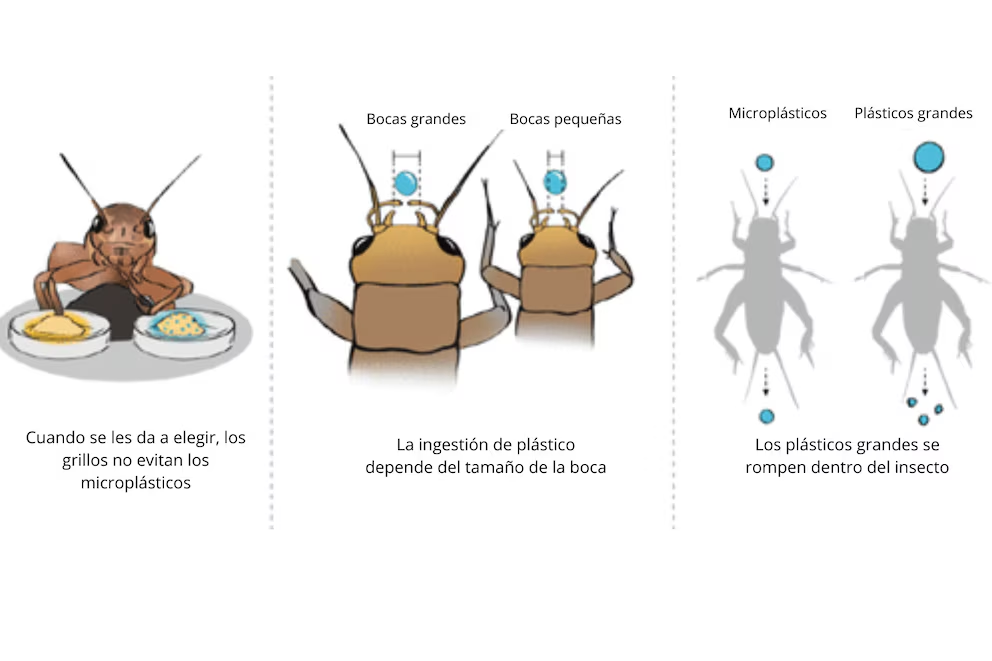
This is an analysis by the American Chemical Society, which revealed that these particular crickets consume microplastics without distinguishing them from real food.
Then, the insects digest these and transform them into even more dangerous plastic fragments for the environment and health.
This is how crickets accelerate the generation of microplastics that pose a growing risk to various ecosystems.
The research, published in Environmental Science & Technology, focused particularly on tropical house crickets (Gryllodes sigillatus) and demonstrated that these ingest microplastics whenever their mouth size allows it.
This behavior generates smaller particles that can be even more harmful than larger plastic for sensitive environmental systems.

Crickets do not differentiate microplastics from food
In their analysis, the team led by Marshall Ritchie studied how crickets interact with microplastics throughout their development.
The researchers offered groups of adults two options: plastic-free food and food contaminated with microplastics of different sizes.
The results showed that these insects did not show a preference for food without plastic. Over time, they increased the consumption of the contaminated diet.
During a period of seven weeks, the scientists observed that as the crickets grew —increasing their body size up to 25 times— so did the size of their mouth.
Then, only when the mouth opening exceeded the size of the plastic particles, the crickets could ingest them whole.
In this regard, Ritchie explained: “Once a particle was large enough to be ingested, the crickets continued to eat it for the rest of their lives.”
From microplastics to nanoplastics: a risky process for the environment
One of the key findings is the ability of crickets to convert microplastics into even smaller fragments, known as nanoplastics, during digestion.
This process of biofragmentation seems to depend on the size of the insect and the particle. In particular, the researchers identified specific patterns:
- 38-micrometer particles tend to be excreted intact
- 425-micrometer particles undergo more intense fragmentation if ingested
- Larger crickets fragmented large particles less
- Smaller ones generated a greater amount of tiny fragments
The ingestion of microplastics did not harm the growth of the crickets, unlike what has been observed in other animals.
However, by ingesting and excreting microplastics, these insects contribute to the formation of smaller particles that can be more harmful to ecosystems.
What this discovery implies for environmental regulation
The research suggests that the feeding behavior and body size of crickets determine the ingestion and fragmentation of microplastics.
This has direct consequences for managing plastic pollution in natural environments.
The authors warned that understanding these processes is essential to establish regulations on the size of plastic particles entering ecosystems.
The study concludes that, to mitigate the risks arising from microplastic and nanoplastic pollution, the role of insects in fragmentation should be considered, and progress should be made in the regulation of the size of plastics present in the environment.


