



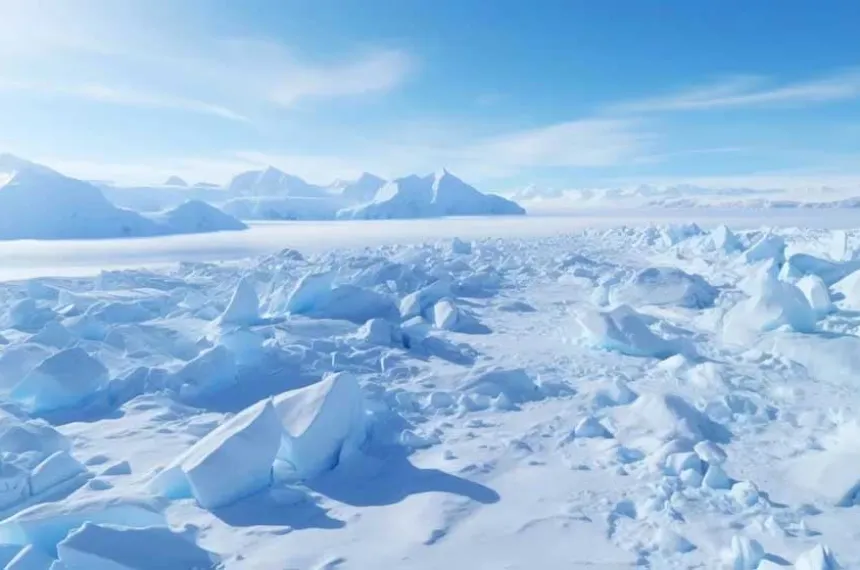
In a scenario dominated by glacial retreat, Antarctica shows an unexpected evolution. New satellite data indicate that, since 2020, the white continent has increased its ice mass steadily, altering the trend of previous decades.
However, this apparent recovery does not imply a structural improvement. On the contrary, specialists warn that the phenomenon responds to complex dynamics coexisting with persistent deterioration processes.
Consequently, the recent behavior forces a review of simplistic interpretations. Antarctica is not “recovering” but is going through a transitional phase within an unstable climate system.
Between historical losses and a temporary reversal of the trend
During the first two decades of the 21st century, the continent lost between 74 and 142 gigatons of ice per year. This retreat mainly affected West Antarctica and vulnerable sectors of the east.
However, since 2020, a significant change has been recorded. The system began to gain about 68 gigatons annually until 2024, which allowed a slight deceleration in sea level rise.
Even so, this reversal does not change the overall picture. The previous accumulated loss and the fragility of the glaciers continue to mark the environmental pulse of the region.
The climate paradox: more snow on a warmer planet
The increase in ice mass is largely due to exceptional snowfall. These precipitations have intensified in recent years and momentarily compensated for the loss of ice at the continent’s edges.
Meanwhile, glaciers continue discharging large volumes into the ocean. Therefore, the system presents an apparent balance: more ice enters through accumulation than is lost through calving.
Thus, a climate paradox is configured. Although the planet is warming, certain polar areas can record more snow due to a greater capacity of the atmosphere to retain moisture.
Factors explaining the phenomenon and its transitory nature
Various factors converge to explain this behavior. Firstly, the increase in global temperature raises oceanic evaporation, generating more moisture available for precipitation in cold areas.
Secondly, changes in atmospheric circulation favor the transport of humid air to Antarctica. This intensifies episodes of extreme snowfall in relatively short periods.
Finally, natural climate variations also influence. Phenomena such as oceanic oscillations and regional patterns can amplify or moderate these effects, reinforcing the temporary nature of the ice increase.

Key differences between continental ice and sea ice
Another central aspect is to distinguish between types of ice. The study focuses on continental ice, which rests on solid ground and whose loss directly impacts sea level.
In contrast, floating sea ice continues to show worrying signs. In recent years, historical minimums in its extent have been recorded, evidencing a sustained deterioration.
Therefore, the Antarctic system presents divergent behaviors. While one part gains mass, another loses stability, further complicating the environmental diagnosis.
A system in tension with global implications
The scientific community warns that this gain could quickly reverse. If snowfall decreases and glacial loss persists, the balance would become negative again.
Moreover, Antarctica holds about 90% of the planet’s ice. Therefore, any sustained change has direct effects on sea level and ocean dynamics.
In summary, the recent growth should not be interpreted as a solution. Rather, it exposes the sensitivity of a key system that continues to send signals of alert in a context of accelerated climate change.



