



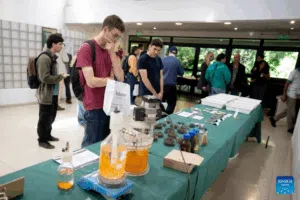
At the National Institute of Agricultural Technology (INTA) in Castelar, a scientific meeting was held that brought together specialists from Argentina, China, Mexico, and the United States under the theme “From Waste to Resources: International Innovations in Sustainable Agriculture”.
The event marked a new advancement of the agreement signed between the INTA and the Biogas Institute of the Ministry of Agriculture and Rural Affairs of China (BIOMA), focused on creating joint solutions to reduce pollution generated by animal organic waste.
The agreement, in effect since 2021, promotes research in biogas as a renewable alternative for energy production, natural fertilizers, and agroecological practices that favor the sustainability of rural communities.
How animal organic waste affects the environment
Waste from intensive livestock farming and other agricultural activities represents a serious environmental problem when not managed correctly. This waste releases greenhouse gases, contaminates groundwater, and deteriorates soil quality.
Uncontrolled decomposition produces methane and nitrous oxides, two of the main contributors to global warming. Additionally, the discharge of manure and slurry into watercourses causes eutrophication, a phenomenon that reduces oxygen and affects aquatic life.
Locally, impacts include odors, pest proliferation, and health issues in rural communities. In response, the development of clean technologies for converting waste into biogas emerges as an effective strategy to mitigate emissions and recover nutrients.
Biogas: renewable energy and natural fertilization
Biogas is obtained through an anaerobic digestion process, where microorganisms transform animal waste into methane gas and a nutrient-rich liquid byproduct. This gas can be injected into energy grids, replace fossil fuels, or generate electricity.
The remaining material, known as “digestate,” is used as a natural biofertilizer. Its high content of nitrogen, phosphorus, and organic matter allows for reduced use of chemical inputs, contributing to soil regeneration and the ecological balance of agricultural systems.
Joint trials between INTA and BIOMA apply this technology in strawberry, flower, pasture, and tomato crops. The results show improvements in productivity, cost reduction, and a significantly lower environmental impact compared to traditional models.

Science, exchange, and shared sustainability
The scientific cooperation between Argentina and China represents a model of joint work in the face of global challenges such as climate change and environmental degradation. Through training, shared research, and joint publications, both countries strengthen technological transfer and sustainable development.
The programs include training researchers at the Biogas Institute of China and visits by Chinese experts to INTA centers. These exchanges promote the formation of specialized professionals and the adoption of solutions adapted to local productive realities.
The binational link also enhances energy diversification and rural autonomy, transforming waste into valuable resources. The use of biogas symbolizes a concrete step towards cleaner, circular, and resilient agriculture in the face of the environmental crisis.


