



The arsenic contamination in drinking water continues to be one of the most serious environmental and health problems in Argentina. It is estimated that around 17 million people live in areas where this natural element can be found in dangerous concentrations for health.
In response to this scenario, a group of researchers from the Institute of Physical Chemistry Research of Córdoba developed a portable electrochemical sensor capable of detecting arsenic quickly, economically, and accurately. The advancement represents an accessible alternative for communities far from large urban centers.
Moreover, the device was designed to operate directly in the field, without the need for complex infrastructure or expensive laboratory equipment. Its implementation could strengthen environmental monitoring in vulnerable regions of Córdoba, Catamarca, and other affected provinces.
A silent problem impacting health and ecosystems
Prolonged exposure to arsenic can cause chronic regional endemic hydroarsenicism, known as HACRE. This disease is linked to skin lesions, cardiovascular conditions, diabetes, and various types of cancer.
Furthermore, specialists warn that contamination also affects child neurological development and compromises the quality of life of thousands of rural families who rely on groundwater for daily consumption.
The advancement of the problem is associated with natural geological conditions, but it is also exacerbated by the lack of continuous controls and the difficulty of accessing analysis technologies in small towns.
Therefore, the possibility of having portable monitoring tools is gaining increasing environmental and social relevance in various regions of the country.
How the new sensor created by Argentine scientists works
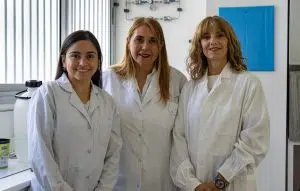
The development was driven by Marcela Rodríguez, Daiana Reartes, and María Dolores Rubianes, researchers from the CONICET and the National University of Córdoba. The sensor uses a bionanotechnology system based on gold nanoparticles and a biopolymer derived from chitin found in crustacean shells.
Thanks to this combination, the device can detect concentrations below 10 parts per billion, the limit recommended by the World Health Organization for safe water.
Additionally, its operation is similar to that of a reactive strip connected to a small portable device. This allows for reliable results without requiring advanced technical knowledge or high energy consumption.
The tests conducted in General Levalle, in Córdoba, and in Recreo, Catamarca, confirmed the system’s effectiveness in analyzing drinking water under real conditions.

The environmental and social advantages of this scientific initiative
One of the main benefits of the sensor is its economic accessibility. By reducing analysis costs, municipalities, rural schools, and social organizations could monitor water quality more frequently and quickly.
Additionally, the portable system facilitates early detection of contamination, allowing for disease prevention and health decisions before serious consequences appear in communities.
On the other hand, the use of biological materials and low environmental impact technologies makes this development a more sustainable alternative compared to traditional laboratory methods.
The initiative also strengthens Argentine scientific and technological sovereignty, as the knowledge was developed entirely by public institutions. The project has already begun its patenting process and received recognition within the UNC Innova 2025 program.
Meanwhile, specialists argue that this type of tool can become a fundamental ally in building environmental prevention policies and ensuring safe water access in historically neglected regions.



