



The scientific vessel Falkor (Too) concluded its expedition over the weekend in the Mar del Plata Canyon and is preparing to explore submarine canyons in Patagonia on September 30.
A new marine research campaign will begin there, bringing together Argentinian oceanographers, geologists, and biologists. They will be under the coordination of Silvia Romero, from the Naval Hydrography Service and the Faculty of Exact and Natural Sciences at UBA.
Specialists such as Laura Ruiz Etcheverry from the Center for Sea and Atmosphere Research (UBA-CONICET) will also participate. The mission is supported by Fundación Williams from Argentina, the Schmidt Ocean Institute from the United States, and CNES from France.
What to expect from the pioneering exploration in Patagonia’s submarine canyons
The scientific campaign will focus on two submarine canyon systems: Bahía Blanca (south of Buenos Aires and Río Negro) and Almirante Brown (450 km from Rawson, Chubut). For the first time, the autonomous vehicle ROV SuBastian will be used to explore and map these structures, which influence the behavior of the Malvinas Current.
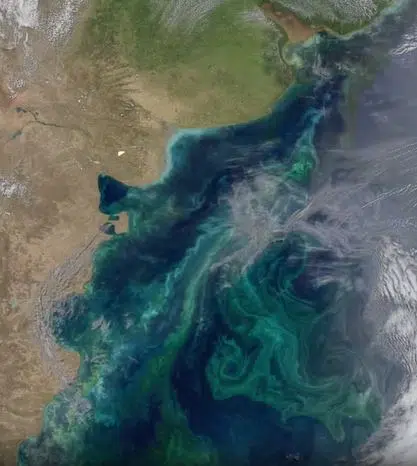 When does the expedition start. (Photo: Instagram screenshot @ecosde2caniones).
This current carries cold, nutrient-rich waters from Antarctica, driving high biological productivity in the Southwest Atlantic.
The canyons alter the marine relief and promote water exchange between the continental shelf and the open ocean, which could explain massive phytoplankton blooms and high biodiversity.
Cutting-edge technology for ocean studies
The expedition will deploy CTD sensors to measure temperature, salinity, and pressure, as well as high-resolution cameras and sediment cores for detailed analysis. 50 drifting buoys —30 surface and 20 subsurface— equipped with GPS to measure speed and current variations will also be launched, sending data every ten minutes.
According to Ruiz Etcheverry, it is the first time that direct samples and measurements are taken in these canyons with an ROV: “Before, we only had bathymetric studies, but now we can film, measure, and analyze in real time”.
Four women will lead the multidisciplinary team, responsible for surveying key organisms such as phytoplankton and zooplankton, essential for the marine food chain. Biologists will take samples at different water column levels, including areas of maximum chlorophyll concentration and thermoclines.
In the northern canyon, near Viedma, it is expected to collect 39 sediment samples, and in the south, 21. 40 CTD stations will also be carried out. All activities will be live-streamed on the official Instagram account @ecosde2caniones.
 The expedition will begin after completing the Mar del Plata Canyon expedition.
A key scientific objective for biodiversity
The main purpose is to determine if the morphology of the submarine canyons alters the inflow of cold waters from the Malvinas Current to the continental shelf and how this phenomenon influences marine life.
The “Ecos de 2 Cañones” expedition is part of the eight missions selected to explore the Southwest Atlantic in 2025, three of them led by Argentinian scientists, following an international evaluation by the Schmidt Ocean Institute.



