



The seas concentrate complex acoustic landscapes that remain largely unknown to science. Whales, orcas, and dolphins produce structured sequences that repeat with variations, a sign of internal sound codes yet to be deciphered.
For decades, these vocalizations were recorded without researchers being able to interpret consistent patterns. The growing capability of artificial intelligence changed that scenario and allowed for the analysis of massive volumes of data impossible to process manually.
This advancement opened a line of research that integrates biology, computer science, and conservation. The technology allows for detecting regularities, comparing sounds, and evaluating their relationship with the behavior of each species.

Tools transforming bioacoustics
Machine learning models process thousands of hours of recordings obtained by hydrophones installed in different oceans. These tools identify repeated sequences and classify them according to temporal and structural metrics.
In recent studies, automated analysis allowed for the discrimination of dolphin whistles that were previously considered identical. Algorithms also detected brief units that could function as equivalents of syllables or phonemes.
This interdisciplinary approach made the interpretation of records more efficient and accelerated processes that previously took years of review. The combination of acoustics, ethology, and computing allows for the reconstruction of possible communicative systems.
Advances in cetaceans and primates
Research with primates revealed complex sequences of sounds that are linked to coordinate actions within a group. These findings suggest a form of rudimentary syntax in different species of great apes.
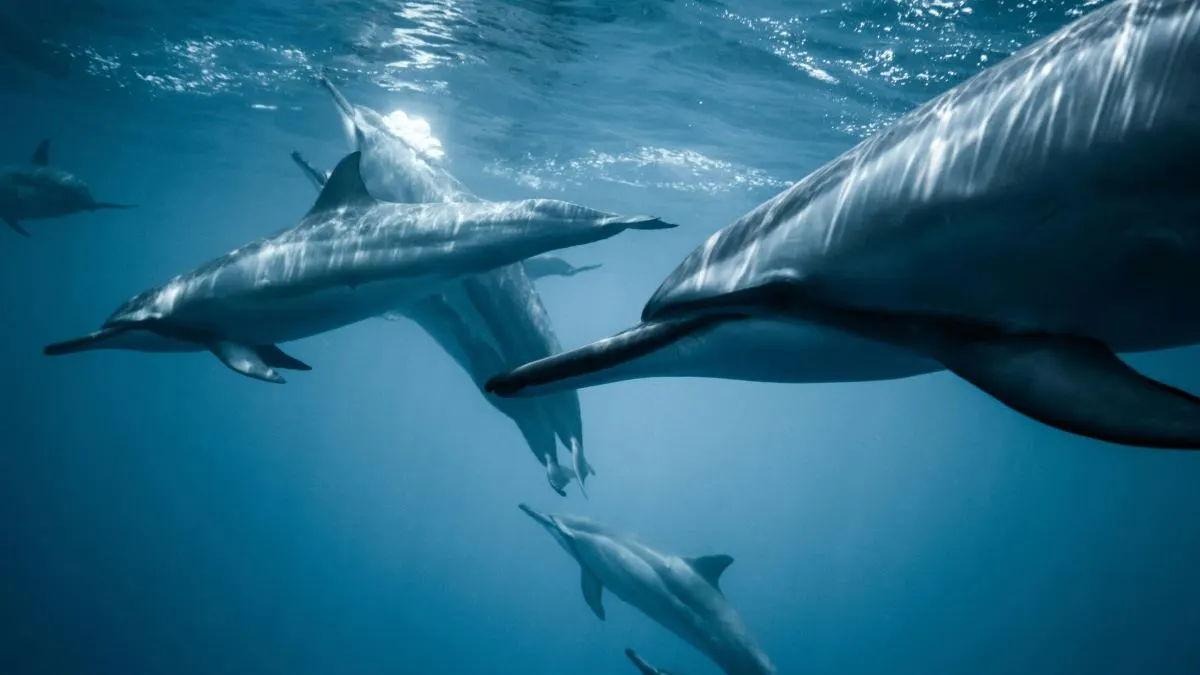
In the marine realm, innovative projects deepen the study of cetaceans. Generative artificial intelligence models are already capable of imitating sperm whale “codas,” a key tool for comparing vocalizations and understanding variations.
Other developments focus on reproducing dolphin whistles and evaluating whether the animals interpret these artificial signals. Meanwhile, the analysis of humpback whale songs revealed predictable sequences that could function as cultural units.
The boundary between animal communication and language
The scientific discussion on whether these systems constitute a language remains open. Some research describes structures comparable to basic grammatical rules, while others argue that they are functional sound associations.
Concepts like productivity, recursion, or reference to absent elements remain exclusive to human language. However, certain behaviors, such as the recognition of signals after long periods, show unexpected cognitive abilities.
The current challenge is to describe to what extent these vocalizations convey specific meanings. Artificial intelligence is the tool that allows for exploring this frontier with greater precision.
Ethical considerations and future challenges in studying these sound codes
The possibility of generating artificial signals raises questions about their effects on animal behavior. Inappropriate use could alter mating patterns, migration routes, or social dynamics.
Technological development requires incorporating ethical criteria and minimal intervention protocols. The goal is to expand knowledge without interfering with wildlife or altering their natural interactions.
Even with these precautions, science agrees that AI-assisted bioacoustics will become a key pillar for marine conservation in the coming decades.

Why artificial intelligence is key to conservation
The application of artificial intelligence in the study of wildlife offers direct benefits for the protection of ecosystems. Its ability to process data in real-time allows for monitoring species that are difficult to observe.
Algorithms can detect changes in acoustic patterns associated with stress, the presence of vessels, or the alteration of sensitive habitats. This information is essential for designing more precise protection policies.
Moreover, the technology allows for identifying individuals, recording migrations, and detecting populations at risk. Its use optimizes conservation campaigns, reduces operational costs, and improves response capacity to environmental threats.
A bridge between science, technology, and biodiversity
The integration between marine biology and artificial intelligence redefines the way animal communication is studied. Advances not only expand scientific knowledge but also strengthen preservation strategies in a context of increasing pressure on the oceans.
The future challenge is to continue developing tools that respect natural processes while allowing for the deciphering of voices that, for centuries, have remained hidden underwater. Technology thus becomes an ally in safeguarding species, habitats, and the acoustic diversity of the planet.


