



In recent years, bees have raised alarms within the scientific community. The sudden changes in their behavior not only compromise the stability of colonies, but also directly impact agricultural production.
In countries like the United States, honey bees play a key role in pollinating crops such as cherries, blueberries, and apples. They are also essential in the production of almonds, a sector that depends almost entirely on their work.
The threat is clear: if the colonies continue to decline, there will be a scarcity of these foods and an increase in supermarket prices. This will not only affect farmers, but also consumers and global food security.
The concern deepens because in addition to natural difficulties, there is the presence of invasive predators, such as the giant Asian hornet, which further pressures bee populations in North America and Europe.
 Scientists study the change in bee behavior.
Changes in Bee Behavior
One of the factors that most disrupts honey bees is overheating. When their internal body temperature exceeds 15 degrees Fahrenheit of what is tolerable, they must beat their wings harder and seek refuge in shaded areas to cool down.
This extra effort has consequences. The time spent regulating their temperature depletes their energy for pollination and reduces their mating opportunities. With fewer flowers visited and less reproduction, colonies lose strength.
To these conditions, other problems are added: habitat loss, intensive pesticide use, and the spread of diseases. All these factors make bees less resistant to heat and more vulnerable to sudden environmental changes.
The decline of these populations is not a minor issue. Beekeepers report the loss of up to a third of colonies, while globally it is estimated that bees participate in 35% of agricultural production.
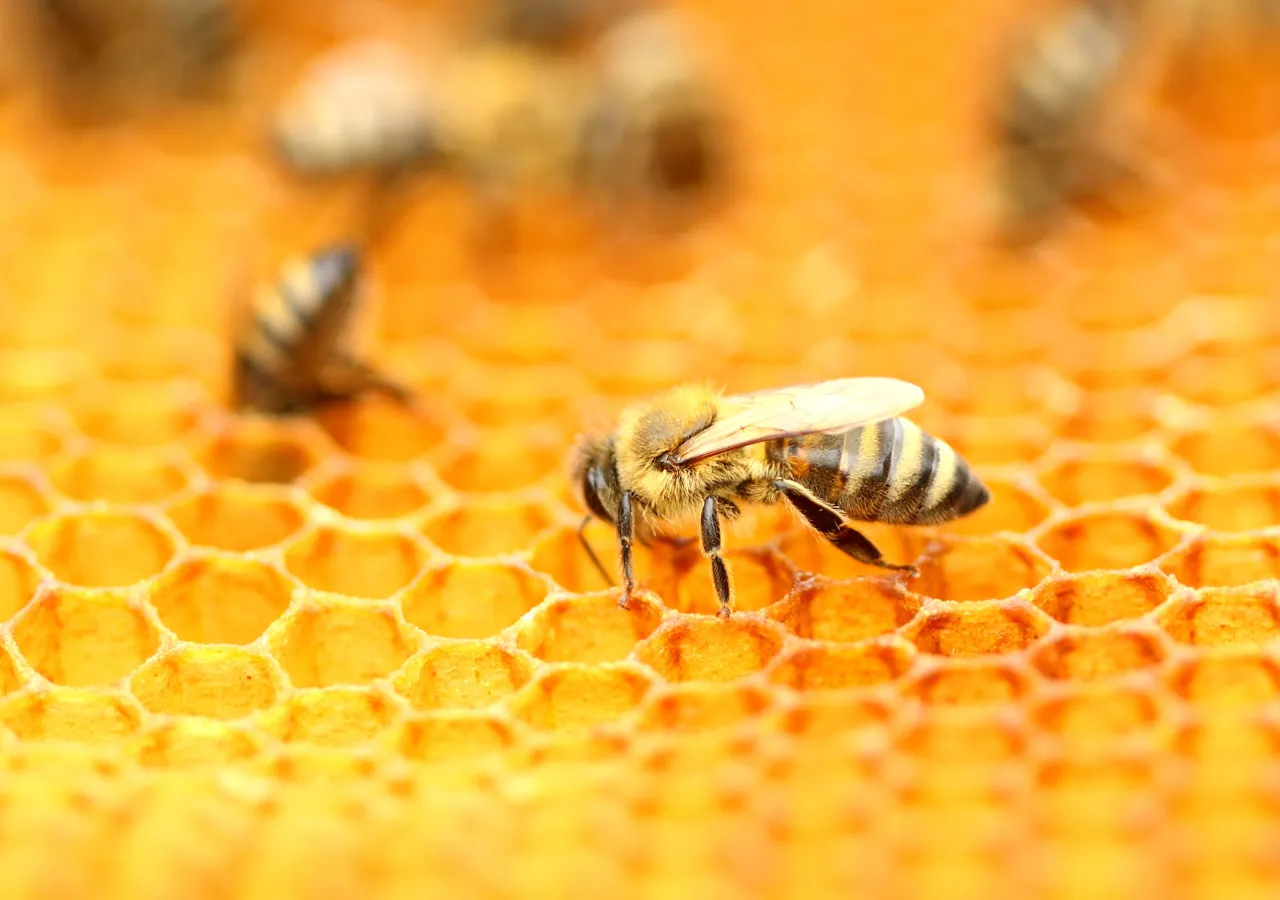 The work of bees and threats to their survival.
Normal Bee Behaviors
To understand the magnitude of current changes, it is necessary to remember what are the normal behaviors of bees in healthy conditions.
First, honey bees usually organize efficiently within the hive. Each group has a role: workers collect nectar and pollen, nurses care for larvae, and the queen ensures reproduction. This balance ensures the colony’s functioning.
Another typical behavior is pollination. Bees visit thousands of flowers a day, transporting pollen between them and enabling the production of fruits and seeds. This activity is continuous during the flowering season and is interrupted only in extreme conditions.
In addition, bees maintain sophisticated communication through dances. Through specific movements, a bee indicates to others the location of flowers or water sources. This coordination ensures that the colony maximizes the available resources.
When these behaviors are altered —whether due to reduced pollination activity, decreased reproduction, or bees failing to maintain their organization— the health of the entire colony is affected, putting agriculture and ecosystems at risk.


