



Almost four decades after the Chernobyl accident in April 1986, the exclusion zone of more than 4,500 km² between Ukraine and Belarus remains a subject of study. Far from becoming a desolate wasteland, ecosystems show signs of recovery and adaptation, according to a report by Science Focus.
The prolonged absence of humans allowed wildlife to return, although radiation continues to exert subtle and uneven effects.
Large Mammals Expanding
Contrary to what was expected after an environmental disaster, large mammals are thriving in the region:
- Wolves, brown bears, European bison, deer, wild boars, moose, and lynxes occupy spaces previously fragmented by human activity.
- The Przewalski’s horses, introduced in the 90s, roam freely through fields and rivers.
- Beavers rebuild dams and recolonize channels and cooling ponds.
The absence of human pressure seems to have favored the recolonization of species that require large territories.
Adaptations in Amphibians
The eastern tree frogs show a notable change: populations within the exclusion zone are up to 40% darker than those in other regions.
This trait, linked to melanin, protects tissues from radiation by neutralizing some of the cellular damage. Natural selection favored the darker individuals, who survive and reproduce more successfully.
Radiation-Resistant Fungi
In ruined buildings and areas near the plant, melanin-rich fungi thrive, capable of growing even faster in the presence of elevated radiation.
Experiments suggest that melanin could modify their metabolism, allowing them to tolerate or exploit radiation as a resource, occupying extreme ecological niches that emerged after the disaster.
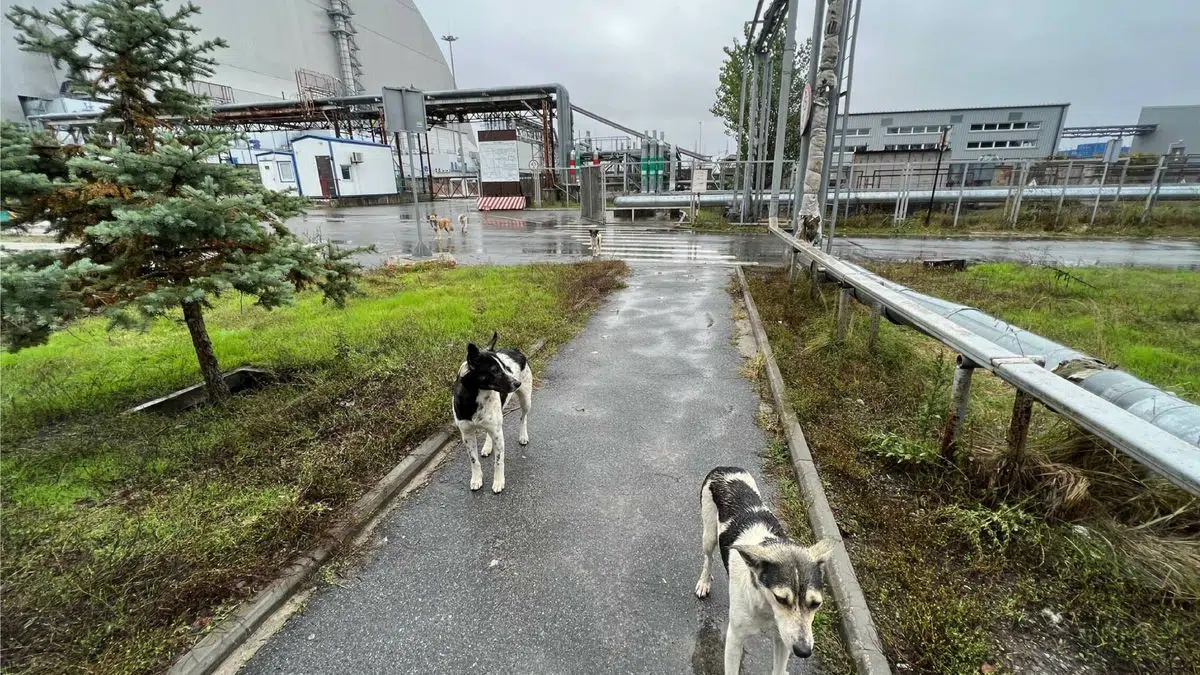
Chernobyl Dogs
Hundreds of dogs descended from abandoned pets live in the area. A 2023 study with 302 specimens showed genetic differences between those living near the plant and those living 15 km away.
These changes reflect isolation, inbreeding, altered diets, and exposure to diseases, rather than radiation-induced mutations. The case demonstrates how a population can quickly differentiate when social and ecological conditions change abruptly.
The Return of Birds
After the accident, many areas became “empty forests,” structurally intact ecosystems but without insects or birds.
Today, 40 years later, the soundscape has changed: warblers, cuckoos, and nightingales fill the forests with song, while migratory and resident birds return. However, recovery is uneven and depends on contamination and prey availability.
The Chernobyl accident demonstrates how nature can adapt and reorganize under extreme conditions. Radiation remains present, but the absence of humans allowed species to thrive and develop unique adaptations.
From mammals and amphibians to fungi and dogs, the wildlife of the exclusion zone offers a living laboratory to understand the resilience of ecosystems in the face of environmental catastrophes.


