



An interdisciplinary team from the National University of Córdoba (UNC) investigated the relationship between climate change and health in vulnerable neighborhoods.
Values were analyzed in the city of Córdoba, in the areas of Alberdi, Marechal, and Villa Páez.
Since 2022, students and professors from the faculties of Medical Sciences, Exact Sciences, and Social Sciences have been visiting neighborhoods to assess not only the environmental impact but also their social and public health effects.
Climate change and health: the study by the University of Córdoba
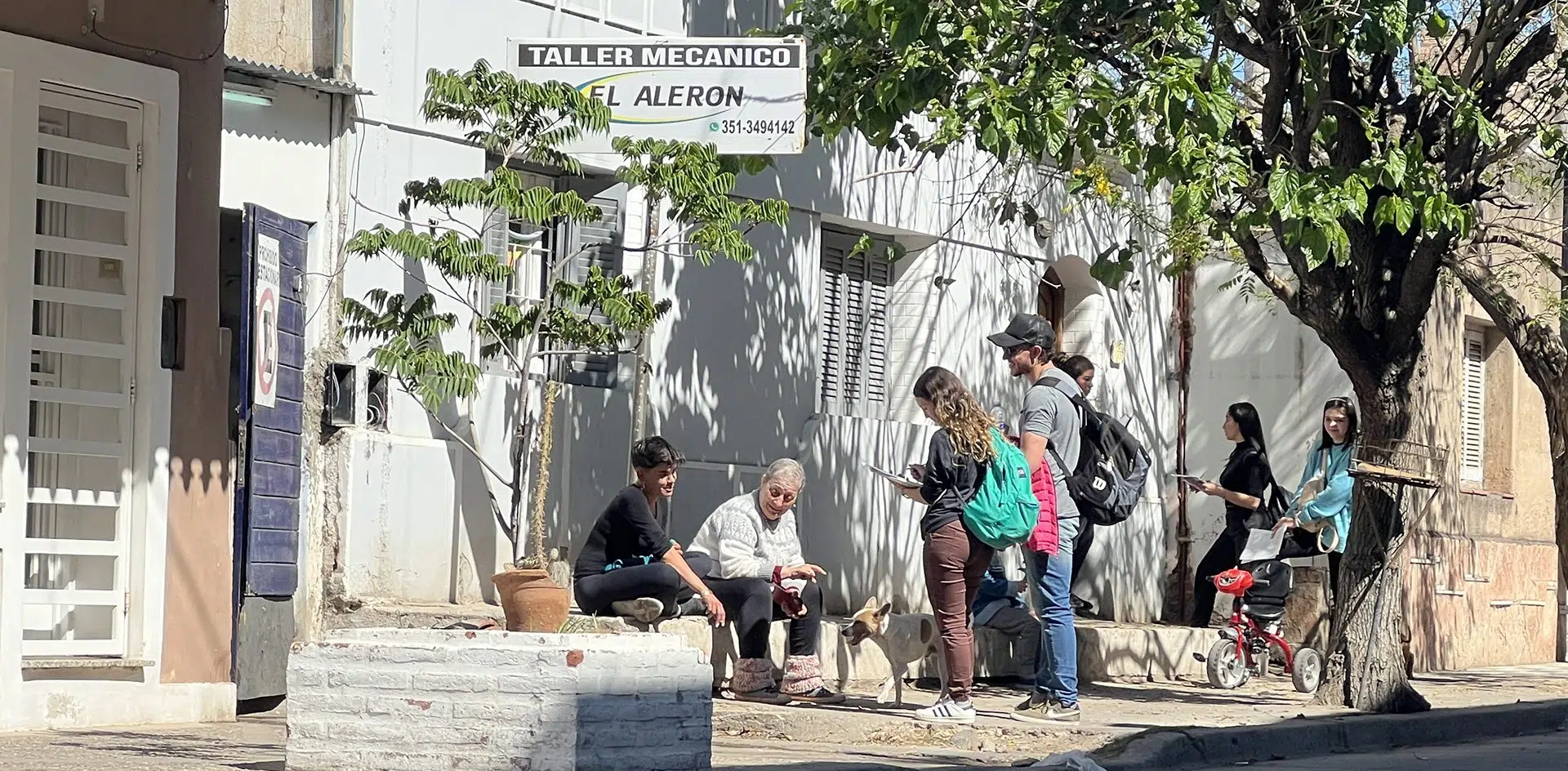 Study by UNC on climate change and health. (Photo: UNC).[/caption>
The project, promoted by the Student Social Commitment Program, combines surveys, community dialogue, and “thermal walks” — urban temperature measurements with residents — to identify urban heat islands and people’s perception of climate risks.
The results show that, although residents acknowledge climate change and its effects on health (such as irritability, insomnia, or exhaustion during heat waves), participation in community actions is limited.
According to the study’s director, Susana Vanoni, the challenge is to move from awareness to collective action.
Results: symptoms and diseases linked to heat
67% of respondents in Marechal reported symptoms like irritability, insomnia, and lethargy during extreme heat episodes, while these percentages reached 72% in Villa Páez and 77.5% in Alto Alberdi.
Additionally, less than half sought medical assistance, reflecting access barriers or normalization of these conditions.
Regarding vector-borne diseases, 58% in Villa Páez, 50% in Marechal, and 40% in Alto Alberdi reported having suffered from dengue. This raises concerns about mosquito-friendly environments and the need for appropriate infrastructure and services.
More than half of the respondents rely on the public health system, with a prevalence of chronic diseases like hypertension, worsening their vulnerability to heat and other climate threats.
Recommendations: towards more resilient neighborhoods
 Effects of climate change.
The report calls for a collaborative approach involving government, academia, and the community focusing on:
-
Housing infrastructure and green spaces: improving thermal insulation and increasing recreational areas.
-
Heat health plans: protocols for emergency care, resources like water and cooling, and training on sunstroke or dehydration.
- Communication and citizen science: heatwave drills scheduled for September 2025 and activities in neighborhood fairs to strengthen knowledge exchange with the UNC.


