



A team from the Andalusian Center for Developmental Biology (CABD) and the CSIC discovered how the eye of insects evolves after analyzing two species separated by 90 million years: the Drosophila melanogaster (vinegar fly) and the Episyrphus balteatus (marmalade hoverfly).
Despite their distinct evolutionary paths, both preserve an essential genetic core intact for the formation of the compound eye.
Genetic conservation and regulatory fluidity
The study, published in PLOS Genetics, identified 106 genes linked to eye development, including 22 transcription factors that regulate the expression of other genes during embryonic development.
- The main genes remain practically unchanged.
- The regulatory mechanisms controlling their activation have changed profoundly.
- This phenomenon, called regulatory fluidity, explains how evolution reorganizes genetic networks without altering essential functions.
Researcher Fernando Casares summarized it: “The tools to build the eye remain the same, but the instructions for using them have evolved”.
Implications for evolutionary biology
The finding demonstrates that evolution does not always create new structures from scratch but can reuse existing genes and modify their regulatory mechanisms to generate adaptations. This explains how insects maintain vital sensory functions while developing new physical characteristics.
The comparison between Drosophila and Episyrphus nearly multiplies by ten the number of known genes related to vision, expanding the catalog available for future research.
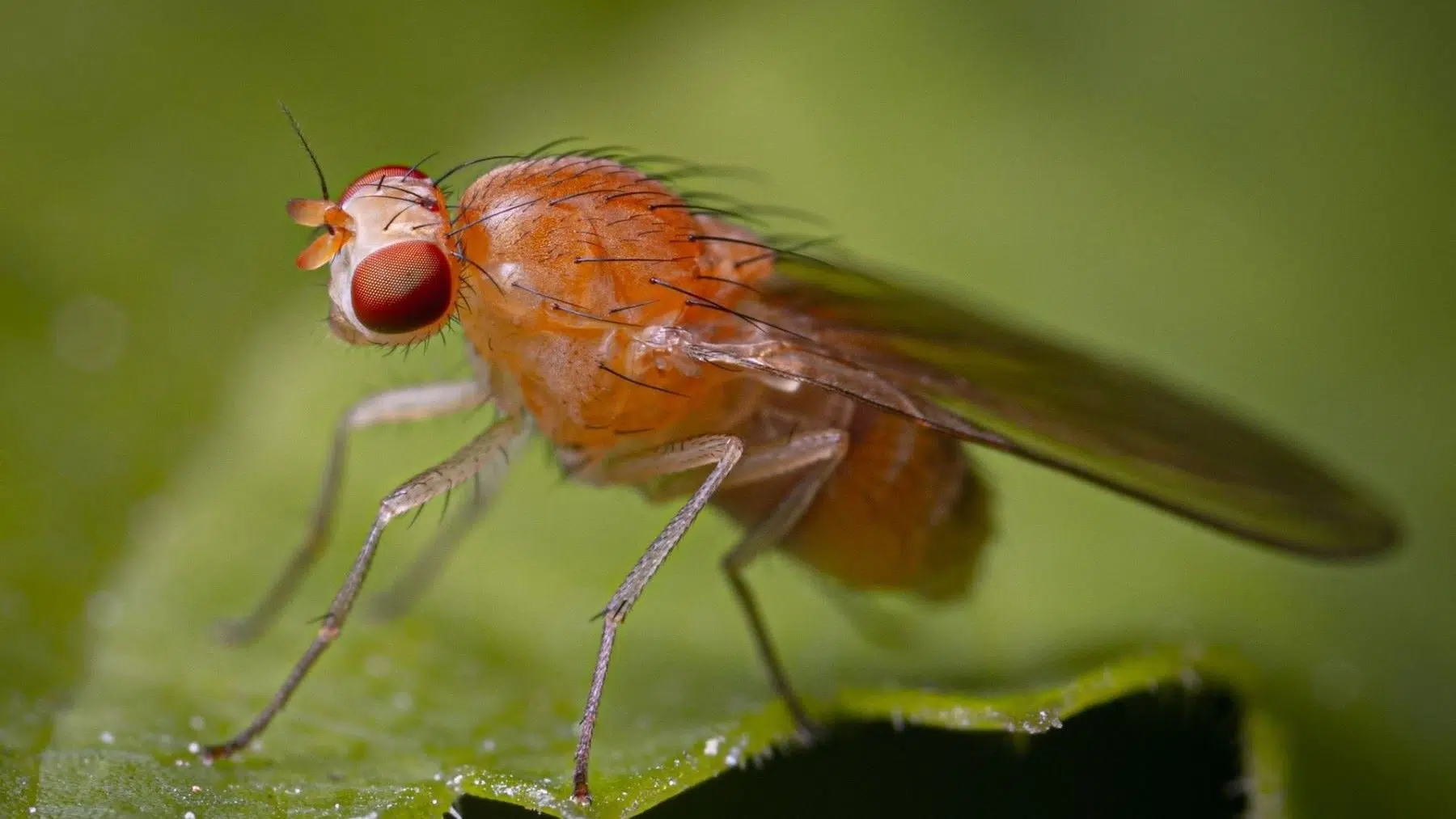
The compound eye and its relevance
The compound eye is present in some of the most numerous animal groups on the planet, such as insects and crustaceans. Understanding its evolution allows:
- To explain the biological diversity and the enormous variety of visual adaptations.
- To reconstruct the genetic networks responsible for eye development in different species.
- To understand the evolutionary rules that govern the formation of complex organs.
New lines of research
Researcher Tomás Navarro highlighted that the study opens paths for:
- Analyzing the evolution of complex organs in other animal groups.
- Understanding the conservation of fundamental biological processes shared by millions of species.
- Exploring how evolution balances innovation and genetic stability.
The discovery confirms that evolution can reorganize genetic instructions without altering the essential functions of an organ.
The conservation of more than a hundred genes over 90 million years reveals the importance of vision in the survival of insects and provides keys to understanding how nature maintains a delicate balance between innovation and continuity.



