



The green clay tennis courts emerge as an innovative solution in the fight against climate change. According to a recent study published in Applied Geochemistry, these sports surfaces can capture carbon dioxide through a natural process known as rock weathering.
In this regard, the technique consists of using silicate-rich materials, such as basalt, which react with rainwater and allow the fixation of atmospheric carbon in the soil. In this way, an everyday infrastructure acquires a key environmental function.
Moreover, this application adds to other previous experiences in agriculture and coastal areas, demonstrating the versatility of the approach. Thus, science begins to integrate climate solutions into existing environments, expanding its reach without requiring major structural transformations.
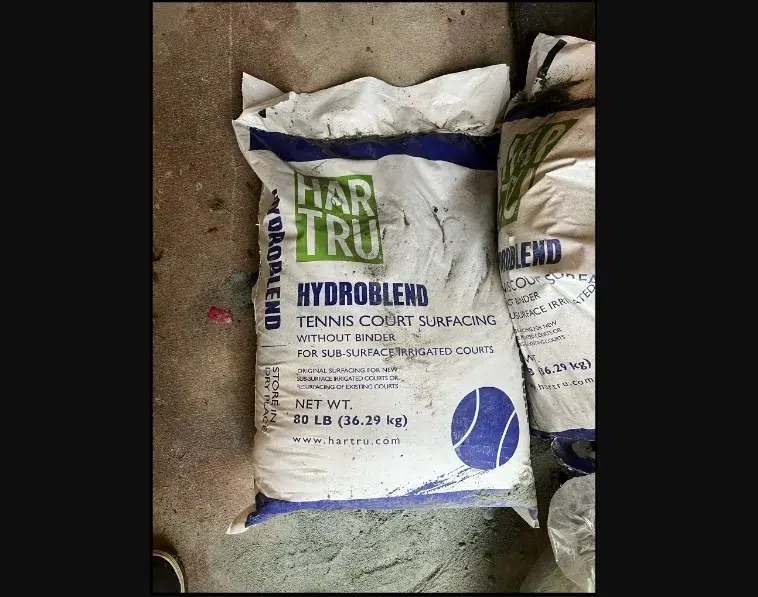
How green clay courts work
The study analyzed a total of 17,178 courts in the United States, made with metabasalt, a material with properties similar to basalt. From these data, the researchers calculated both the emissions generated and the capacity for carbon capture.
Consequently, the analysis considered the entire life cycle of the courts: extraction of materials, transportation, construction, and maintenance. Variables such as temperature, the size of the mineral grains, and chemical composition were also evaluated.
As a result, it was determined that these courts can eliminate approximately 25,000 metric tons of carbon dioxide per year. Consequently, they position themselves as a more efficient alternative compared to traditional hard surfaces, which do not have this absorption capacity.
Results marking a paradigm shift
The data reveal that 80% of green clay courts reach net zero emissions in less than 10 years. Likewise, 92% achieve this goal before 20 years, demonstrating their medium-term impact.
However, one of the most notable aspects is the average time to reach negative emissions, which is around 3.5 years. This implies that, in a short time, these surfaces begin to capture more carbon than they generate.
On the other hand, factors such as geographical location influence their performance. Courts located in warm climates or near basalt processing centers show better results, while some in cold regions may not achieve neutrality.

The environmental benefits of this initiative
The implementation of green clay courts offers multiple advantages in ecological terms. Firstly, it contributes to the direct reduction of carbon dioxide in the atmosphere, a central objective in the face of the climate crisis.
Additionally, it reduces emissions associated with construction compared to concrete surfaces, reducing the initial environmental impact by 1.6 to 3 times. Therefore, it not only captures carbon but also prevents its generation.
Furthermore, this strategy promotes the efficient use of existing resources, integrating climate solutions into already installed infrastructures. In this way, the territory is optimized without the need to expand the urban footprint.
Towards an expansion of sustainable solutions
The potential of this technology opens new opportunities for urban and sports design. As the demand for sustainable spaces grows, initiatives like this could be replicated in different countries and contexts.
Moreover, improving the composition of materials and optimizing maintenance would allow to increase the carbon capture capacity. Consequently, continuous innovation will be key to enhancing its benefits.
Finally, this approach demonstrates that the ecological transition does not depend solely on large energy infrastructures. It can also be driven by simple solutions, integrated into everyday life, where even a tennis court can become a planet ally.


