



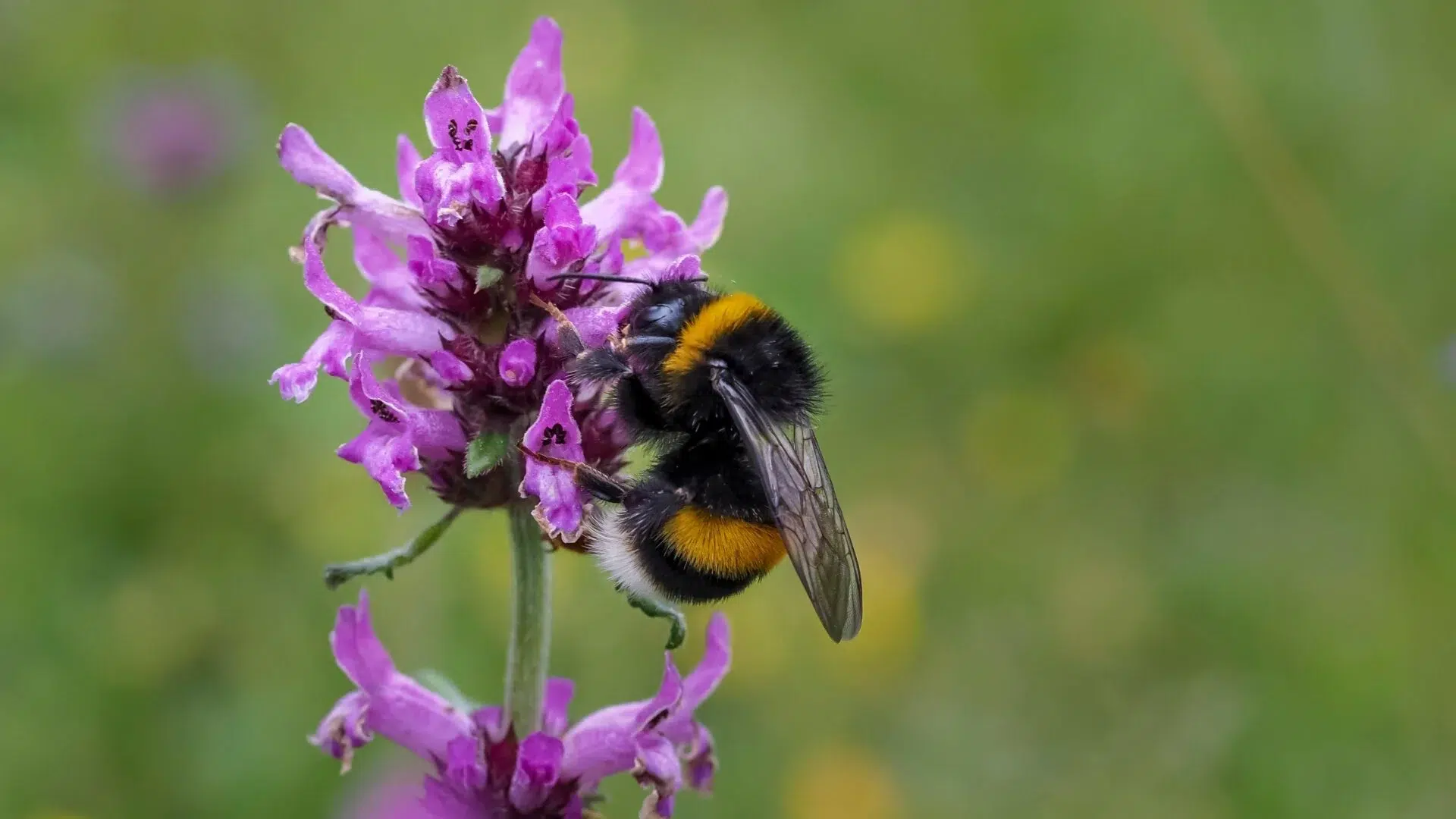
A new study conducted by researchers from the universities of Turku and Oulu revealed that household insecticides can reduce the return of bumblebees to the nest by up to 95% after prolonged exposure. The study focused on prallethrin, a common pyrethroid in devices used to repel mosquitoes on terraces and gardens.
The finding is concerning: bumblebees do not die immediately, but they lose their ability to orient themselves, compromising the survival of their colonies.
The experiment
The study involved 167 Bombus terrestris specimens, exposed to a commercial device for 1, 10, and 20 minutes. They were then released 1,000 meters from their nest, and researchers observed how many managed to return within three days:
- Unexposed group: 37% returned.
- 10-minute exposure: only 17% returned.
- 20-minute exposure: just 5% managed to return.
The bumblebees that did return showed no signs of weakness and did not take longer than the unexposed ones. The problem was disorientation, a sublethal effect that erodes ecological efficiency without causing immediate mortality.
Ecological consequences
The loss of orientation has a direct impact on pollinator efficiency:
- Fewer visits to flowers.
- Less pollen transport.
- Reduction in plant reproduction.
Each bumblebee that does not return to the nest stops contributing nectar and pollen, essential for feeding larvae and sustaining the colony. The progressive decrease of individuals affects both biodiversity and agricultural production.
An urban and everyday risk
In urban and peri-urban environments, where gardens and terraces act as small biodiversity refuges, the impact is even more significant. What happens on a balcony can affect the surrounding ecosystem.
The use of these devices is regulated and limited to domestic contexts, but their normalization in millions of homes introduces diffuse and cumulative exposure. It is not about massive fumigations, but small constant emissions throughout the summer, which together create a hostile environment for pollinators.
Concern for pollinators in Europe has already led to restrictions on certain neonicotinoids and the promotion of the European Pollinators Initiative. This study adds to the alert: even products considered “safe” in domestic settings can have unexpected and harmful effects.
Impact on agriculture and ecosystems
- Crops dependent on pollination: fruit trees, vegetables, and seeds may see reduced yield and quality.
- Natural ecosystems: changes in plant composition, loss of species dependent on pollinators, and alteration of food chains.
- Urban biodiversity: gardens and parks lose their function as refuges for key insects.
The Finnish study demonstrates that household insecticides not only affect the insects they aim to repel but also essential pollinators like bumblebees. The threat is not immediately visible, but its cumulative effect can compromise food production, biodiversity, and ecosystem stability.



