



The microsatellite Atenea, developed by the CONAE along with Argentine universities and scientific organizations, successfully completed its participation in NASA’s mission Artemis II.
Aerospace engineer Facundo Pasquevich, responsible for mechanical integration, highlighted that even NASA itself doubted that Argentina could meet the deadlines: “Out of the 60 countries that applied, 4 were chosen, and even NASA didn’t think we could do it”.
Of the four selected satellites — from Germany, Saudi Arabia, South Korea, and Argentina — only two managed to establish a correct communication link, one of them being the Argentine one.
Operations and Records
- Atenea operated for 20 hours, sending telemetry from extreme conditions.
- It reached the greatest distance recorded by an Argentine satellite, with signals received from more than 70,000 km from Earth.
- It validated electronic systems in high-radiation environments and tested long-range communication links.
- The data was received at stations in Córdoba and Tierra del Fuego, coordinated with the international Artemis II network.
Scientific and Technological Impact
The microsatellite measured radiation levels and evaluated the behavior of electronic components in high-demand environments. This data will be key for the development of future space missions of greater technical complexity.
CONAE reported that Atenea allowed for large-scale communication testing in a real operational context, consolidating Argentina’s capability in deep space.
National Collaboration
The project involved the participation of:
- Universidad Nacional de La Plata (UNLP)
- Universidad Nacional de San Martín (UNSAM)
- Facultad de Ingeniería de la UBA (FIUBA)
- Comisión Nacional de Energía Atómica (CNEA)
- Instituto Argentino de Radioastronomía (IAR)
- Empresa VENG S.A.
Official Reactions
The Argentine government celebrated the milestone as a symbol of global integration and technological excellence. In a statement, the President’s Office declared: “Argentina is once again part of the concert of Nations making history. Today the world chooses us for our reliability, security, and technological leadership”.
Artemis II and Human Record
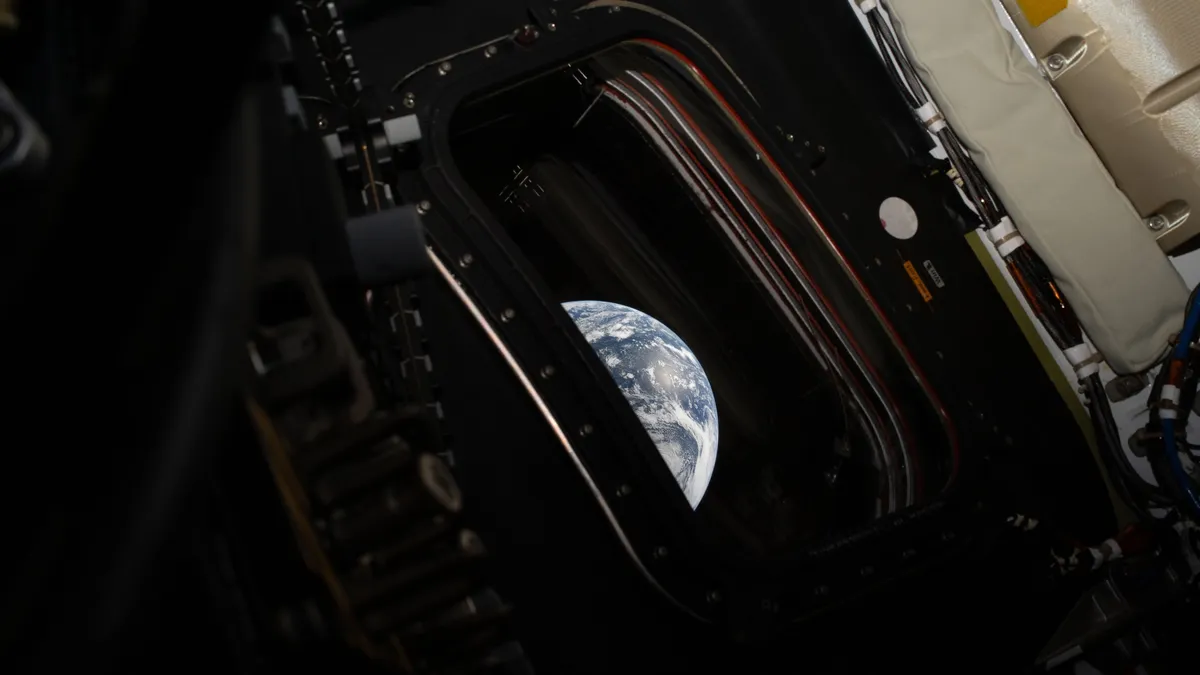
NASA also reported that astronauts Reid Wiseman, Victor Glover, Christina Koch, and Jeremy Hansen became the farthest humans from Earth, surpassing the Apollo 13 mark with more than 400,171 km of distance.
The success of the microsatellite Atenea in Artemis II marks a historic milestone for Argentine science and technology, demonstrating that the country can compete in top-tier space projects. The microsatellite not only validated national technology in deep space but also reinforced international cooperation and paved the way for more ambitious future missions.



