



An indigenous community is promoting an innovative research project with seedling trees for the conservation and reforestation of the Peruvian Amazon.
This community is Yamino, from the Kakataibo people, recognized for their sustainable forest management and commitment to conservation.
Recently, they have become the focus of a pioneering study: “A look at conservation: potential of seedling trees in native communities and forest concessions in the Ucayali region.”
This collaborative project is led by the Servicio Nacional Forestal y de Fauna Silvestre (Osinfor), the National Agrarian University of the Jungle (UNAS), and the Association for Research and Integral Development (AIDER).
The goal is clear. They aim to understand the forest’s ability to regenerate naturally and enhance seed production to boost reforestation and the recovery of degraded areas in the Peruvian Amazon.
Seedling tree research: a scientific and community approach
The research team, as reported by the local agency Actualidad Ambiental, evaluated key seedling trees in the community’s forest management area. They collected data on valuable species such as ana caspi, mashonaste, copaiba, and cachimbo.
“This study addresses poorly researched species in terms of seedling trees and natural regeneration. The partnership with UNAS and AIDER strengthens Amazonian forest research,” explained Richard Aylas Chuquillanqui, an Osinfor specialist.
The data obtained will help identify the productive potential of the seeds, a fundamental step to promote sustainable economic alternatives and strengthen the communities’ economy.
Role of Indigenous Youth
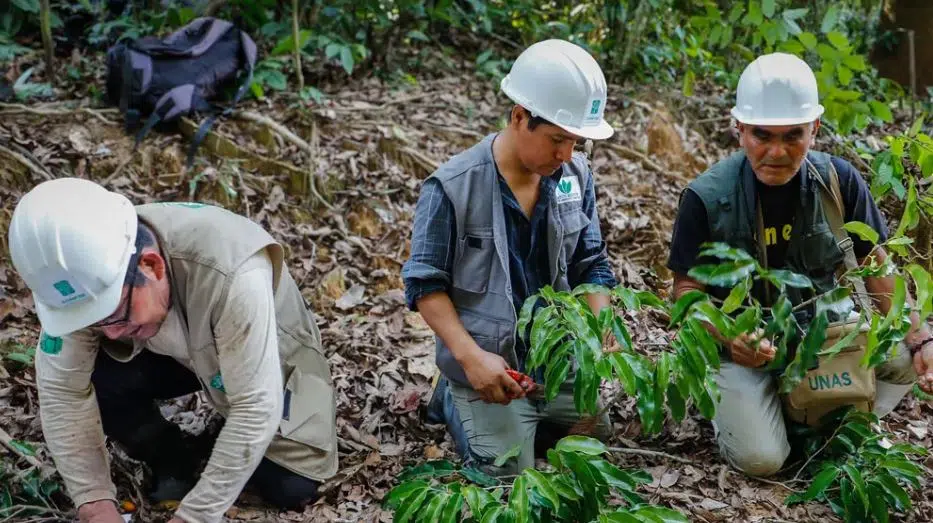 The initiative to research seedling trees in the Peruvian Amazon. (Photo: Actualidad Ambiental).
The study not only focused on science but also involved the community. Three young Kakataibo from Yamino actively participated in the fieldwork, showing their interest in contributing to the sustainable management of their natural resources.
Juan Antonio Estrella Torres, one of the young participants, shared his experience: “It was enriching to learn from the engineers and identify species by their leaves. This motivates me to continue studying and to value the care of our trees.”
With a “Very Good” rating in the Management Information System of Osinfor (SIGO) for their strict compliance with forest regulations, the Yamino community stands out as a model of community forest management.
Estrella Torres called on other communities to take care of seedling trees, as “the regeneration of the forest and our future depend on them.”
A Model of Sustainability in the Peruvian Amazon
Located in the buffer zone of the Cordillera Azul National Park, the Yamino community is distinguished by its productive dynamism, which includes the cultivation of cocoa and plantain, as well as handicrafts production. These activities complement a strong commitment to forest conservation.
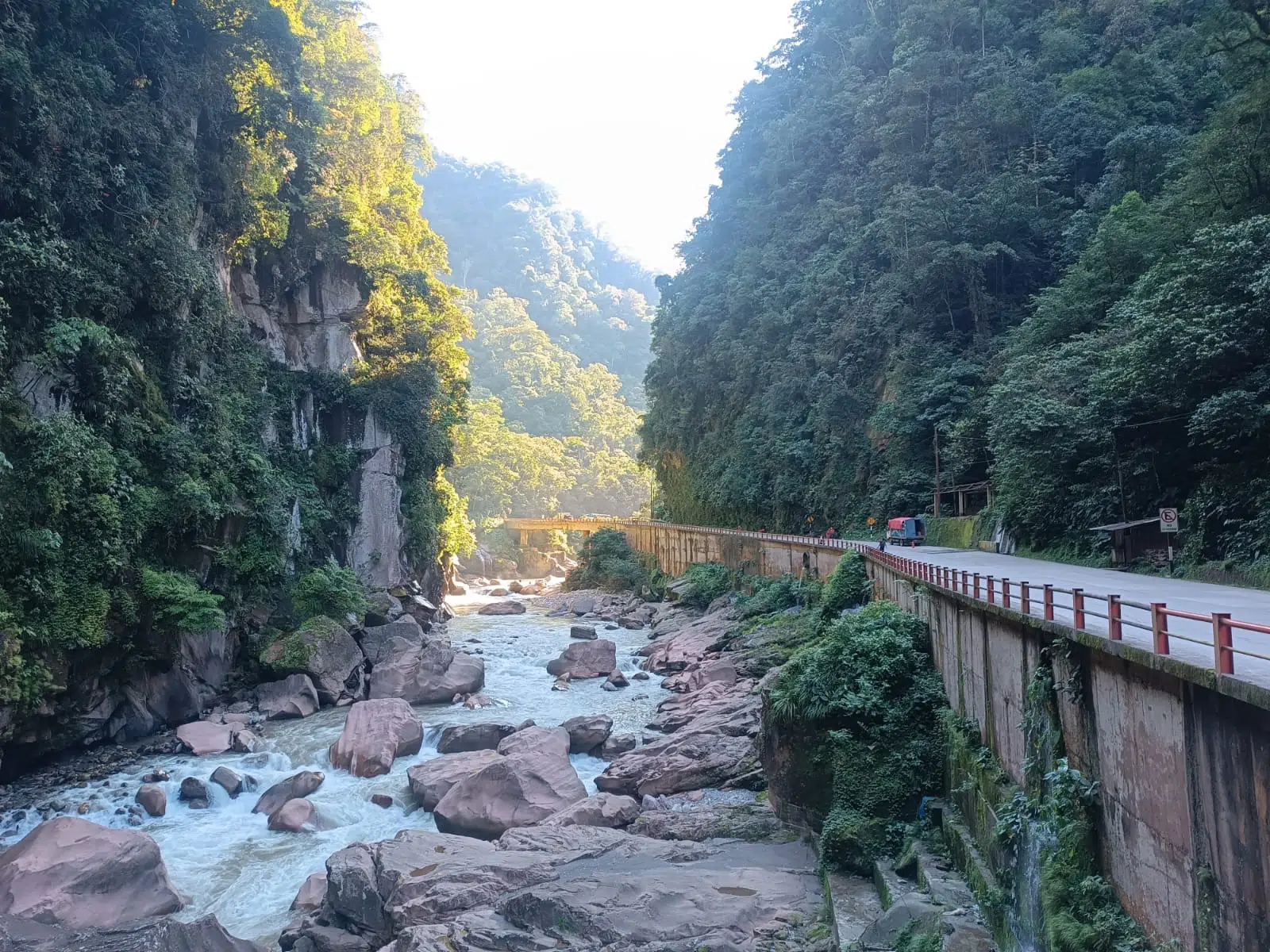 Ucayali, in the heart of the Amazon. (Photo: Wikipedia).
The study’s results will be compiled into a scientific book, highlighting the crucial role of seedling trees in natural regeneration.
This initiative aims not only to generate knowledge but also to inspire other communities and strengthen sustainable forest governance in the Ucayali region, demonstrating that cooperation between science and ancestral knowledge is key to a greener future.



