



Chinese scientists have taken a step further in the fight against microplastics. They have created a **filter with squid bone and cotton** that promises to eliminate 99.9% of this material.
The **plastic pollution** is a global problem that directly affects ecosystems and human health. Therefore, the innovative “Ct-Cel2 appears as a hopeful solution.
## How is CT-Cel2: the filter with squid bone and cotton
The study has been published in the journal *Science* and is signed by researchers from the **Wuhan University** in China. There they detail how Ct-Cel is a **supramolecular biomass fibrous filter**.
It was created thanks to the combination of **chitin**, a derivative of squid bone, and **cellulose derived from cotton**.
“This fibrous biomass framework shows excellent performance in **absorbing polystyrene, polymethylmethacrylate**, polypropylene, and polyethylene terephthalate,” say the researchers.

## How the filter works
According to the description, this filter **acts like a living organism**. “The affinity for **various microplastics** is attributed to the transformation of multiple intermolecular interactions between the different microplastics and the CT-Cel,” detailed the scientists.
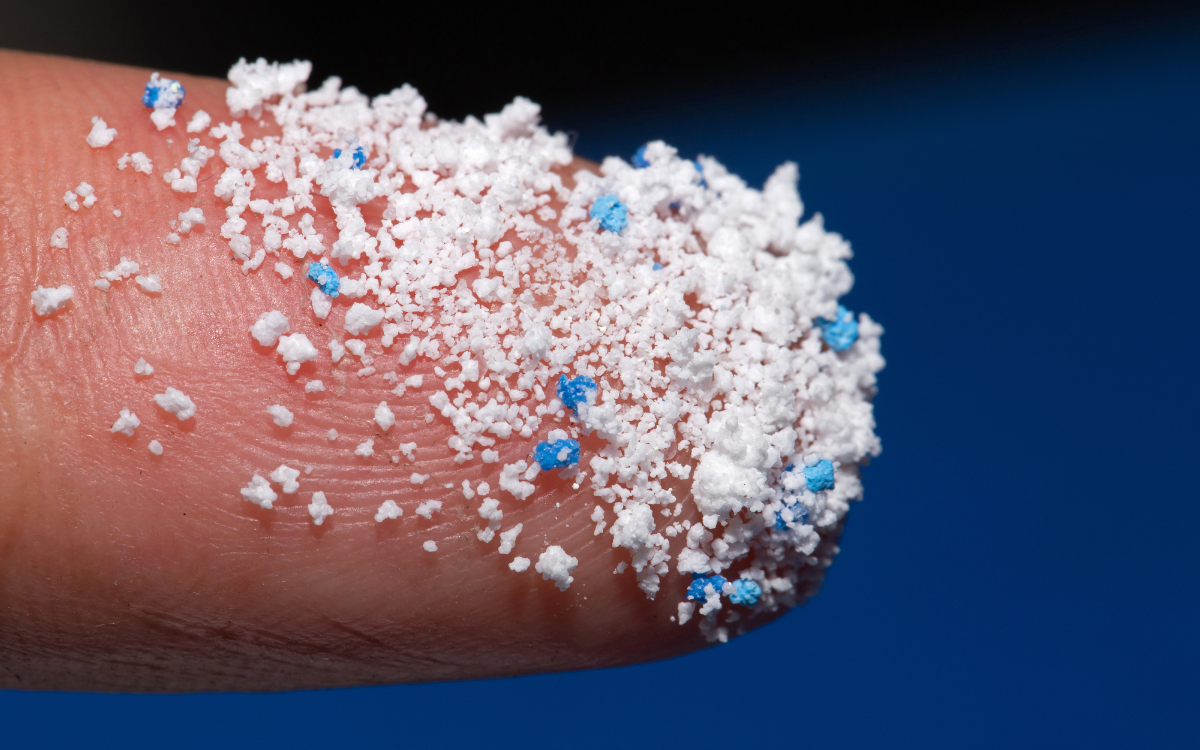
This means that the filter has a wide **variety of bonding reactions** between its parts, allowing for better adaptation to **”trap” those plastic varieties** ranging from 100 nanometers to three microns.
Thus, it can eliminate **98 to 99.9%** of these types of microplastics in real tests in waters from **agricultural irrigation, lakes, coastal areas, and stagnant waters**.
Additionally, maintaining a high capture efficiency (between 95.1% and 98.1%) after five absorption cycles.
However, it should be noted that they also mention that the presence of some chemicals in the water **reduces the absorption capacity**.
And what are those mechanisms for trapping particles? Molecular exchange like Van der Waals forces, electrostatic attraction of particles, or the simplest: physical interception of them.
Both chitin and cellulose had already positioned themselves as interesting elements for filtering and removing contaminants from water, but the **real challenge for researchers** was to combine them.
It required manipulation to break down the internal structure of each component and then rebuild said combined structure.
## Testing stage
The authors also point out that it is a **filter in a very early development stage**. Despite the **exhibited potential**, more tests, and on a larger scale, are needed before conducting the research to determine whether it is viable or not to produce it on a commercial level.
## 90% of plastic is not recycled
In 2019, the world produced around **460 million tons of plastic**, a number that doubled since 2000, according to the Organization for Economic Cooperation and Development (**OECD**).
More than 90% of plastic is never recycled, and over 20 million tons end up in nature every year.
Plastic also accounts for **3% of global carbon emissions**, as it is produced with fossil fuels.
**[Subscribe to our YouTube channel!](https://www.youtube.com/channel/UCrYLIWysAyv4m833zGAQ02g)**



