



An international team of scientists led by Cornell and Aalto universities has developed an innovative tool that allows identifying reef fish through sound and video, transforming acoustic monitoring into a key strategy for the protection of coral ecosystems.
Underwater soundscapes: a biodiversity still hidden
More than 700 Caribbean fish species could emit unique sounds, previously unknown.
The project, driven by FishEye Collaborative, collected over 20 hours of recordings in Curaçao, managing to attribute specific sounds to 46 reef fish species, many of which were not previously known to emit vocalizations.
“The acoustic diversity of reefs rivals that of tropical rainforests,” says Dr. Marc Dantzker, executive director of FishEye Collaborative.
Diver-free technology: autonomous and continuous monitoring
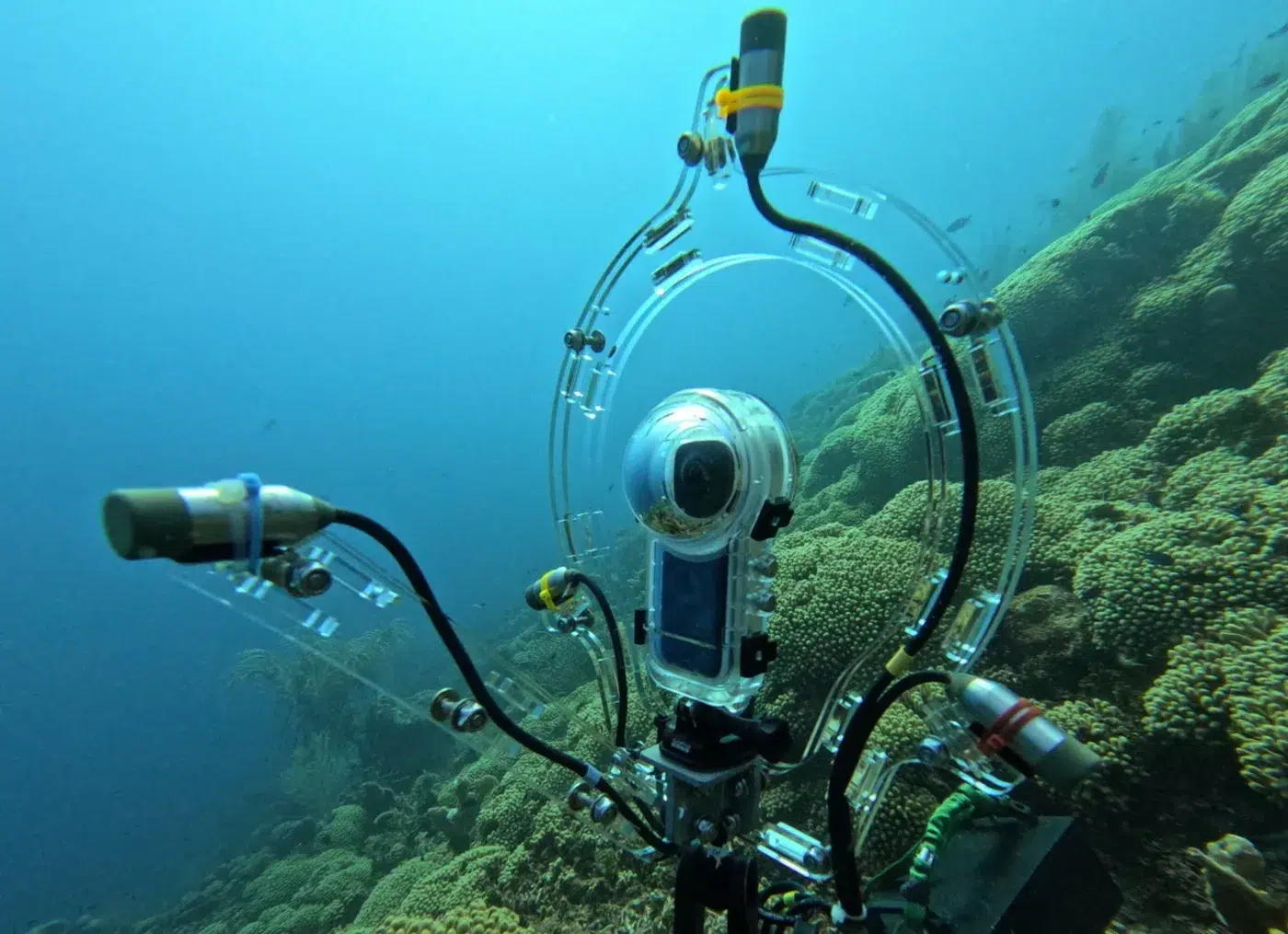
The system can be installed in the natural environment and record sounds for long periods.
“We captured behaviors and vocalizations never seen before,” explains Dr. Aaron Rice, lead author of the study.
The tool combines spatial audio and 360° video, allowing to locate the sound source and overlay it on the image, making it easier to identify which fish produces each sound.
Applications for marine conservation
Acoustics become an indicator of reef health and resilience.
So far, fish sounds were overshadowed by noisier species such as dolphins, whales, and shrimp. This technology allows discovering the “hidden voices” of the sea, providing valuable data to assess biodiversity and monitor changes in ecosystems.
“We are far from having a ‘Merlin’ for the oceans, but sounds are already useful for science,” says Dr. Rice.
Reefs at risk: urgency to monitor and restore
Climate change, habitat loss, and human activity threaten marine biodiversity.
“Reefs are deteriorating rapidly, affecting food security and the livelihoods of nearly a billion people,” warns Dr. Dantzker.
Investment in restoration is significant, but requires efficiency and rigorous monitoring. This tool allows evaluating how reefs respond to stress factors and conservation interventions.
Citizen science and technological future
Inspired by applications like Merlin Bird ID, researchers dream of a marine version.
While acoustic identification of birds is already accessible to the public, creating a similar app for fish is still a challenge.
However, current advances bring that possibility closer, and offer immediate benefits for scientists, managers, and coastal communities.


