



A team of specialists from Argentina, Peru, and Brazil confirmed the presence of microplastics in copepods from the South Atlantic, tiny crustaceans that are an essential part of the zooplankton, an important pillar of marine ecosystems. The samplings, conducted between November 2022 and June 2023 in Monte Hermoso, Reta, and La Chiquita, revealed that both the water and the organisms were contaminated with microscopic plastic fibers.
The finding, carried out by members of Conicet and the National University of Quilmes (UNQ), reinforces a growing concern: copepods, being one of the most abundant organisms in the oceans, act as reservoirs for plastics and facilitate the upward movement of these particles through the food web. What these microscopic creatures ingest can end up in fish, seabirds, and even in the human diet.
The phenomenon is linked to the global plastic cycle. According to international estimates, more than 430 million tons of this material are produced each year, two-thirds of which become waste. Over time, these wastes break down into microplastics, particles that persist in the ocean for decades.
Sandy beaches act as natural traps that concentrate a large amount of these fragments in the surf zone. There, copepods filter the water for food and end up ingesting transparent, blue, black, or yellow plastics that mimic real plankton.
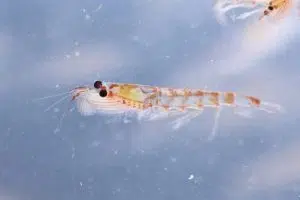
The Role of Zooplankton in Marine Ecosystems
Zooplankton, composed of microscopic organisms such as copepods, fish larvae, and small crustaceans, constitutes the food base of the oceans. These organisms float with the currents and are consumed by fish, mollusks, seabirds, and mammals such as whales and dolphins.
Their ecological importance lies in being the direct link between phytoplankton —which produces oxygen and fixes carbon through photosynthesis— and the higher levels of the food web. In this way, they sustain biodiversity and regulate vital processes for the balance of the planet.
Contamination by microplastics disrupts this natural mechanism. By accumulating in the zooplankton, the particles cascade through the ecosystem. This not only threatens the survival of marine species but also jeopardizes the food security of millions of people who depend on fishery resources.
A Threat that Escalates to Humans
The study revealed that species like Acartia tonsa ingest a greater variety of microplastics than other copepods like Paracalanus parvus or Euterpina acutifrons. However, in all cases, transparent fibers were the most common, probably due to their resemblance to regular food.
The problem magnifies considering that these organisms are consumed by commercial fish. Thus, the microplastics that start in the plankton end up accumulating in the human diet. They have already been detected in drinking water, table salt, and even in the air, suggesting a pollution cycle that cannot be ignored.
Removing these ocean fragments is unfeasible: filtration methods would affect the plankton itself and the dynamics of marine ecosystems. Therefore, the only real strategy is preventive: reduce plastic production, improve waste management, and promote responsible consumption to limit the arrival of waste into the sea.
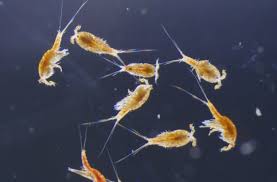 Detected the presence of microplastics in zooplankton. Photo: misPeces.
Consequences that Endure Over Time
The effects of microplastics are measured not only in tons but also in permanence. Once in the sea, these particles can remain for over a century, releasing chemical substances and accumulating in marine biota.
The impact on human health is still being investigated, but initial studies indicate possible links to inflammatory processes, hormonal disruptions, and toxic risks. Simultaneously, the loss of biodiversity threatens to weaken ecosystems already facing climate change, overfishing, and ocean acidification.
What starts in a microscopic organism ends up revealing a global problem. The contaminated zooplankton is the first visible link in a silent crisis that rises to the surface and directly affects human communities.



