



After the success of the microsatellite Atenea alongside NASA’s Artemis II mission, the CONAE is preparing for a new challenge: the launch of the Sabia Mar satellite, scheduled between April and December 2027. This project, entirely developed in Argentina, will have as its main objective the monitoring of the continental shelf and the health of the Argentine Sea.
State-of-the-art technology
The Sabia Mar will be the first Argentine satellite equipped with advanced optical instruments:
- Internal cameras sensitive to the visible range of the electromagnetic spectrum.
- Capability to record minimal variations in water tone.
- Precise measurement of marine chlorophyll, a key indicator of the oceanic food chain.
According to engineer Martín Álvarez, project leader, these cameras will provide information with a resolution superior to any other satellite in operation.
Strategic applications
The satellite will provide valuable data for:
- Detection of illegal fishing: it will have a special camera to identify ship lights at night in the Argentine Exclusive Economic Zone.
- Monitoring of toxic red tides: it will detect harmful algal blooms that affect whales, mollusks, and pose risks to human health.
- Aquaculture and fish production: it will help establish bans and protect public health.
- Scientific research: it will provide data on water color and nutrient dynamics in the sea.
Dimensions and operation
- Weight: 532 kg.
- Height: 2 meters.
- Diameter: 1.60 m with closed panels and 9 m with open panels.
- Useful life: 5 years.
- Orbit: it will orbit the Earth in 98 minutes, transmitting data to the stations in Córdoba and Tolhuin (Tierra del Fuego).
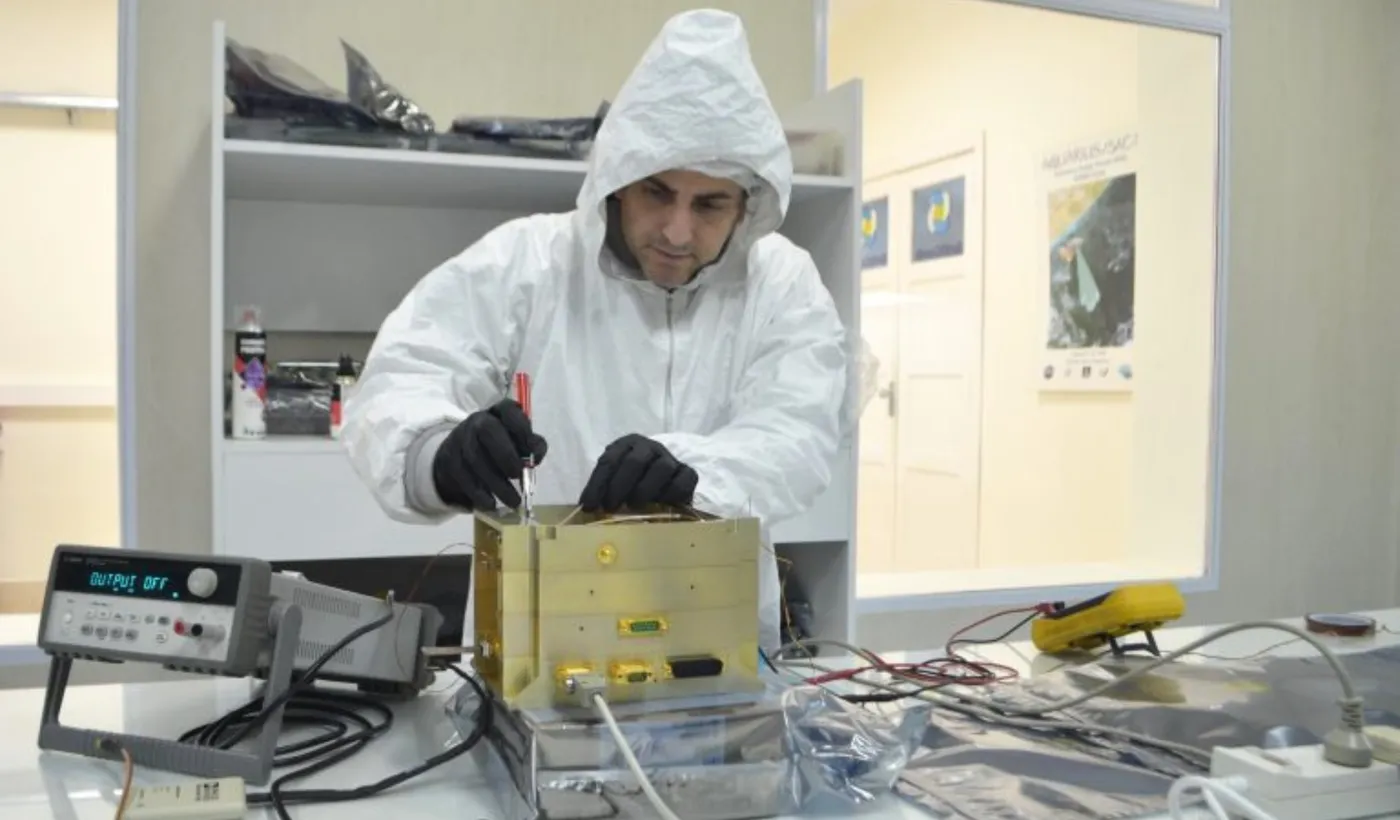
Currently, the satellite is 95% integrated and is in the environmental testing stage to ensure its resistance to launch.
A collaborative effort
The project involves key institutions in the country:
- INVAP.
- National Atomic Energy Commission (CNEA).
- National University of La Plata (UNLP).
- VENG S.A..
Dr. Carolina Tauro, principal investigator, highlighted that the Sabia Mar will offer a “permanent panoramic view” of the sea, something impossible to achieve with direct measurements.
The Sabia Mar represents a technological and scientific leap for Argentina. It will not only allow monitoring of illegal fishing and protect marine biodiversity, but it will also consolidate the country as a leader in the development of environmental observation satellites.
In a global context where food security and ocean conservation are priorities, this satellite will be a strategic tool for the future of the Argentine Sea.



