



The acidification of the oceans is one of the most important threats facing marine ecosystems worldwide, becoming increasingly dangerous, according to a study published in Global Change Biology.
To reach this discovery, members of the Marine Laboratory of Plymouth (PML) in the United Kingdom and the U.S. National Oceanic and Atmospheric Administration (NOAA) conducted different physical and chemical measurements in the upper layers of the ocean. The researchers combined these results with advanced computer models and studies of marine life.
This analysis led to the conclusion that by 2020 the global level of oceanic conditions was already close to the “danger zone” of ocean acidification. In fact, the results showed that in some regions it was surpassed.
Furthermore, the research revealed that at greater depths, around 200 meters below the surface, around 60% of these waters had crossed the acidification threshold, compared to 40% of surface water. This means that the survival of many marine creatures may be affected.
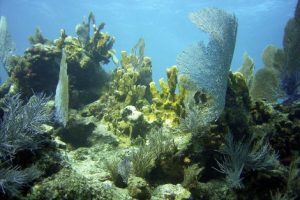
Corals as the most affected victims of this phenomenon
As a consequence of ocean acidification damage, around 43% of suitable habitats for tropical and subtropical coral reefs were lost. Sea butterflies, a key species in the food web, also lost 61% of their habitat, while coastal mollusk species lost 13% of their global coastal habitats.
But these are not the only affected species, as tropical coral reefs and deep-sea reefs serve as essential habitats and shelters for numerous species of the seabed, such as crabs, starfish, and other shellfish like oysters and mussels.

Ocean Acidification: a Silent Change
Ocean acidification is a chemical process that occurs when the oceans absorb part of the carbon dioxide (CO₂) emitted into the atmosphere, mainly from human activities like the burning of fossil fuels. When dissolved in water, CO₂ forms carbonic acid, which reduces the ocean’s pH and makes it more acidic.
This phenomenon alters the natural balance of seawater and especially affects organisms that rely on calcium carbonate to form their shells or skeletons, such as corals, mollusks, and certain types of plankton. As the water becomes more acidic, it becomes harder for them to develop and survive.
Acidification also impacts marine ecosystems as a whole, from the food chain to overall biodiversity. It is a growing global threat, often invisible but with profound consequences for marine life and the human communities that depend on it.



