



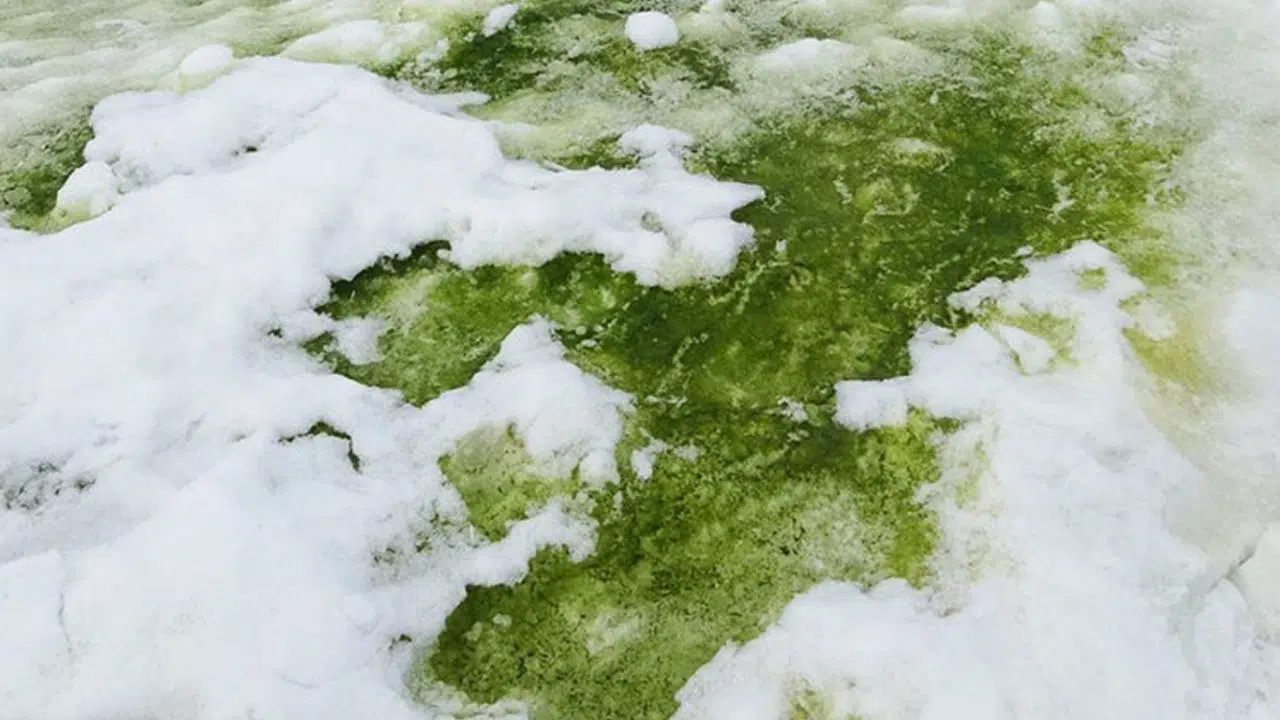
At the beginning of March, the satellites of the Copernicus program of the European Space Agency (ESA) captured surprising images: the ice in Antarctica showed an unusual green hue.
This phenomenon, observed by the Sentinel-3 satellites, is associated with the proliferation of phytoplankton, microscopic organisms that perform photosynthesis and tint the waters with a greenish color.
The role of phytoplankton
Far from being negative, this growth indicates a balanced marine ecosystem. The phenomenon occurs seasonally in the Southern Ocean:
- When the polar night ends and sunlight returns, the ice begins to melt.
- The melting releases nutrients that promote the growth of phytoplankton.
- Marine currents distribute the microorganisms, creating areas visible from space.
Phytoplankton is the base of the marine food web, essential food for krill and other organisms, as well as being crucial for the carbon cycle and oxygen production.
Changes observed in Antarctica
Recent studies show that climate change is altering these communities:
- Composition: diatoms predominated, but since 2016 an increase in cryptophytes and haptophytes has been observed, linked to the loss of sea ice.
- Biomass: in the Western Antarctic Peninsula an increase in biomass has been recorded, especially in the austral autumn.
- Distribution: they are found both on the surface and under the sea ice, being more abundant in coastal areas.
- Environmental impact: sea warming may affect the krill food web and reduce the region’s capacity as a carbon sink.
Importance of satellite monitoring
The Sentinel satellites allow these phenomena to be observed in real-time and at any point on the planet. Thanks to this technology, scientists can:
- Analyze the dynamics of marine ecosystems.
- Anticipate changes in the structure of phytoplankton.
- Evaluate the impact of global warming on biodiversity and the carbon cycle.
This type of monitoring is key to understanding how oceans regulate the climate and how the loss of sea ice is restructuring microorganism communities.
The green ice observed in Antarctica is not a dangerous anomaly, but a natural manifestation of phytoplankton growth. However, changes in its composition and distribution reflect the influence of climate change on polar ecosystems. Understanding these processes is essential to anticipate risks, design conservation strategies, and protect global climate stability.



