



The natural satellite will reach its full moon phase this weekend with the Snow Moon phenomenon, marking the peak of the lunar calendar during the winter in the northern hemisphere, according to EarthSky.
The astronomical calendar of February is set to welcome the Snow Moon, the most significant celestial event of the month that will take place this weekend.
This phenomenon occurs when the Moon is positioned on the opposite side of the Earth with respect to the Sun, allowing its visible face to be fully illuminated. On this occasion, the satellite will reach its maximum splendor on Sunday, February 1, positioning itself under the constellation of Virgo.
The name of this full moon does not refer to a change in the color or structure of the star, but rather has deeply rooted cultural origins in the traditions of the indigenous peoples of North America.
These communities named the Snow Moon the full moon of February because this month usually coincides with the most intense snowfalls and the lowest temperatures in the northern hemisphere, historically hindering hunting and gathering activities.
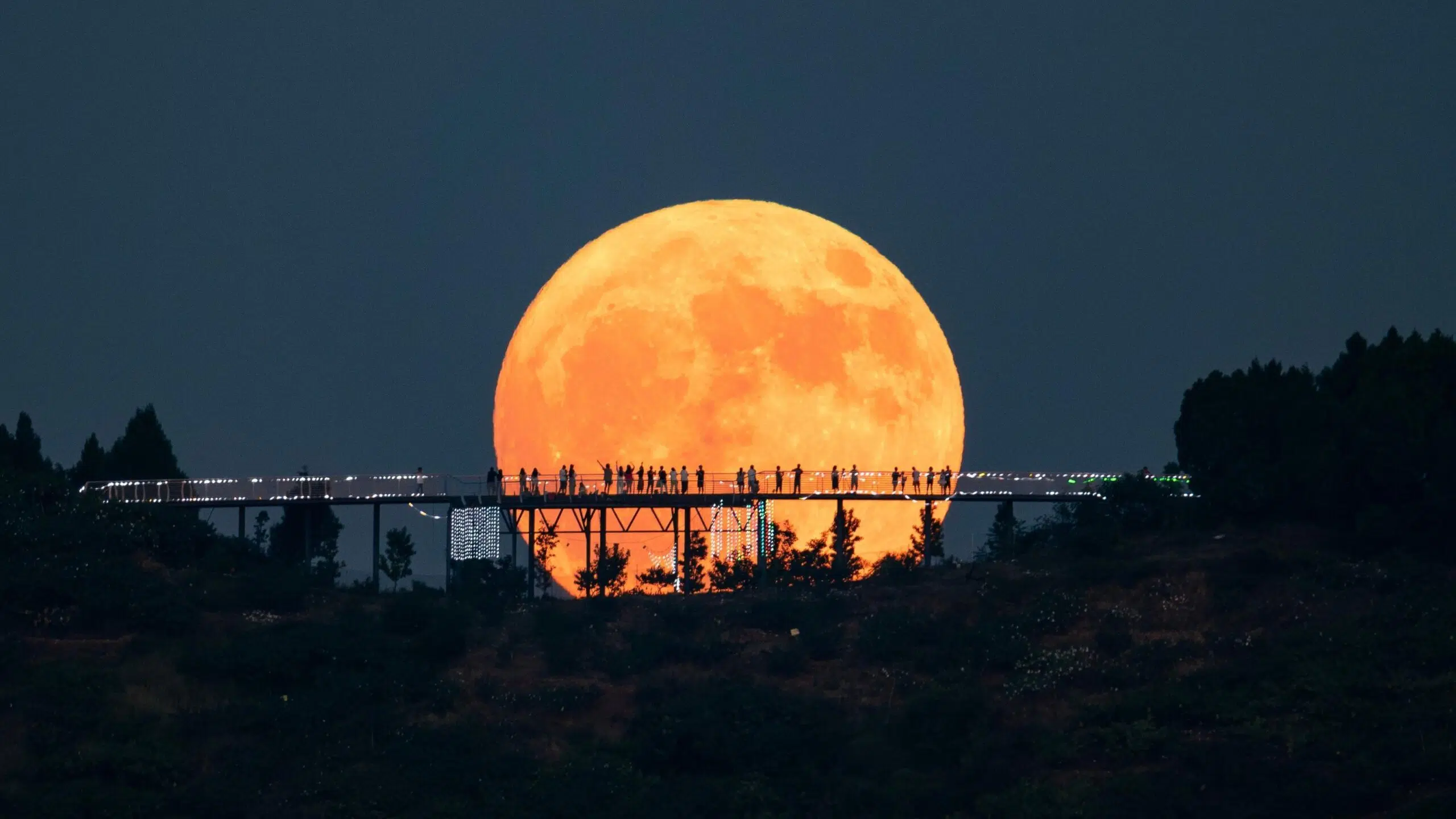
Unlike other events that require complex optical instruments, this full moon can be appreciated with the naked eye from any point on the planet, as long as the weather conditions and cloudiness allow it.
However, to obtain a superior visual experience, experts recommend moving away from urban centers with high light pollution.
From an astronomical perspective, this year’s Snow Moon is technically defined as a “micromoon“.
This term is used when the satellite is near its apogee, that is, at the point in its orbit farthest from the Earth.
As a result, the lunar disk may appear slightly smaller and less bright than during a supermoon, although for the average human eye this difference is usually almost imperceptible, maintaining all its visual splendor.
Full Supermoons of 2026
Scientists sky watchers can anticipate when to see supermoons in the night sky.
Supermoons occur when the Moon approaches the Earth during its orbit, making it appear more bright and more full than a regular full moon.
On average, the Moon is about 384,472 kilometers (238,900 miles) from the Earth. But the December supermoon will be the closest of the year, at 356,740 kilometers (221,667 miles), according to EarthSky.
These are the rest of the full moons in 2026, according to Farmers’ Almanac:
- March 3: Worm Moon
- April 1: Pink Moon
- May 1: Flower Moon
- May 31: Blue Moon
- June 29: Strawberry Moon
- July 29: Buck Moon
- August 28: Sturgeon Moon
- September 26: Harvest Moon
- October 26: Hunter’s Moon
- November 24: Beaver Moon
- December 23: Cold Moon



