



NASA, in collaboration with the National Snow and Ice Data Center of the United States, recorded the temperature in Antarctica and surprised with the lowest level ever documented.
In the Eastern region, they recorded a record of -93.2 °C. This was detected on August 10, 2010 in a high mountain range known as Dome Fuji. The finding, confirmed on December 9, 2013, and released these days, positions this region as the coldest place on the planet.
Temperature in Antarctica: an extreme and practically inaccessible environment
The area where the record was reached is located near a high ridge between Dome Argus and Dome Fuji, in the Eastern Antarctic Plateau, a vast expanse covered in ice and snow.
Access is extremely difficult due to the combination of extreme cold, altitude, geographic isolation, and logistical limitations for conducting on-site studies.
To confirm the record temperature, NASA used the Landsat 8 satellite and analyzed over 30 years of data. This value exceeded the previous record by just under -89 °C, consolidating the Antarctic Plateau as the coldest point on Earth.
The Antarctic Plateau, cold and dry: how it resembles Mars, according to scientists
In addition to its intense cold, the Antarctic Plateau is one of the driest places on the planet, with conditions comparable to those of the planet Mars. There, water only exists in the form of ice or vapor, and is rarely found in liquid form.
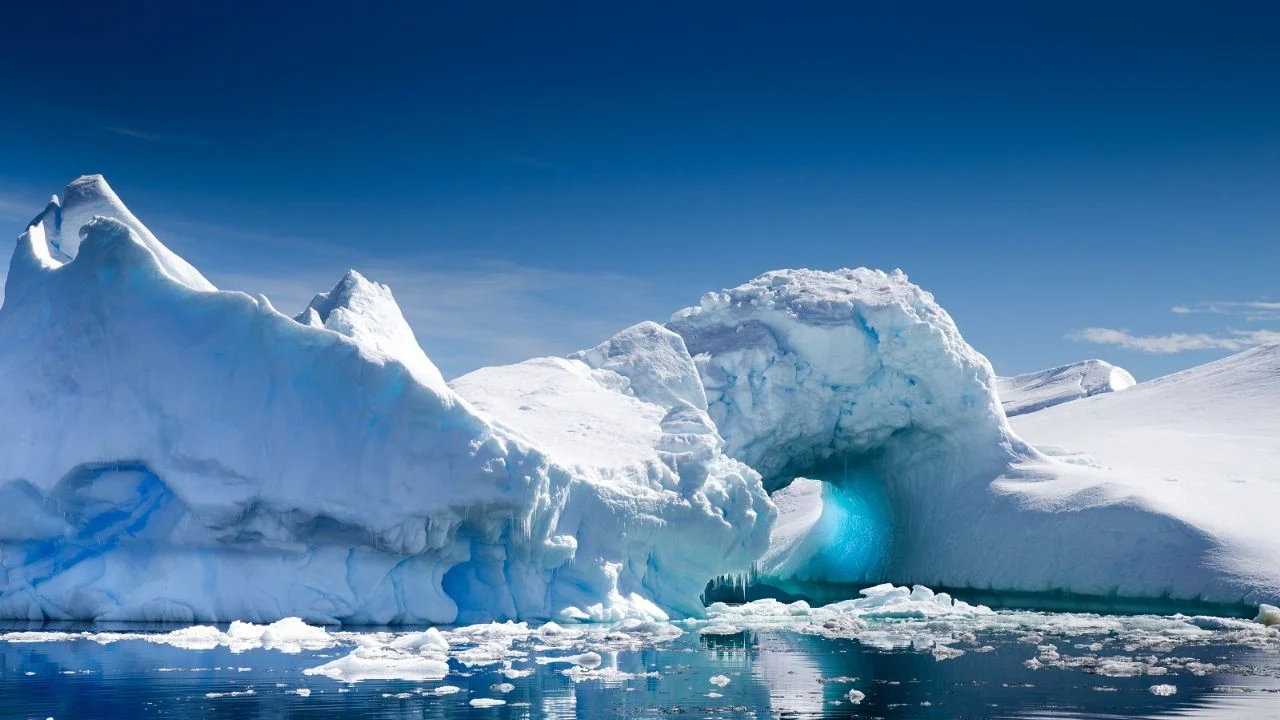 Temperature in Antarctica.
On Mars, the average annual temperature near the equator is around -58 °C, and the atmosphere contains very little water vapor. This similarity makes the Antarctic Plateau an ideal scenario for astrobiological studies.
Researcher Víctor Parro, from the Center for Astrobiology (CAB) and INTA, highlighted that this environment is one of the best terrestrial analogs to investigate the possibility of life on other planets or icy moons, such as Europa (Jupiter) and Enceladus (Saturn). Instruments designed for future space missions can be tested there.
The Antarctic Plateau, also called the plateau of the geographic South Pole, is located in the central part of Eastern Antarctica. It extends over 1000 kilometers to the east, covering the Queen Maud Land and the Australian Antarctic Territory.
Situated at over 3000 meters above sea level, it combines extreme temperatures with remarkable aridity.
Ice specialist Ted Scambos emphasized that this mark of -93.2 °C is “50 degrees colder than any recorded in Alaska, Siberia, or North Dakota.”



