



The sea and the pinguins marked the course of the life of Pablo García Borboroglu, a marine biologist born in Chubut who currently leads global efforts for the conservation of these birds. After more than three decades of tireless work, his commitment was internationally recognized with the prestigious title of Explorer of the Year 2025, awarded by Rolex and National Geographic.
Since he was a child, “Popi” felt a special connection with penguins, first in the stories of his grandmother and then in the real landscapes of Patagonia. That passion turned into a scientific career focused on protecting these endangered birds. Of the 19 existing species, almost half face some degree of danger.
Throughout his 36-year career, the conservation actions driven by Borboroglu benefited about 2.5 million penguins in more than 130,000 square kilometers of natural habitat. His work, which integrates science, outreach, and public policies, was key to raising awareness of the threats facing these species.
In addition to his fieldwork, Borboroglu represents an inspiring figure that demonstrates that science done in Argentina can have a global impact. With this new recognition, he joins the select group of explorers driving real changes in planet protection.
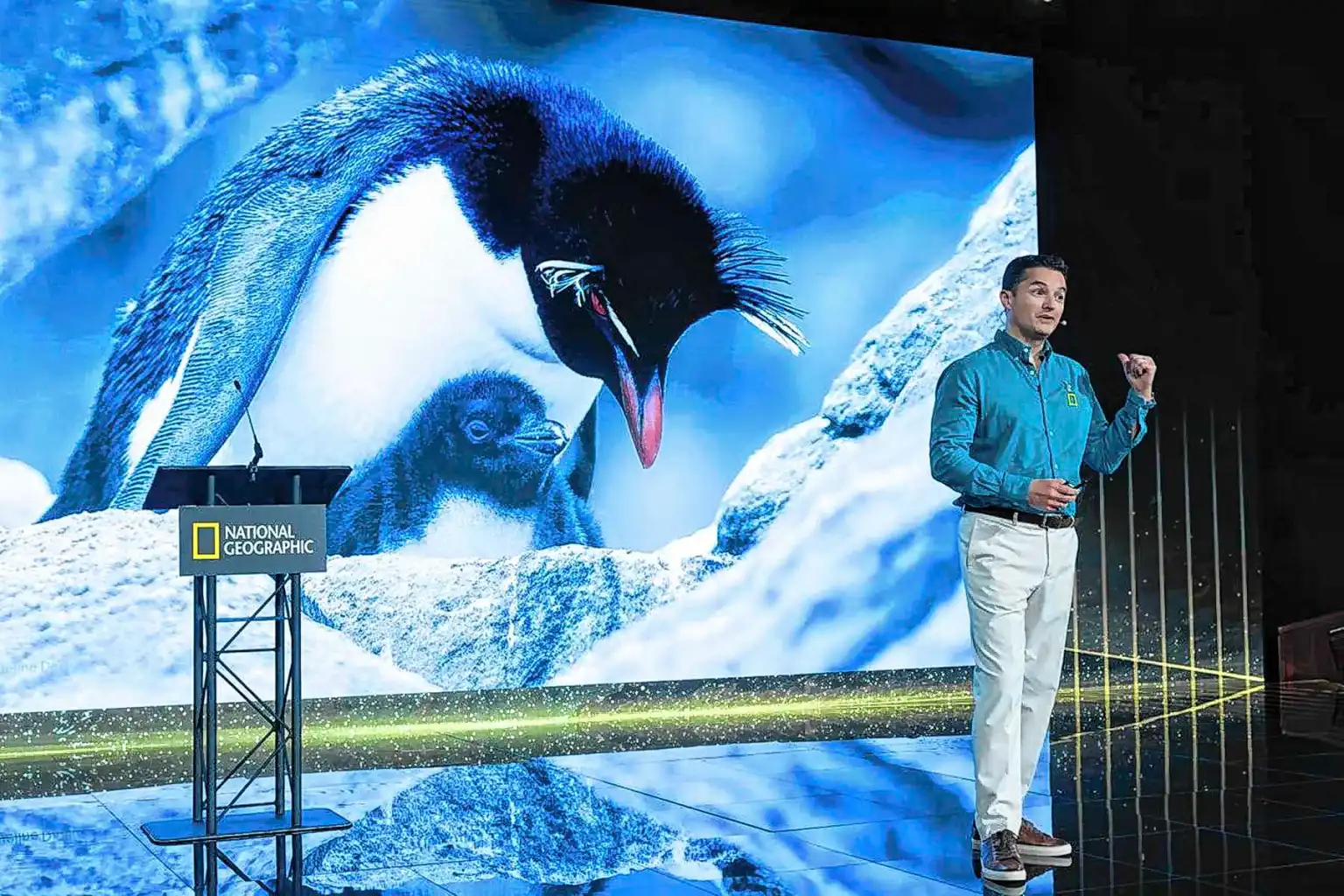
The impact of a conservation leader
The title of Explorer of the Year not only acknowledges the scientific work of Borboroglu, but his ability to mobilize collective awareness. Alongside filmmaker Bertie Gregory, with whom he shared the award, he produced the documentary series Secrets of the Penguins, premiered on Disney+ under the production of James Cameron.
The collaboration between science and art allowed bringing the story of penguins to the general public, highlighting not only their beauty but also their vulnerability to climate change, industrial fishing, and habitat loss.
Such productions, along with educational campaigns and legal actions in defense of the colonies, positioned Borboroglu as an undisputed reference in marine wildlife conservation. In 2023, he became the first Latin American to receive the Indianapolis Prize, considered the Nobel Prize of conservation.
The impact of his work was also recognized in Argentina, where he was honored after receiving the international award. His story demonstrates that constant work and commitment can pave the way even from contexts far from the major centers of scientific power.
The Global Penguin Society: science and joint action
As president of the Global Penguin Society, Borboroglu leads an international network that combines science, education, and public policies to protect these marine birds.
The organization works on the conservation of the world’s 19 penguin species, assessing their threats, restoring habitats, and promoting protected areas. It also collaborates with governments in designing regulations and with schools to raise environmental awareness from childhood.
One of its fundamental pillars is to generate applied research, meaning producing scientific knowledge that directly serves to make environmental management decisions. The Society was crucial in protecting areas like Punta Tombo and achieved progress in countries such as South Africa, Australia, and New Zealand.
Moreover, it promotes an interdisciplinary approach: not only biologists participate, but also educators, communicators, engineers, and economists, under the notion that conservation must be a collective effort.

Inspire, protect, transform
Borboroglu’s message is clear: conservation is not solely the task of scientists. Everyone, from different fields, can contribute to protecting biodiversity.
The story of this committed Patagonian shows that it is possible to act on a local scale and make a global impact. The recognition from National Geographic and Rolex is more than a personal distinction, it is a collective drive towards a fairer future for wildlife.
Currently, millions of penguins and thousands of people benefit from the work of someone who decided to follow these birds to the most remote corners of the planet. His legacy is just beginning.



