



The Ozone Layer is defined as the zone of the Earth’s atmosphere, located mainly in the stratosphere, which contains a high concentration of ozone (O3). In the past, this layer, which is responsible for protecting Earth from harmful solar radiation, was severely affected, leading to measures being taken for its recovery.
However, what may seem like good news can become a concerning factor, as the ozone layer not only protects the planet from solar radiation but also retains heat due to its greenhouse effect. This factor, combined with the recovery, would lead to greater warming of the Earth, according to a new study led by the University of Reading, England.
This research revealed that it is expected the ozone will cause an additional 0.27 watts per square meter of warming. According to experts, this figure, used to measure the amount of additional energy retained per square meter of Earth’s surface, would make ozone the second contributing factor to global warming by 2050, after carbon dioxide.
The article, published in Atmospheric Chemistry and Physics, presents the findings obtained through computer models that simulated how the atmosphere will change by the mid-century. For this, scenarios with low implementation of controls on air pollution were considered, along with the gradual elimination of CFCs and HCFCs, the gases that contribute to global warming, as stipulated by the Montreal Protocol in 1987.

A recovery that adds and subtracts
Due to the damage to the ozone layer, several countries chose to eliminate CFCs and HCFCs gases, considering it a way to mitigate climate change. While this measure helped reverse the situation, the ongoing heat increase, which will continue if the layer keeps regenerating, cancels out the climatic benefits of their elimination.
There is no doubt that protecting the ozone layer is essential for human health, preventing skin cancer, and shielding the planet from ultraviolet radiation. It is also necessary to review climate policies to prevent further warming.
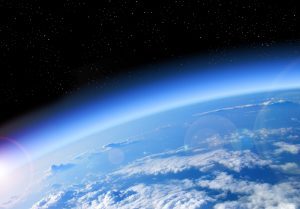
The ozone layer: a vital shield
The ozone layer is a layer of gas located in the stratosphere, between 15 and 35 kilometers in altitude. Its main function is to absorb a large part of the ultraviolet radiation from the sun, preventing it from reaching the Earth’s surface in excess and thus protecting the health of living beings.
For decades, compounds like chlorofluorocarbons (CFCs) caused its weakening, leading to the so-called “ozone hole.” This decrease allows harmful radiation to enter, which can cause skin cancer, cataracts, and severely affect wildlife, especially the most sensitive marine organisms.

