



The planet harbors an immense **biological diversity**, estimated at nearly nine million [animal species](https://noticiasambientales.com/ciencia/una-planta-japonesa-sorprende-al-mundo-con-su-estrategia-de-mimetismo-se-hace-pasar-por-hormiga-para-atraer-moscas/). However, only a fraction of them have been described and cataloged, reflecting the magnitude of what is still unknown about the **global fauna**.
Among these creatures, ants stand out not only for their abundance but also for the **evolutionary enigmas** they pose. It is estimated that there are 20 quadrillion of these insects on Earth distributed among thousands of **species**.
In **Spain**, for example, there are nearly 300 ant species, some of them endemic and others invasive. But within this multitude, a recent discovery revealed an unexpected phenomenon: the ability of a **species of ant** to generate individuals belonging to a different species.
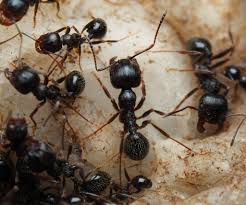
This phenomenon was discovered in the ant *Messor ibericus*, a common harvester ant in Southern Europe. Research conducted in several colonies showed that their queens, under certain conditions, can produce males that genetically correspond to another species: *Messor structor*. This process represents a unique case in the **animal kingdom**.
## Xenoparidy: a surprising mechanism
The phenomenon was named “**xenoparidy**” and occurs thanks to a unique **biological mechanism**. The queen of *M. ibericus* stores the sperm of *M. structor* males in a specialized organ called the spermatheca. Instead of using it to fertilize eggs in the usual way, she uses it as a **genetic template** to **clone males** of the other species, which are born within her own colony.
This [discovery](https://www.nature.com/articles/s41586-025-09425-w), published in the journal *Nature*, is surprising not only for the genetic complexity it implies but also for the geographical distance between **both species**. While *M. ibericus* is mainly found in Southern Europe, *M. structor* inhabits areas in the east of the continent. However, hybrid colonies were recorded in places as distant as Sicily, raising questions about dispersal and adaptation mechanisms.
The cloning between species without human intervention demonstrates that **nature** still holds unknown strategies to ensure survival. In the case of ants, this system seems to be a way to ensure the constant production of individuals that reinforce the colony, strengthening its ability to collect food and **build nests** in changing environments.

## Is natural cloning between species possible?
The xenoparidy documented in Iberian ants opens the door to reflect on whether this phenomenon can occur in other **animals**. Although **artificial cloning** is a field widely studied by science, **nature** seems to have found its own ways to replicate **genetic information** from different species.
So far, the detected cases are limited to the world of **social insects**, where the complexity of colonies demands innovative survival mechanisms. However, this discovery broadens the horizon of **evolutionary biology**, as it suggests that **natural cloning** between species, without human intervention, is possible under certain ecological and genetic conditions.
The importance of this discovery goes beyond science and is directly linked to **conservation**. Understanding how species like *M. ibericus* have developed this strategy helps to understand the adaptability of **nature** to **environmental changes**. It also invites us to reflect on the fragility of **ecosystems** and the need to protect them to continue discovering the secrets they still hold.
Ultimately, the case of Iberian ants demonstrates that the planet still hides unsuspected **biological processes**. Natural cloning between species, far from being science fiction, is already an **observable reality** in the world of insects, reminding us that life has infinitely more complex resources than we imagine.



