



Texas scientists have created a revolutionary method to extract drinkable water from the air. Up to 14 liters per day can be obtained.
It is a system that allows to convert almost any organic waste into a collector. The essential difference with previous methods is that it does not require specific materials.
Drinkable water from the air: how they extract it
Food scraps, fallen branches, and other natural materials are the basis of the system created by researchers, according to the University of Texas in Austin.
It is based on molecularly functionalized biomass hydrogels. It allows to transform a wide variety of natural products into adsorbents, materials capable of absorbing liquids.
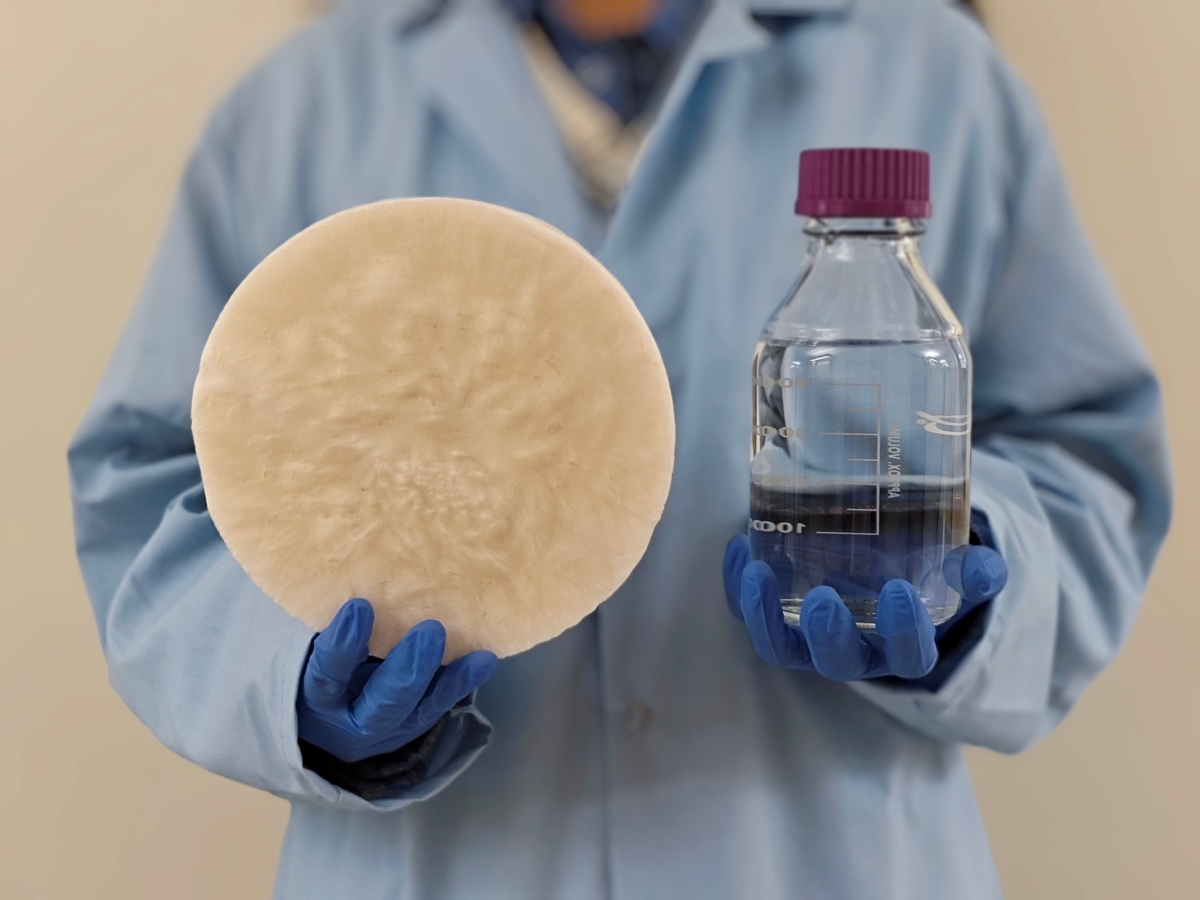 They created an original method to extract water from the air.
By combining these adsorbents with a slight heating process, researchers can collect liters of drinkable water directly from the atmosphere, even in low humidity conditions.
“With this breakthrough, we have developed a universal strategy of molecular engineering that allows to convert diverse natural materials into highly efficient adsorbents,” explained Guihua Yu, professor of materials science and mechanical engineering at the University of Texas.
“This represents a new way of conceiving sustainable water collection, taking a big step towards practical systems for households and small communities,” he added.
The research, which was published in the journal Advanced Materials, opens new possibilities for obtaining water in regions with water scarcity.
Up to 14 liters in a day
In field tests, as reported, researchers managed to generate 14.19 liters of drinkable water per kilogram of adsorbent per day.
This greatly exceeds most existing adsorbents, which only produce between 1 and 5 liters per kilogram per day.
Instead of relying on the traditional approach of “selecting and combining” specific materials, this molecular strategy allows to convert almost any biomass into an efficient water collector.
 Ensuring access to drinkable water.
Unlike current synthetic adsorbents, which require petrochemicals and high energy consumption, the hydrogel developed by the University of Texas team is biodegradable, scalable, and also energy efficient.
“At the end of the day, access to drinkable water must be simple, sustainable, and scalable,” pointed out Weixin Guan, lead researcher of the study. “This material allows us to harness nature’s most abundant resources to generate water from the air, anytime and anywhere,” he concluded.


