



A recent report from the Joint Research Centre of the European Commission identified 12 nations facing the highest level of water vulnerability in the world. The research uses a risk scale from 0 to 10 and reveals that Africa and Asia concentrate extreme risk scenarios, where droughts could trigger humanitarian crises, food insecurity, and severe economic impacts.
The data adds to warnings from international organizations. Since 2000, the frequency and duration of droughts increased by 29%, reflecting a phenomenon that is becoming more recurrent and no longer limited to arid regions, but threatening ecosystems and communities on all continents.
Beyond the environmental impact, droughts represent a huge challenge for the global economy. The World Bank projects that water scarcity could reduce the GDP of some regions by up to 6% by 2050, driving massive migrations and potential conflicts over natural resources access.
The African continent is the most affected by this vulnerability. Mauritania, Mali, Niger, Somalia, Zimbabwe, Namibia, and South Africa are among the countries in a critical state, where rainfall reduction and soil degradation directly threaten subsistence agriculture and millions of families depending on it.
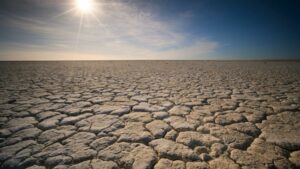 Twelve countries in Africa and Asia are at extreme risk of drought.
A Threat Expanding to More Regions
In Middle East and Asia, the situation is no less concerning. Syria, Iraq, Afghanistan, and Tajikistan face extreme conditions due to the combination of climatic phenomena, overexploitation of water resources, and geopolitical instability. These factors reinforce each other, weakening the resilience of ecosystems and the societies depending on them.
In South America, the global map places Bolivia as the most exposed nation, with maximum risk by 2050. Although other countries in the region show high levels of vulnerability, it is Bolivia that concentrates a critical situation due to the reduction of Andean glaciers and increasing pressure on its freshwater sources.
The described panorama warns that drought is not just a natural phenomenon, but a multidimensional problem exacerbated by human action and the lack of sustainable management measures. Its impact ranges from biodiversity loss to reduced food security and the potential for social and political tensions.
Factors Triggering a Drought
The development of a drought is conditioned by multiple environmental and climatic factors that act together. One of the most decisive factors is the prolonged lack of precipitation, a natural phenomenon exacerbated by climate change that alters traditional rainfall patterns in different regions of the planet.
Excessive evaporation is also a key element. In areas with high temperatures, water evaporates faster from rivers, lakes, and soils, reducing available water reserves. This process particularly affects agricultural ecosystems, where crops rely on soil moisture for their development.
Another decisive factor is the degradation of ecosystems by human activities such as deforestation, overgrazing, and overexploitation of aquifers. These processes reduce the soils’ capacity to retain water and promote desertification. Added to this is the extreme climatic variability, with increasingly intense heatwaves, exacerbating environmental dryness and limiting the recovery of affected territories.
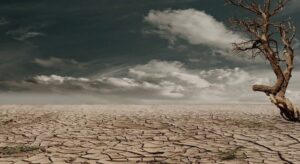 Lands are drying up worldwide and the UN warns.
A Global Challenge with Pending Solutions
The risk map developed by the European Commission shows that drought will be one of the great challenges of the 21st century. Without urgent measures of sustainable management, the problem will deepen in the coming years, affecting both vulnerable countries and developed economies.
Investing in resilient water infrastructures, restoring degraded ecosystems, and promoting efficient water use are necessary steps to address the crisis. International cooperation will also be crucial, as water is a shared resource that knows no boundaries.
In a scenario where climate pressure intensifies, drought ceases to be a silent phenomenon and becomes a direct threat to life, ecosystems, and the stability of nations. Its management will largely determine the planet’s sustainability in the coming decades.


