



An international study revealed that, faced with a warming world, trees could release less carbon dioxide (CO2).
The analysis was led by Professor Ian Wright, chief scientist at the Hawkesbury Institute for the Environment at the University of Western Sydney. These tree releases, as a result of their respiration, could be much lower than previously thought.
Less CO2 in warmer climates: what science says
Contrary to the widespread belief that global warming will increase the release of CO2 by trees, the findings suggest that this process may not increase as drastically.
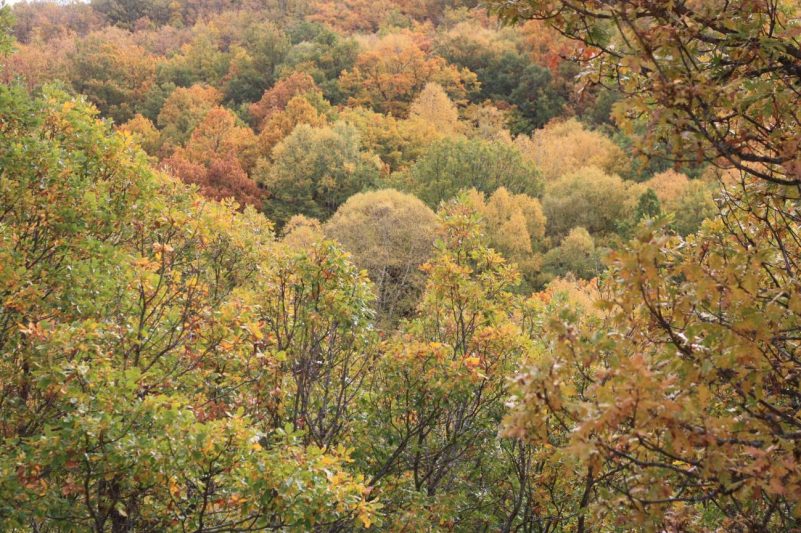 How global warming would impact trees.
The research, published in the journal Science, provides crucial information for predicting the amount and movement of CO2 in our ecosystems as a result of rising temperatures.
Implications for the carbon cycle
This discovery reinforces the understanding of thermal acclimation of plants. That is, how they respond to temperature changes.
The respiration of trees, involving the release of CO2 as a byproduct of energy generation for growth, significantly contributes to the Earth’s annual carbon flux.
Understanding how this process is affected by global warming is essential for evaluating the role of forests in the carbon cycle.
So far, scientists have long anticipated that global warming will inevitably cause plants to increase the amount of carbon dioxide they release into the atmosphere.
This, in turn, will cause even more warming. “This is likely to be true, but this latest research reveals that carbon flows in warmer future climates will not increase as much as currently believed,” Professor Wright stated in a press release.
Professor Wright and his colleagues tested their theory with the analysis of a dataset on wood respiration. It consists of thousands of measurements made on hundreds of species, in field sites spanning the world’s major climatic zones.
The importance of the new revelations
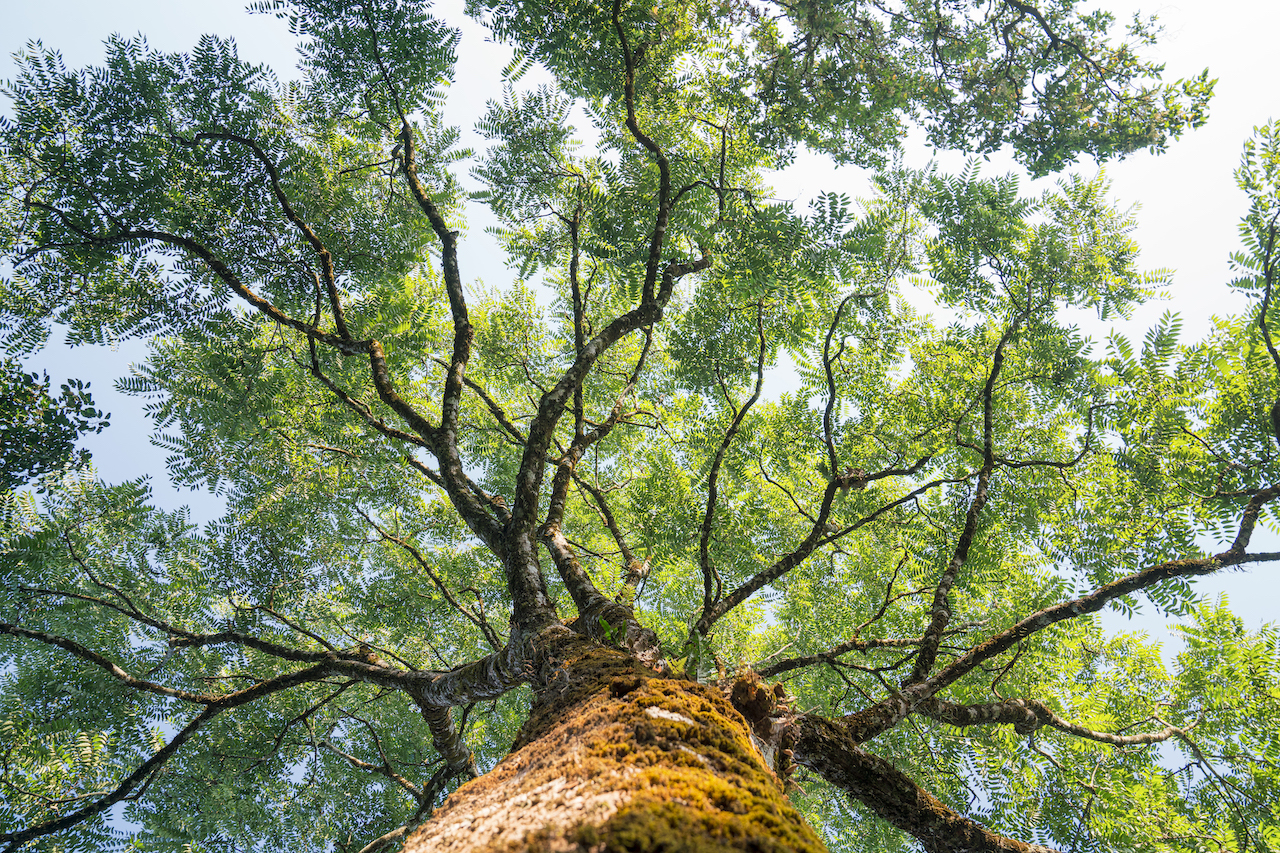 Trees’ response to a warming planet.
The results of this study challenge previous expectations about tree behavior in a warmer climate. They also highlight the need for ongoing research to better understand carbon dynamics in our ecosystems.
This is fundamental knowledge to develop effective climate change mitigation strategies and to sustainably manage our forest resources.


