



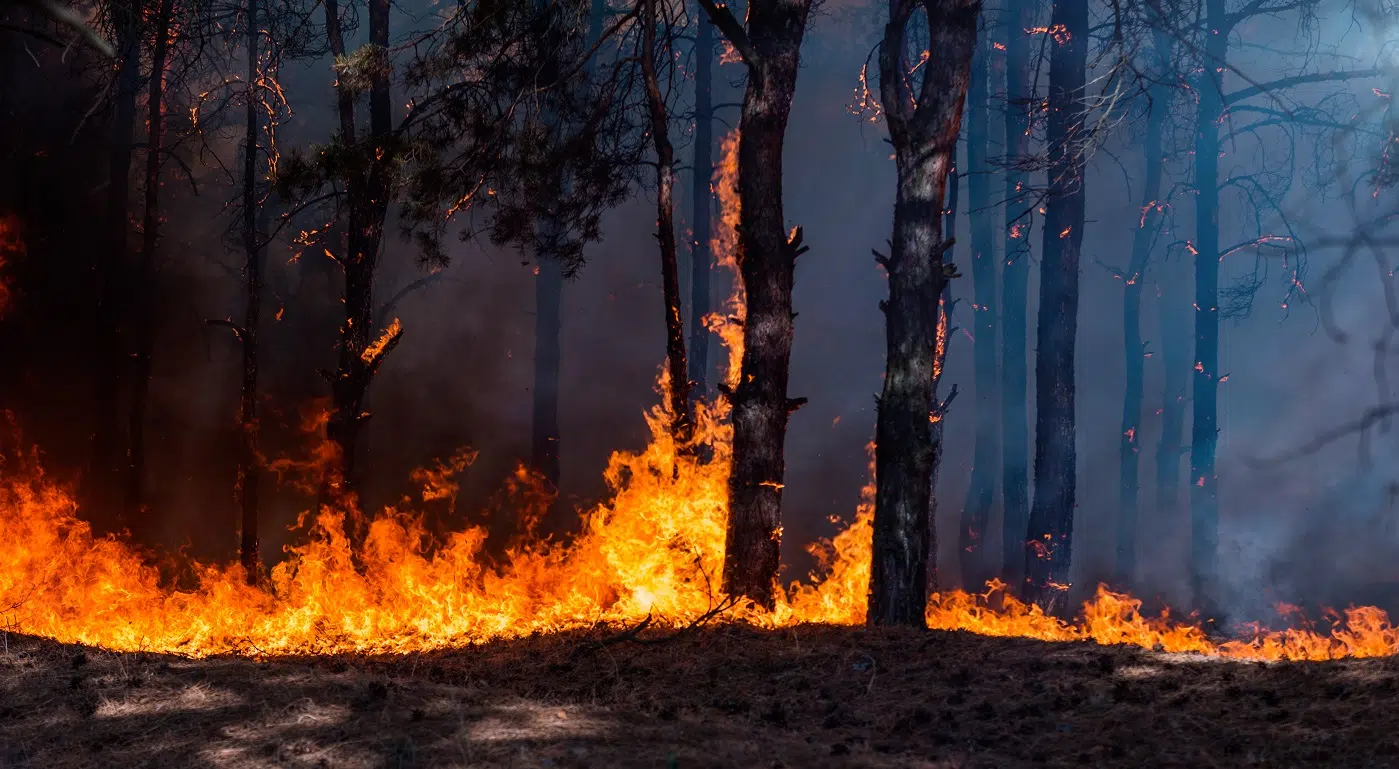
An international study published in the journal Environmental Science & Technology revealed that wildfires and controlled burns release up to 21% more hazardous organic compounds for health than previously calculated.
This means that the air in many regions may be more harmful than previously thought, with direct consequences for public health and the environment.
The smoke travels beyond the fire
The particles and gases emitted by fires can travel long distances, affecting populations living far from the fire sources. Therefore, experts warn that the pollution generated is a global problem and not just a local one.
The work was conducted by researchers from the Tsinghua University, with support from the National Natural Science Foundation of China and other centers, using fire data recorded between 1997 and 2023.
What compounds are released
Each year, thousands of hectares of forests, grasslands, and peatlands burn worldwide, releasing water, ash, and carbon compounds. Among them are:
- VOCs (volatile organic compounds): gases that evaporate quickly and can exacerbate respiratory diseases.
- IVOCs and SVOCs (intermediate and semi-volatile compounds): released at higher temperatures and form fine particles capable of penetrating the lungs, increasing health risks.
Many previous studies did not include these compounds due to the difficulty of measuring them, leading to an underestimation of the pollution magnitude.
Study results
Researchers calculated that wildfires release at least 143 million tons of organic compounds per year, 21% more than previously estimated.
- Grasslands generate two-thirds of these emissions.
- Jungles, boreal forests, peatlands, and temperate forests contribute the rest.
- Southern Africa is the region with the highest level of emissions, with 4.4 tons per square kilometer each year, far exceeding other areas such as northern Africa, South America, and equatorial Asia.
Implications for health and climate
The organic pollution from fires is equivalent to 79% of what human activity produces, and the most harmful compounds are present at similar levels.
Researchers warn that the mix of smoke with urban pollution further complicates air quality in regions like equatorial Asia, northern Africa, and Southeast Asia. These areas require specific strategies to address the problem.
Next steps
The study provides a solid basis for improving air quality models, assessing health risks, and designing climate-related policies. However, scientists acknowledge that more research is needed to better understand how intermediate and semi-volatile compounds affect human health.
The conclusion is clear: adding up all the invisible compounds allows us to gauge the true impact of fires on the air we breathe, and underscores the need for differentiated policies to reduce both fire pollution and human activity pollution.


