



Andrés Peregrosa, an electronic technician with over 30 years of experience in the plastic industry, decided in 2023 to take a step further: instead of just repairing and automating machines, he began to transform plastic waste into raw material to manufacture new useful products.
This is how Maplasto was born, a company that converts composite plastics —difficult to recycle by traditional methods— into elements for industry, agriculture, and urbanism.
Innovative Products
Maplasto manufactures:
- Plastic pallets for the industry.
- Posts, rods, gates, and corrals for the agricultural sector.
- Crossarms for medium voltage lines.
- Modular deck floors, parquet-like boards, and floors for breeding farms.
- Urban furniture such as tables, chairs, and baskets.
The venture works with high-barrier multilayer plastics, like those used in food packaging or cigarette paper, which are often discarded due to their recycling complexity.
International Recognition
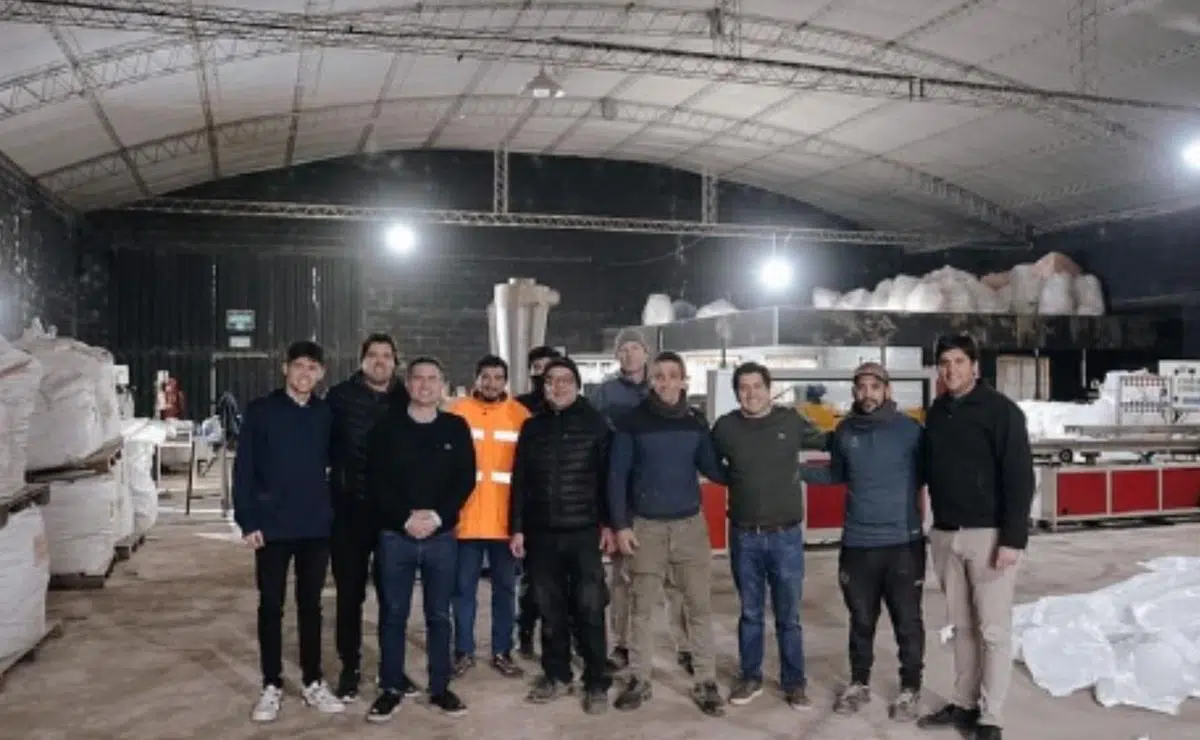
The factory is composed of 10 people, including partners and local employees. In December 2025, Maplasto received the Sustainable Leadership Award granted by the British Chamber of Commerce and the British Embassy, in recognition of the volume of waste processed and the positive impact on pollution reduction.
Economic Challenges
Although sales still do not cover fixed costs, Peregrosa remains optimistic in a dialogue with Cadena 3: “Every day there are signs of something good”. The company continues to conduct tests to support the commercialization of its products and consolidate its place in the Argentine circular economy.
Importance of Plastic Recycling in Argentina
Plastic recycling is key to reducing pollution and generating green jobs:
- Environmental impact: prevents waste from ending up in seas and rivers.
- Energy savings: recycling PET and polyethylene consumes less energy than producing virgin plastic.
- Circular economy: transforms waste into products with economic value, such as urban furniture or packaging.
- Challenges: although in 2021, 64% of Argentines separated waste, the industry still faces infrastructure and awareness issues.
New Developments
In Argentina, recycling reached a rate of 17% in 2024, revaluing about 263,500 tons. However, the industry operates with more than 50% idle capacity, due to the lack of separation at source and the competitiveness of virgin plastic.
Among the most outstanding products are:
- Plastic wood for posts, school benches, and structural profiles.
- New packaging and bags made from recycled pellets.
- Design objects such as planters, lamps, and organizers.
The case of Maplasto represents an example of innovation and environmental commitment in Argentina. By transforming complex plastic waste into durable products, it contributes to the circular economy, reduces pollution, and paves the way for new green job opportunities.
Its experience demonstrates that waste can become valuable resources when technology, creativity, and environmental awareness are combined.



