



More and more everyday products are changing their composition to care for the environment. Biodegradable materials integrate into nature without polluting, because they can decompose by the action of microorganisms in a short time.
Unlike conventional plastic, which takes centuries to disappear, these materials return to the natural cycle in weeks or months. They reduce waste, prevent garbage accumulation, and help curb soil and ocean pollution.
Many of them come from renewable resources such as starch, cellulose, vegetable peels, or even food waste. This not only decreases environmental impact, but also promotes circular and more sustainable economies.
 Biodegradable plastics.
From the kitchen drawer to compost
At home, it is possible to find more biodegradable items than one imagines. Unbleached paper napkins, pasta straws, bamboo toothbrushes, or compostable containers for takeout are accessible and effective examples.
Also, cornstarch bags that degrade in compost in a few days, or beeswax wraps, reusable and plastic-free. Even cardboard cotton swabs or natural latex gloves serve this green purpose.
Adopting these materials in daily life involves a simple yet powerful decision. It is not just about reducing the use of plastics, but about opting for a more harmonious way to coexist with the planet in everyday life.
What is the biodegradation process and how long does it take?
Biodegradation is a natural process by which certain materials decompose thanks to the action of microorganisms present in the environment, such as bacteria, fungi, and enzymes. This transformation not only changes their appearance but also their chemical composition, until their basic elements, such as carbon or hydrogen, reintegrate into the environment.
The time it takes for a material to biodegrade varies widely. Organic waste such as food scraps or untreated paper can disappear in days or weeks. In contrast, materials like conventional plastic can take hundreds or even thousands of years to fully decompose.
Environmental conditions also influence this process: temperature, humidity, oxygen presence, and microbial activity determine the speed at which a material decomposes. The same object can degrade quickly in a composter but remain intact for years in a landfill.
An important challenge is the lack of clear regulation on what qualifies as biodegradable material. There is no official time limit to determine this classification, which can lead to confusion among consumers and favor unsustainable practices under an ecological appearance.
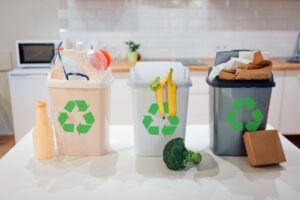 Compostable and biodegradable
A possible and necessary transition
Choosing biodegradable does not mean giving up convenience but rethinking consumption. The transition to environmentally friendly materials is underway and begins with the simplest habits: how we shop, how we use, and how we dispose.
Change is within our reach and, above all, in daily decisions. By choosing products that return to the earth without harming it, we also sow a cleaner, healthier, and fairer future for all.


