



The Government of the City of Buenos Aires (GCBA) officially presented the Trambús CABA project in a public hearing, an initiative of sustainable mobility that will begin implementation in 2026.
It is a system of high-capacity electric buses that will run on exclusive corridors and connect key areas of the city, with the aim of reducing emissions, improving connectivity, and promoting urban equity.
First route: Line T1 between Aeroparque and Sáenz
The initial route, called T1, will run through the city from north to south, from Aeroparque to the Sáenz Transfer Center in Nueva Pompeya, passing through eight neighborhoods in six districts. The route will include:
- 71 stops (36 southbound, 35 northbound), every five blocks
- Connection with five subway lines: D, B, A, E, and H
- Estimated frequency: one service every four minutes during peak hours
- 50 units assigned to the company Megacar
Types of stops and vehicles
The stop stations will be divided into three formats:
- Exclusive central lanes, similar to the Metrobús
- Lateral stops, like conventional buses
- Iconic stops, located at strategic nodes such as subways and Aeroparque
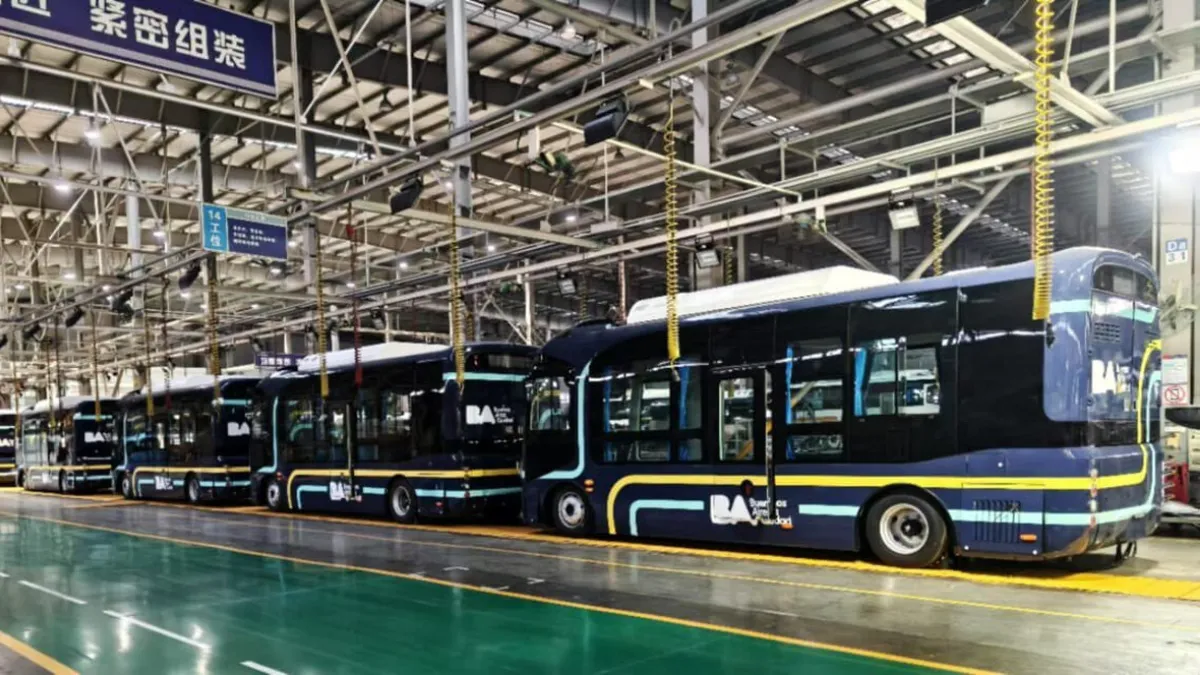
The electric vehicles will be presented in two versions:
- Standard model of 12 meters
- Articulated model of 18 meters
Second line: T2 between Belgrano C and San Pedrito
The Line T2, scheduled for 2027, will connect Belgrano C (Mitre Railway) with San Pedrito (Line A), passing through neighborhoods such as:
- Villa del Parque, Agronomía, Parque Chas, Villa Pueyrredón, and Villa Urquiza
- Connections with subway: Congreso de Tucumán (Line D) and San Pedrito (Line A)
Technology, inclusion, and sustainability
The Trambús CABA stands out for incorporating:
- Electric propulsion: emission-free, silent, and rechargeable at stations
- Intelligent systems: cameras, driving sensors, and assistance
- Universal accessibility: low floor and adapted design
- Gender equity: priority for female drivers
Environmental and social benefits
- Reduced atmospheric and noise pollution
- Greater energy efficiency per passenger
- Promotion of active and healthy mobility
- Reduction of road accidents
- Equitable access to urban opportunities and services
Complementary initiatives in sustainable mobility
- 277 km of bike lanes and expansion of the Ecobici system
- Metrobús corridors and progress on the Line F subway
- Pedestrianization of streets and policies to discourage the use of private cars
A more connected, clean, and inclusive city
The Trambús CABA represents a firm step towards a more livable city, where electric public transport becomes the axis of the urban energy transition.
Connecting neighborhoods, reducing emissions, and promoting equity, Buenos Aires positions itself as a regional leader in sustainable mobility.



