



In the midst of the environmental crisis and the search for more sustainable materials, an innovative proposal emerges: building homes with industrial hemp, using a bioconcrete known as hempcrete.
This material, already applied in Europe and the United States, is beginning to make its way in Argentina thanks to the legal framework that enables the development of cannabis and industrial hemp for productive purposes.
What is hempcrete?
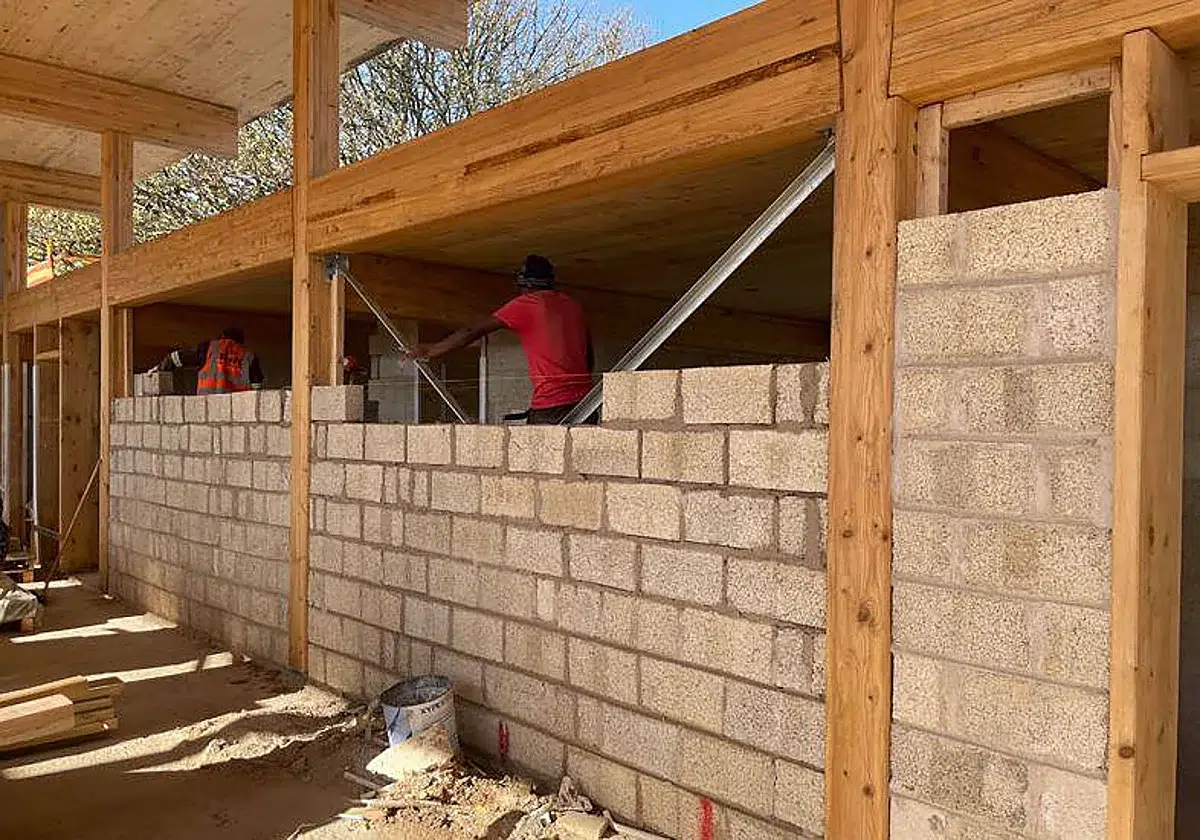
Hempcrete is a mixture of fibers from the cannabis stalk, lime, and water. It is used as a filler material for walls, insulation, and coatings, and although it does not replace load-bearing structures, it offers multiple advantages:
- Lightweight and recyclable.
- Regulates humidity and prevents mold.
- Thermal and acoustic insulation.
- Fire resistant.
- Captures carbon during its useful life, becoming an ally against climate change.
Argentinian context
The enactment of Law 27.669 opened the door to the development of industrial hemp in Argentina, not only for medicinal purposes but also for productive ones. This spurred pilot projects, university research, and ventures exploring the potential of hempcrete to solve typical local housing problems, such as humidity and low thermal efficiency.
Additionally, the country has the ARICCAME (Regulatory Agency for the Hemp and Medicinal Cannabis Industry), which regulates the value chain and enabled the first experimental harvest after 50 years of prohibition.
Environmental and social advantages
Industrial hemp stands out for:
- CO₂ capture and low environmental impact.
- Rustic cultivation, requiring few inputs and helping soil remediation.
- Productive diversification, generating added value and employment.
- Multiple applications: construction, textiles, food, and bioplastics.
In construction, hempcrete is used to manufacture panels, blocks, and insulating coatings. Its “breathable” nature improves indoor air quality and prevents condensation.
Obstacles and challenges
The main challenge in Argentina is not technical, but cultural and regulatory. The association of cannabis with recreational use generates prejudices, and there are still no widely adopted construction standards for this material.
However, with an expanding hemp industry and a growing demand for sustainable solutions, houses made with cannabis are no longer a futuristic curiosity and are beginning to emerge as a real alternative for 21st-century housing.
Historical roots and current trials
Hemp has a history in Argentina: it was promoted by Manuel Belgrano in the 19th century for naval and textile uses. Today, the INASE (National Seed Institute) authorized the import of seeds to validate varieties adapted to different ecosystems. Trials in regions like the Chacra Experimental El Pato explore its integration into productive rotations.
Houses made with cannabis represent a sustainable innovation that combines agricultural tradition with modern technology. With hempcrete, Argentina has the opportunity to move towards more efficient, ecological, and resilient construction, aligned with the challenges of climate change and the need to diversify its productive matrix.



