



The city of Salta celebrated the 16th edition of Neumatón, a municipal operation that promotes the responsible collection of used tires.
The event took place in the parking lot of the Municipal Civic Center (CCM), where residents, institutions, and companies joined this initiative that has already managed to collect more than 1,100 tons of tires since its launch.
Why is it key to remove tires from public spaces?
Abandoned tires represent a health and environmental risk: they can become fire hazards, urban micro-landfills, or stagnant water reservoirs where the dengue-transmitting mosquito thrives.
The program aims to prevent these waste products from ending up in vacant lots or warehouses, offering a concrete alternative for final disposal for residents and companies.
Circular economy: from urban waste to industrial input
The collected tires are transformed into alternative fuel for cement production
Thanks to an agreement with Geocycle, a subsidiary of Holcim, the collected tires are transported to the Puesto Viejo plant (Jujuy), where they are used as alternative fuel in cement kilns. This process of energy recovery allows for the utilization of the calorific power of rubber, avoiding their disposal in landfills and closing the product lifecycle in a sustainable manner.
“If these tires ended up in the landfill, the environmental impact would be enormous. Instead, they become inputs for the cement industry,” explained José Piú, Director of Sustainable Development.
Citizen participation and community spirit
The event had high community participation, including residents who arrived in cars, motorcycles, and carts, as well as local companies that found in Neumatón a legal and environmentally responsible outlet for their unused tires.
The Argentine Army and the Provincial Health Ministry also collaborated, collecting tires in nearby tire shops and vacant lots.
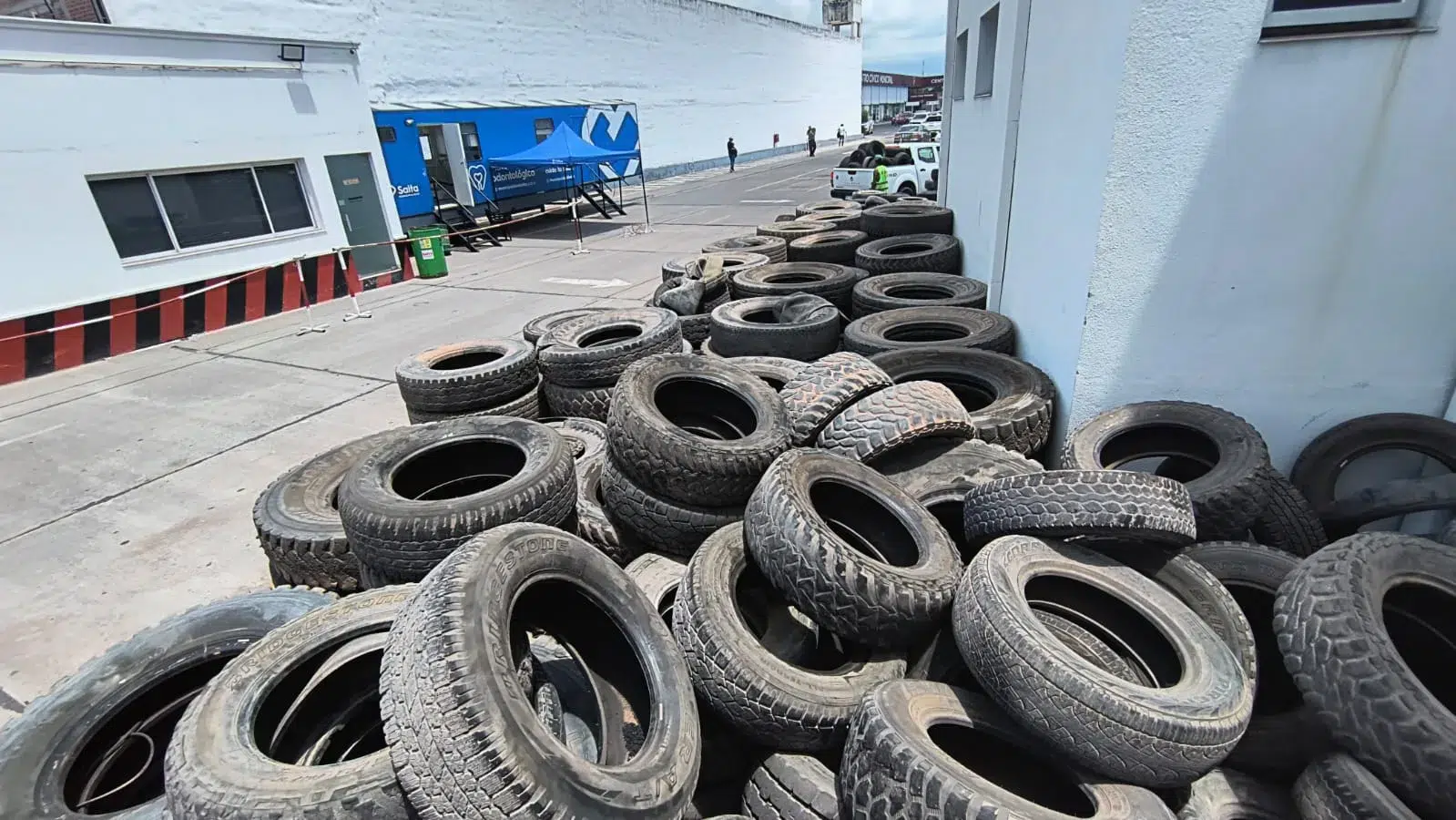 Neumatón: over 1,100 tons of tires collected in Salta
Green incentives and environmental certification
In addition to the collection, each edition of Neumatón includes eco-exchange activities, where participants receive seedlings, seeds, and discounts on new tires.
Companies, on the other hand, receive a final disposal certificate, essential for complying with current environmental regulations.
Accumulated impact and consolidation as public policy
Since January, the municipality had reached 900 tons collected, a figure that has now been significantly surpassed.
“This growth demonstrates that Neumatón has consolidated as an effective public policy, with a direct impact on urban quality of life and on the environmental awareness of citizens,” emphasized the Environmental Secretary.
“The tires delivered here today will never again circulate as waste in public spaces. That is the great achievement of Neumatón,” Piú concluded.



