



Las casas prefabricadas have transitioned from being a “curious” alternative to becoming a real option for many families in Spain.
The combination of shorter timelines, relatively predictable prices, and an increasingly higher level of finishes has made them gain popularity, especially in areas where traditional housing has become more expensive or where building from scratch involves too much uncertainty.
But “prefabricated house” doesn’t mean just one thing: there are huge differences between a concrete modular house and a light structure like a steel frame, and these differences are (very) noticeable in the final price. Below you’ll find a clear guide on what they are, what types exist, how much they cost in Spain, and what factors drive up or lower the budget.
What exactly is a prefabricated house
In simple terms, a prefabricated house is a home whose construction is carried out totally or partially in a workshop or factory, and then it is transported and assembled on the plot. This allows for greater quality control (less “improvisation” on site) and reduces time, because part of the work is done in parallel with the preparation of the land.
Under the “prefabricated” umbrella, there are:
-
Modular houses: built in complete modules that are transported and assembled on the plot.
-
Panelized houses: panels (walls, floors, roofs) are manufactured and assembled on site like an advanced “kit”.
-
Mobile homes / transportable homes: usually on chassis and designed to be installed with less construction intervention (beware of regulations and use as a permanent home).

Types of construction and how they influence the price
1) Wood structure (light frame or CLT panel)
Wood offers good thermal performance and a highly appreciated aesthetic. It can be light frame (more common) or more “premium” industrialized systems like CLT (cross-laminated panels).
Usual price range: usually competitive in mid-range, but depends greatly on the level of insulation, ventilation, and finishes.
2) Steel frame (light steel structure)
Similar system to the wood frame, but with galvanized steel profiles. It is popular for its precision, speed, and dimensional stability.
Usual price range: medium, with a good cost/time ratio if the project is well defined.
3) Prefabricated / modular concrete
Usually associated with high durability, good acoustic insulation, and a “traditional house” feel. Concrete modules can increase the cost of transport and cranes, but offer a robust result.
Usual price range: medium-high, although very variable.
4) Containers and alternative systems
Prefabricated houses made with shipping containers have become popular for their aesthetics and speed, but they are not always as cheap as one might think (insulation, reinforcements, cuts, finishes, and regulations can increase costs).
Usual price range: very variable; “cheap” only if the project is greatly simplified.

Prices in Spain: how much does a prefabricated house cost
Talking about prices without context is risky, because many offers advertise “from X €/m²” but may exclude relevant items. Still, to guide you, in Spain a rough range is usually handled. Discover more at Houseoner about prefabricated houses prices and models in Spain.
-
Basic range: 900–1,300 €/m²
-
Mid-range: 1,300–1,900 €/m²
-
High-end / premium turnkey: 1,900–2,800+ €/m²
With these numbers, a 100 m² home could roughly range between:
-
90,000–130,000 € (basic)
-
130,000–190,000 € (mid-range)
-
190,000–280,000+ € (high-end)
And a 150 m² home:
-
135,000–195,000 € (basic)
-
195,000–285,000 € (mid-range)
-
285,000–420,000+ € (high-end)
The big nuance: “house price” vs “total price”
Many budgets fall short because the client compares a “house” with a “complete work”. In a prefabricated home, the final price is usually divided as follows:
-
The house (manufacturing + assembly).
-
The plot (not included, except for specific promotions).
-
Foundation (slab, footings, sanitary floor…).
-
Urbanization and connections (water, electricity, sanitation, telecommunications).
-
Licenses, fees, and project (architect, surveyor, visas, taxes).
-
Earthworks and access (especially important if trucks/cranes are involved).
-
Extras (porch, pool, garage, landscaping, home automation, improved aerothermal, etc.).
In practice, a useful rule is to consider that, in addition to the house price, there can be an additional 20%–40% in associated costs (foundation, connections, permits, land adaptation, etc.). In complicated plots or with large slopes, that extra can be higher.
What factors make the budget go up or down
1) Design complexity
A compact house (rectangular plan, simple roof) is cheaper than one with setbacks, large overhangs, multiple heights, or custom windows.
2) Transport and assembly
If the plot has narrow access, slopes, or crane limitations, the cost rises. The larger the module, the more demanding the logistics.
3) Energy efficiency and installations
Superior insulation, triple glazing, ETICS, mechanical ventilation with recovery, aerothermal with underfloor heating… all improve comfort and energy bills, but increase initial investment. In Spain, with the requirements of the CTE, efficiency is mandatory at a certain level; the difference lies in how much you “raise” the bet.
4) Level of finishes
Kitchen, bathrooms, carpentry, floors, and coatings are the “heart” of the cost. Two houses with the same structure can vary by tens of thousands of euros just because of finishes.
5) Turnkey or by phases?
A serious “turnkey” is usually more transparent and reduces surprises, but it may seem more expensive because it includes items that others exclude. If you do it by phases, you can save, but you assume more coordination and risk.
Regulations and permits: what cannot be ignored
If the prefabricated house is to be used as a permanent residence, it usually needs to comply with the Technical Building Code and process municipal licenses like any construction. The key point is not whether it is “prefabricated”, but whether it is considered a permanent building (anchored, with foundation, connections, etc.). Mobile homes may have different cases, but nothing should be taken for granted: local regulations and land classification prevail.
Tips for choosing without making mistakes
-
Request a detailed budget: housing, transport, assembly, foundation, connections, licenses, project management, etc.
-
Clarify what “turnkey” includes: some companies include kitchen and bathrooms; others do not.
-
Visit an assembled house: the leap between catalog and reality can be significant.
-
Check guarantees and certifications: structure, watertightness, installations.
-
Look at the logistics of your plot before deciding: access and crane can condition the construction system.
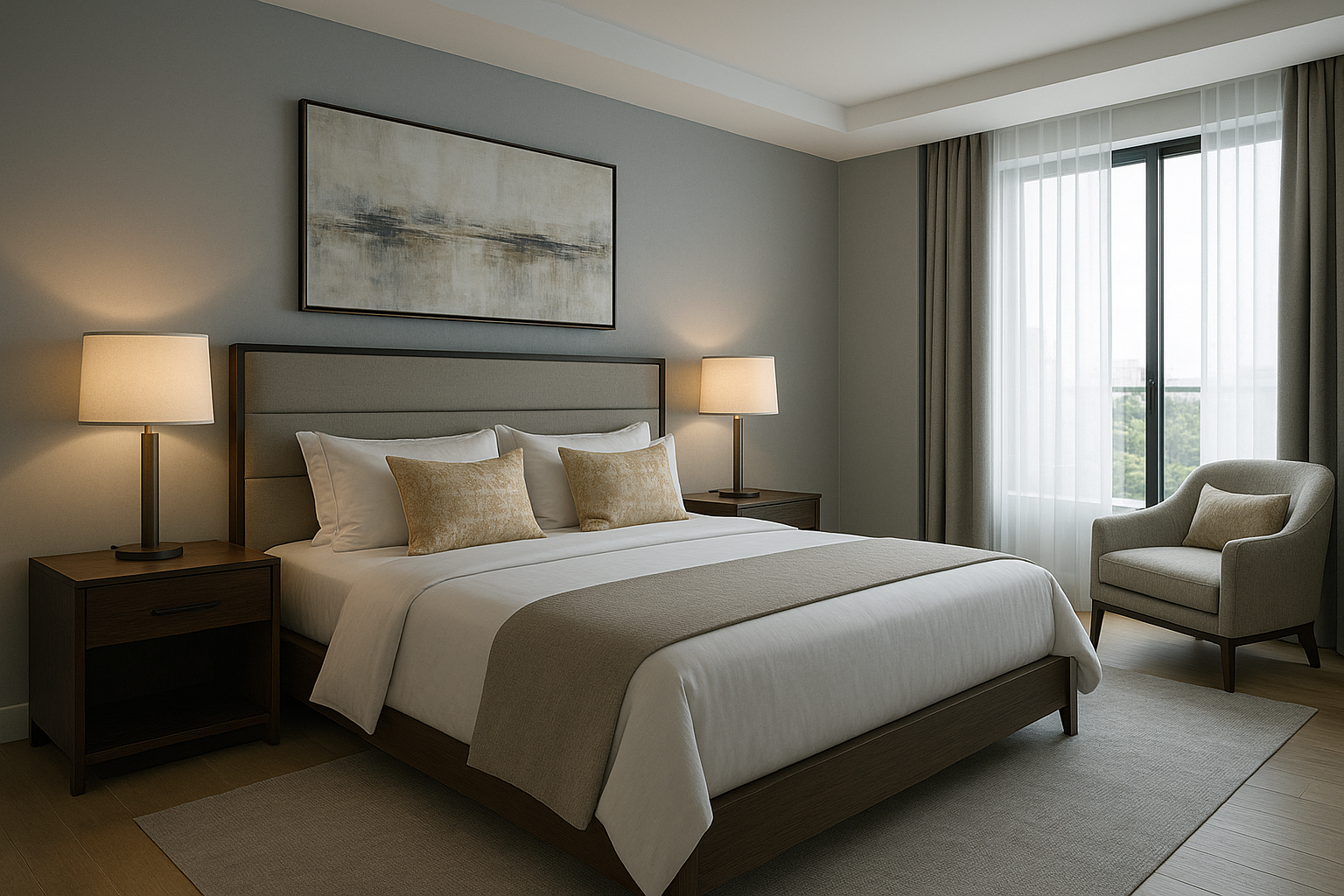
In recent years, prefabricated houses in Madrid have gained more and more prominence as an alternative to traditional housing. This is due to multiple factors: long construction timelines on site, rising housing prices, and the need for faster, more efficient, and customizable solutions.
Madrid, with its combination of dense urban areas and municipalities with more available land, is an ideal setting for this type of project. Prefabricated houses adapt well to both residential plots in metropolitan area municipalities (such as San Sebastián de los Reyes, Alcalá de Henares, or Aranjuez) and larger plots in rural areas of the Community.
Advantages of prefabricated houses in Madrid
-
Speed of execution: Manufacturing in a workshop and assembly on the plot reduce timelines compared to traditional construction, something especially valued in projects where time is critical.
-
Quality control: Construction in a controlled environment improves thermal performance and material precision, helping to meet the energy requirements of Madrid’s climate (summer heat and winter cold).
-
Customization: From modern designs with straight lines to more classic styles, they can be adapted to tastes and urban planning limitations of each municipality.
-
Energy efficiency: With advanced insulation systems, high-efficiency windows, and the possibility of incorporating renewable energies, prefabricated houses allow for reduced heating and air conditioning consumption — key in a continental climate like Madrid’s.


