



Soil erosion is one of the most concerning environmental issues of recent times, along with ecosystem degradation and water pollution. However, the planet has a natural ally to face this situation: the plant vetiver.
This tropical plant gave rise to Vetiver biotechnology, a system that uses this natural resource capable of protecting and healing the land without the need for chemical products or expensive mechanical systems.
The system based on the application of the plant Chrysopogon Zizanioides, its scientific name, is not only theoretical but rather practical, as it is successfully applied in the treatment of industrial and domestic effluents, as well as in the remediation of dumps and in the protection of riverine and maritime coasts.
The “green tool” made with the vetiver plant is recognized by both civil engineering and agriculture for the unique characteristics of its root system. This is because its roots, with vertical and deep growth, can reach depths of up to 10 meters and have a resistance similar to that of soft steel.
A natural remedy for the land
Through the implementation of Vetiver biotechnology, what is sought is phytoremediation, as this plant, brought from India in the 1980s, helps prevent soil layers from collapsing or developing holes, cracks, or fissures.
This is because they function as a barrier system that stabilizes the terrain, while controlling erosion and absorbing soil and water contaminants, such as metals or arsenic.
Special Functions
In addition to soil stabilization, vetiver biotechnology can be applied to wastewater treatment, as the tropical plant acts as a kind of artificial wetland, taking advantage of its ability to extract and neutralize nutrients, not to mention its potential to improve crop yields, producing higher quality food.
Furthermore, this tool can be used on beaches as coastal barriers that prevent rough seas. It can even be useful to prevent floods thanks to the way its roots grow.
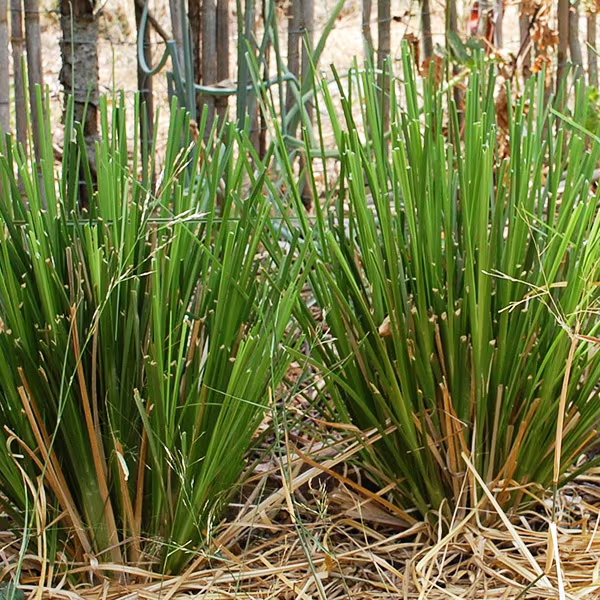
 Vetiver plant. Photo: Unsplash.
Vetiver: a plant that regenerates and protects
Vetiver is a grass native to India characterized by its deep root system, capable of reaching over three meters underground. This particularity makes it an ideal natural resource to prevent erosion, improve soil quality, and retain water in degraded areas.
In addition to its resistance, vetiver has high ecological value because it helps stabilize slopes, riverbanks, and roads, preventing landslides and loss of fertile soil. Its dense and strong roots create a natural barrier that protects rural and urban ecosystems where it is planted.
Beyond its environmental role, this plant also provides productive benefits. It is used in agroforestry systems to protect crops, improve soil fertility, and even in craftsmanship, as its leaves are used to make roofs and fabrics. Thus, vetiver becomes a ally of ecological restoration and sustainable development.



