



Visiting the Faro Isla Leones is much more than reaching an isolated structure on the coast of Chubut. The journey begins with sailing through the Parque Patagonia Azul, among islets and marine fauna that anticipate the encounter with one of the most emblematic and solitary monuments in the region.
Upon disembarking from the boat, the visitor immerses in an intense environment: the penetrating smell of the sea, the constant wind, and the sound of the sea lion colony guarding the coast.
From paper to reality
Tour guide Juan De Franco, a specialist in heritage interpretation, first learned about Faro Leones through historical documents, choosing it as the subject of his university thesis. Destiny later led him to work at the very site he had studied from afar.
His first visit revealed the essence of the place: absolute silence and isolation. “It’s not a place you reach by walking or by chance; people who get to the lighthouse do so because they seek it out,” he explains.
Life at the edge of the world
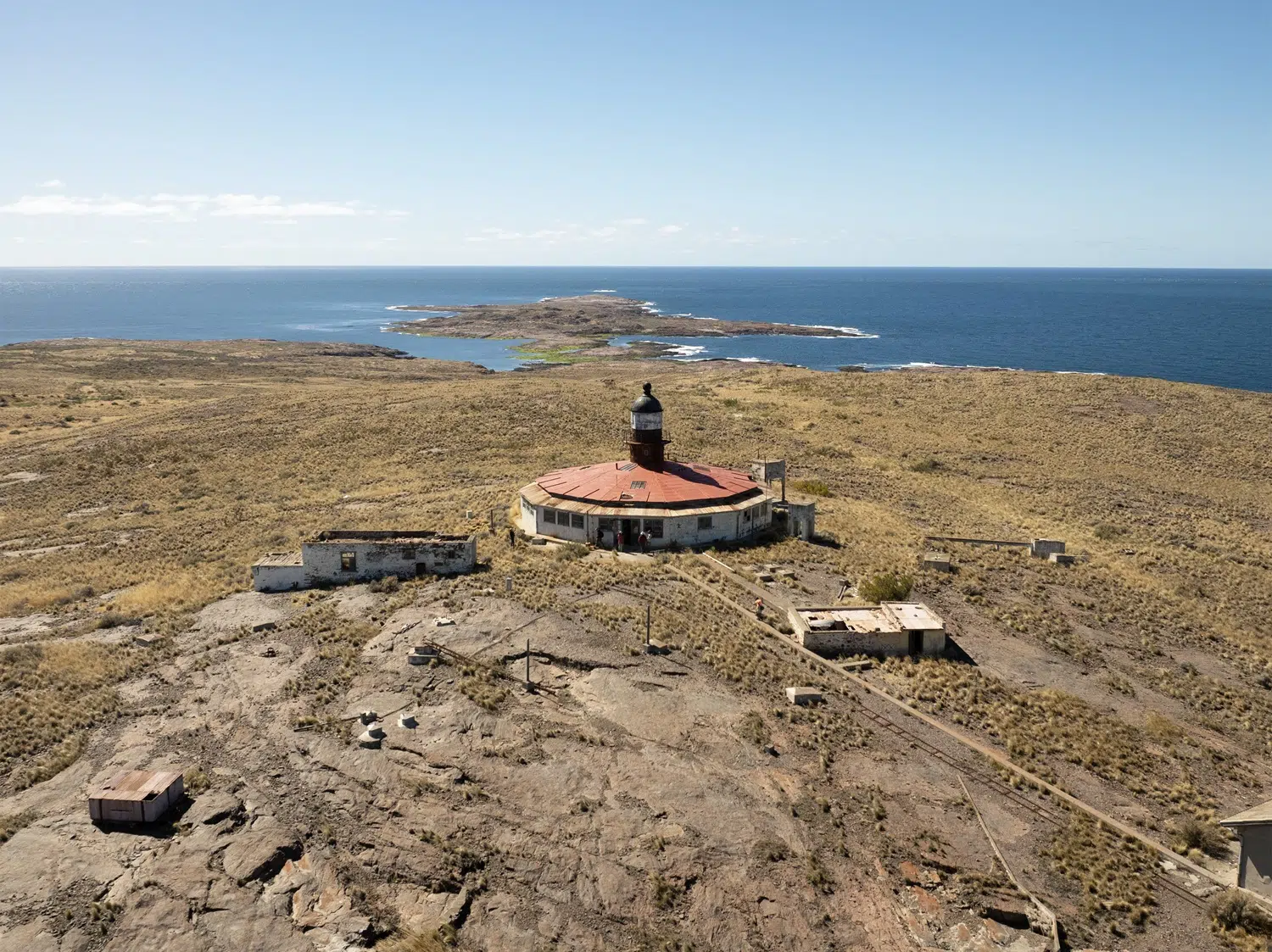
The journey to the tower functions as a trip back in time. The postcard of the iron giant facing the sea transforms into a human story when discovering the everyday details of the former lighthouse keepers:
- Gutters and water tanks that show adaptation to survive without fresh water.
- The rusted structure that conveys respect for the challenge of inhabiting an extreme islet.
“There, a click happens, and the lighthouse stops being just a postcard to become a testimony of how people lived and worked in one of the harshest sites in Patagonia,” recounts De Franco.
A fragile and urgent beauty
The current state of the lighthouse adds drama to the visit. The advanced corrosion and structural deterioration show its fragility. The spiral staircase leading to the dome is closed due to the risk of collapse, preventing access to the view the lighthouse keepers once had.
“The main distinctive feature of the lighthouse is its fragility. It is a fundamental historical heritage site in Patagonian navigation and today is in a very advanced state of deterioration,” warns De Franco.
Conservation and collective memory
Since the creation of the Parque Interjurisdiccional Marino Costero Patagonia Austral (PIMCPA), Isla Leones has been under its jurisdiction, both for the fauna it harbors and for the historical value of the lighthouse. Conservation also depends on the local community and groups like Amigos del Faro, who work to keep its memory alive.
For De Franco, preserving the resource is vital: “If that doesn’t happen, not only the structure will be lost, but also part of the collective memory of the region.”
Identity and landscape
Faro Leones connects the coastal identity of Chubut with the marine biodiversity of Parque Patagonia Azul. The daylight and especially the sunset light intensify the experience: the sun reflects on the metal, and the sea changes color, creating a unique postcard.
Visiting Isla Leones is walking through the living history of southern navigation, in a wild environment that remains intact. The visit invites you to discover a fragile and urgent heritage, whose preservation is essential to maintain the memory and identity of the region before time and wind finish claiming it.


