



Chile has more than four thousand kilometers of diverse landscapes, from coasts to mountain ranges. In this vast territory, the Los Ríos Region stands out as a destination that combines biodiversity, Mapuche culture, and a natural environment that invites responsible tourism. Here, snowy mountains, lakes, and temperate forests offer unique experiences for those seeking a connection with nature.
Tours in this region attract visitors not only for their scenic beauty, but also for the integration between visitors and local communities. The tourism offer includes activities from snow sports to visits to private parks, hot springs, and urban wetlands. All of this shapes a scenario where environmental conservation and enjoyment go hand in hand.
The Mocho Choshuenco National Reserve is one of the most visited destinations during the winter season. Its snowy peaks allow for trekking, mountaineering, and hiking with snowshoes, with routes suitable for both beginners and experts. The landscape offers unforgettable views and an opportunity to explore mountain ecosystems in balance.
Another must-see spot is the Neltume Park, within the Huilo Huilo biological reserve. There, ancient forests, waterfalls, and the presence of native species convey the strength of the Patagonian ecosystem. Visiting the Huilo Huilo Waterfall, surrounded by ferns and typical birds of the area, reinforces the connection with nature and the importance of protecting it.
 Mocho Choshuenco National Reserve, in Los Ríos, Chile. Photo: Informa al Mundo.
Los Ríos, a unique destination for nature lovers
In the Los Ríos Region, the Rañintulelfu hot springs are an example of sustainable tourism. Located next to Lake Neltume, they combine local mythology with services designed for disconnection in a protected natural environment. These types of ventures demonstrate how it is possible to enjoy well-being without degrading the environment.
The city of Valdivia also contributes to ecotourism with its wetlands and urban parks. Spaces like the El Bosque Urban Park not only conserve Valdivian ecosystems, but also serve as centers for environmental education and community participation. With universally accessible walkways, they represent inclusive and conscious tourism.
A walk along the Valdivian waterfront reveals another natural attraction: the sea lions. These animals, living alongside urban life, have become a symbol of the city and a reminder of the need to protect coastal ecosystems.
An invitation to ecotourism
Ecotourism in Los Ríos is not limited to nature; it also includes cultural and gastronomic experiences. Traditional cafes, local markets, and sculpture parks complement visits, demonstrating that sustainability can encompass all aspects of a trip.
The region has accessible and connected tourism infrastructure, facilitating the arrival of visitors from Chile and Argentina. However, the true value of the experience lies in respect for the environment and in the opportunity to travel more consciously.
The ecotourism model applied in Los Ríos shows that it is possible to enjoy destinations of great beauty without endangering their future. On the contrary, responsible travel contributes to preserving it. In times where the climate crisis affects the most fragile ecosystems, this form of tourism emerges as one of the most coherent and necessary alternatives.
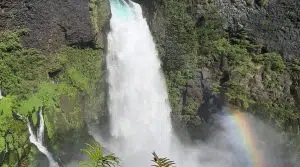 Neltume Park, in Los Ríos, Chile. Photo: Tripadvisor.
Benefits that go beyond the traveler’s experience
Ecotourism offers environmental, social, and economic advantages that make it a model of sustainable development. Ecologically, it promotes the conservation of fragile ecosystems by allocating income to the maintenance of protected areas. This allows financing restoration projects, species protection, and biodiversity monitoring.
On a social level, ecotourism strengthens cultural identity and the participation of local communities. The integration of ancestral knowledge, such as that of the Mapuche culture in Los Ríos, enriches the visitor experience and creates opportunities for dignified employment in rural areas.
From an economic perspective, this type of tourism promotes sustainable activities and distributes benefits more equitably. Unlike mass tourism, which often concentrates profits in large chains, ecotourism benefits small entrepreneurs, artisans, and local guides, promoting circular economies.


