



The Martín García Island, located in the Río de la Plata, has historically been a key strategic point for controlling navigation in the Southern Cone. Situated at the confluence of the Paraná and Uruguay rivers, its position allowed for the domination of trade routes, monitoring of river traffic, and securing military advantages since colonial times.
Although it is closer to the Uruguayan coast, since the 19th century it has been administered by Argentina, which generated diplomatic tensions with Uruguay. Finally, the Treaty of the Río de la Plata and its Maritime Front established the boundaries in the estuary and recognized Argentine sovereignty over the island.
Geological and natural uniqueness
With just 1.8 km² of surface, Martín García differs from the alluvial islands of the delta due to its Precambrian rocky origin (part of the Brasilia massif). This characteristic gives it greater height and stability.
In 1974 it was declared a Provincial Natural Reserve, protecting exceptional biodiversity:
- Flora: riverine forests, thorny scrublands, reed beds, and more than 800 plant species.
- Fauna: capybaras, black-and-white tegu lizards, and abundant birdlife.
Historical and cultural heritage
The island was discovered in 1516 by Juan Díaz de Solís and since then has been the scene of multiple historical episodes:
- Political prison: presidents such as Hipólito Yrigoyen, Juan Domingo Perón, and Arturo Frondizi were detained there.
- Historical infrastructure: the old lazaretto, the naval prison, the lighthouse, the Urquiza Theater, and a historical cemetery.
- Regional conflicts: occupied at various times by military forces during the 19th century.
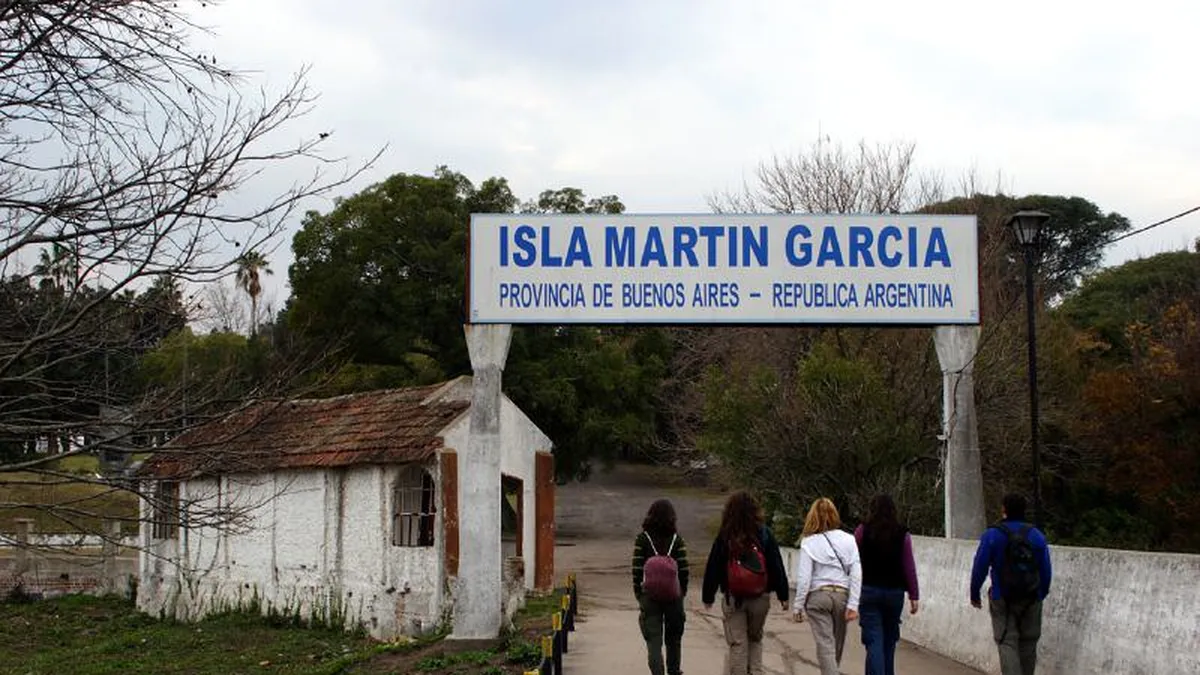
Unique border with Uruguay
In the 1980s, the island naturally joined with the Uruguayan Timoteo Domínguez, forming the only land border between Argentina and Uruguay. This fact reinforces its geographical and political uniqueness in the region.
Tourism and current uses
Today, Martín García receives about 20,000 annual visitors. It is accessible by boat from Tigre (Argentina) or Carmelo (Uruguay). Among its attractions are:
- Interpretive trails and bird watching.
- Historical ruins and cultural spaces.
- Its traditional artisanal bakery, famous for sweet breads.
- The “Argentine flag,” a butterfly characteristic of the island.
Strategic and environmental importance
The island represents an enclave of Argentine sovereignty in shared waters, with value in three dimensions:
- Ecological: a biodiversity refuge in the metropolitan area.
- Historical-cultural: witness to colonial disputes and national politics.
- Geographic-strategic: control of access to interior rivers.
The Martín García Island is much more than a territory in a resolved dispute: it is a space of high patrimonial and natural value, combining history, biodiversity, and tourism. Its unique geological origin, its role in regional politics, and its present as a natural reserve make it a symbol of identity and sovereignty for Argentina.


