



San Luis consolidates itself as one of the most popular destinations for religious tourism in the center of the country. Its mountainous landscapes, historic towns, and old railway stations house temples, sanctuaries, Stations of the Cross, chapels, and monasteries where spirituality intertwines with popular tradition, creating a unique attraction.
From the Central Sierras to the southern part of the province, faith combines with rivers, valleys, and winding roads that invite both reflection and cultural discovery. The Ministry of Tourism and Culture promotes these circuits as a complementary offer to natural attractions, revaluing historical spaces and strengthening the identity of San Luis.
Architectural and religious heritage
In the city of San Luis, the highlights are:
- Cathedral of San Luis (1883), an icon of the historic center.
- Santo Domingo Temple, one of the oldest buildings.
- Church of Our Lady of the Rosary of the Throne, with 18th-century architecture.
In La Carolina, the Church of Our Lady of Carmen, built by Jesuits, testifies to the footprint of religious orders. Dominicans, Salesians, and Mercedarians also left their legacy in different parts of the province.
Celebrations and pilgrimages
Among the most popular festivities are:
- Shrine of the Lord of Miracles of Renca, the epicenter of the Conlara Valley.
- Christ of Villa de la Quebrada, a destination for crowds that pilgrimage each year.
- Stations of the Cross of El Morro and Villa de Merlo, which combine ceremony and mountain views.
- The Stations of the Cross of El Volcán, a route by priests from the Major Seminary San Miguel Arcángel.
Other relevant spaces include the shrine of the Miraculous Medal, the parish San Roque in Villa Mercedes with its Christ from the 1800s, and the traditional nativity scene of Potrero de los Funes.
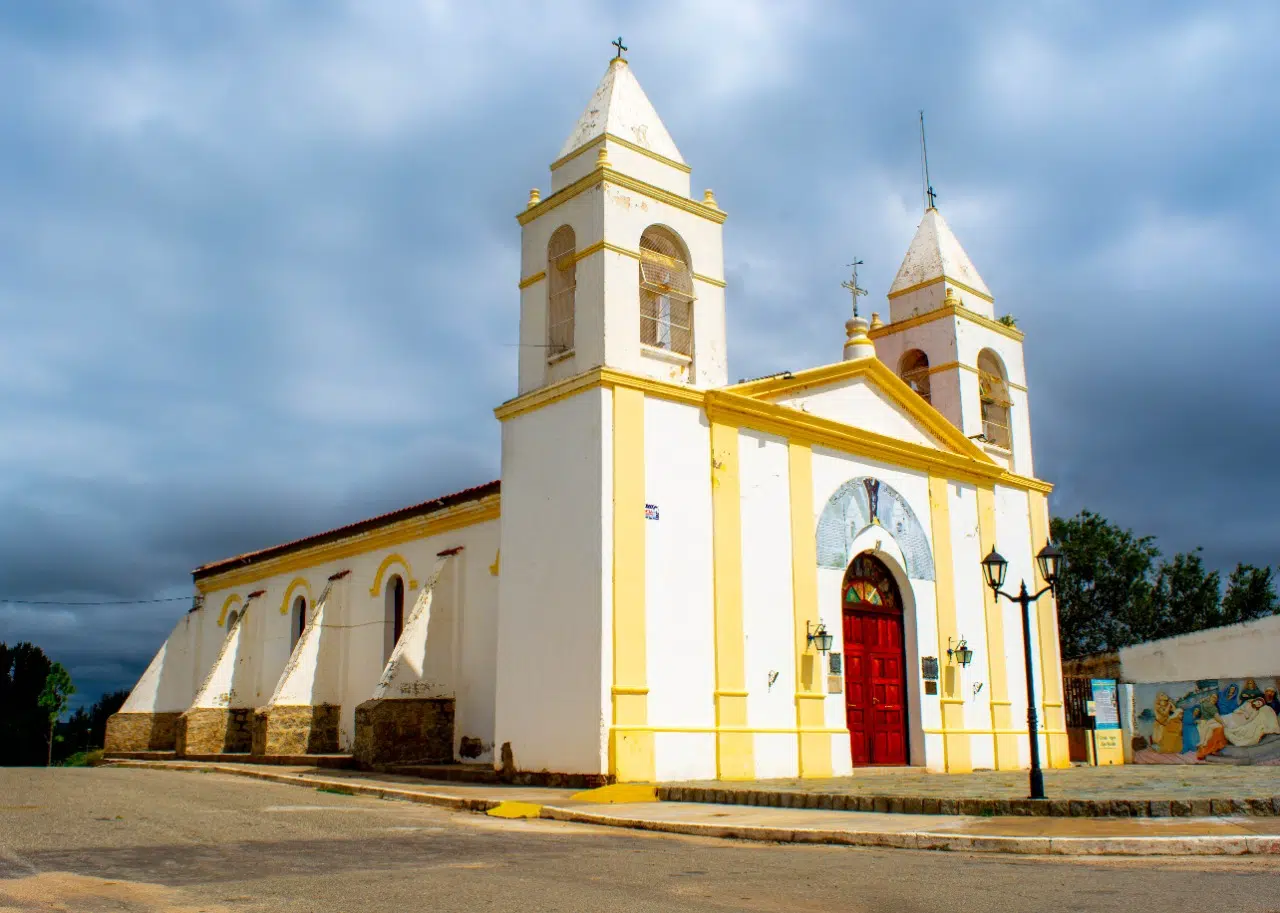
Monasteries and spirituality in nature
The monasteries of Suyuque and Carpintería offer spiritual retreats throughout the year. In the Sierras de los Comechingones, small oratories invite silence and contemplation. Additionally, indigenous communities such as the Huarpes and Ranqueles keep alive expressions of popular religiosity and ancestral worldview.
Faith corridors
Religious tourism unfolds in different corridors:
- Central Sierras: San Luis, Juana Koslay, El Volcán, La Carolina, Nogolí, Villa de la Quebrada, Potrero de los Funes, among others.
- Comechingones: Villa de Merlo, Carpintería, Cortaderas, Los Molles, Papagayos.
- Conlara Valley: Renca, Concarán, Tilisarao, Naschel, La Toma, Santa Rosa.
- Northern San Luis: San Francisco del Monte de Oro, Luján, Quines, Candelaria.
- El Morro: San José del Morro, Juan Llerena, Saladillo.
- Southern province: Villa Mercedes, Buena Esperanza, Nueva Galia, Pueblo Ranquel.
San Luis offers a spiritual and cultural heritage that dialogues with history and geography. Religious tourism not only mobilizes pilgrimages but also stimulates regional economies, strengthens traditions, and values century-old constructions. Between mountains and bell towers, the province invites you to experience where faith and landscape merge into a single horizon.


