



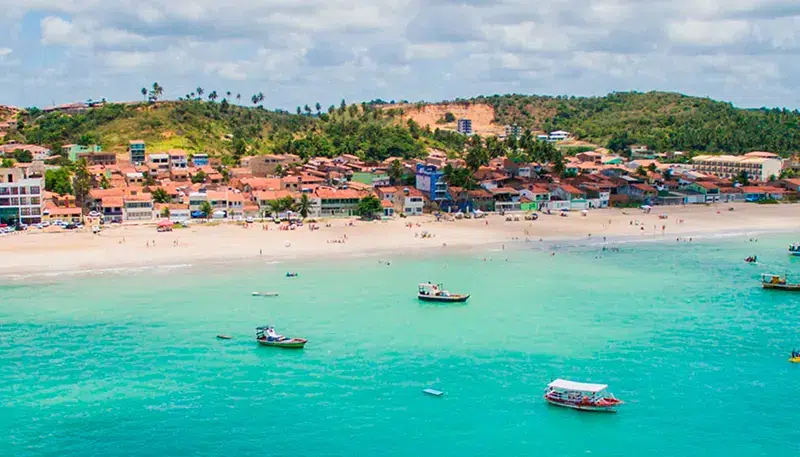
When many summer destinations begin to empty, a beach in northeastern Brazil continues to receive visitors attracted by its unique landscape. It is Maragogi, a coastal destination that stands out for its natural turquoise pools and its extraordinary marine biodiversity.
Located in the state of Alagoas, this locality has become one of the most valued points on the Brazilian coast. Its combination of coral reefs, warm waters, and well-preserved coastal ecosystems makes it an ideal setting for nature tourism.
Additionally, its proximity to Maceió facilitates the access of travelers arriving from different parts of South America. Many tourists combine both destinations to explore the coast and discover its marine landscapes.
March: an ideal time to enjoy the sea without large crowds
Unlike other tourist destinations, the northeast of Brazil maintains pleasant weather conditions for most of the year. For this reason, places like Maragogi continue to receive visitors even when summer ends in the southern hemisphere.
During March, temperatures remain high and the sea retains its characteristic tropical warmth. However, the number of tourists decreases compared to the months of January and February.
This combination allows for enjoying the beaches with greater tranquility and with less pressure on coastal ecosystems. Likewise, tourist services often offer more affordable prices, encouraging the arrival of travelers.
For these reasons, the beginning of autumn has become one of the preferred times for those seeking natural landscapes without the large concentrations of visitors.
The “galés”: reefs that create natural pools in the middle of the ocean
One of the most distinctive features of Maragogi are the so-called galés. These are coral reef formations that emerge several kilometers from the coast and, when the tide goes out, form extremely clear natural water pools.
These formations are located approximately three kilometers from the main beach and can only be visited through boat excursions. The journey to the reefs offers views of the coastline and allows observing the transition between the different marine environments.
Within these natural pools, the water is calm and transparent, facilitating the observation of tropical fish, corals, and other marine species. This natural phenomenon is one of the main attractions of the destination.
Additionally, the galés function as ecological refuges where numerous species find food and protection, reinforcing the importance of preserving these ecosystems.

Beaches of northeastern Brazil: coastal ecosystems that favor ecotourism
The beaches of northeastern Brazil have environmental characteristics that make them one of the most attractive marine environments on the continent.
Firstly, the presence of coral reefs reduces the strength of the waves and creates calm and transparent waters. This natural phenomenon favors the formation of natural pools and protects the coastline from erosion.
Moreover, these ecosystems host a vast diversity of marine life, including fish, crustaceans, mollusks, and various coral species. This biodiversity makes the region an ideal space for activities such as snorkeling and marine wildlife observation.
On the other hand, the mangroves and coastal forests surrounding many beaches perform key ecological functions. These environments act as natural barriers against storms, filter sediments, and serve as nurseries for numerous species.
Due to this natural richness, destinations like Maragogi are increasingly positioned within ecotourism. The current challenge is to promote responsible tourism that allows enjoying these landscapes without compromising the balance of marine ecosystems.


