



In a meeting led by the mayor Federico Susbielles, the Bahía Blanca Environmental Council presented its 2024-2025 management report, highlighting two fundamental pillars: environmental education and the consolidation of a local circular economy.
The figures reveal a 70% growth in recycling capacity and the training of more than 35,000 students, who now act as multiplier agents in their homes and communities.
Environmental education: youth as protagonists of cultural change
The Bahía Recicla program is implemented in schools of all levels with playful, cultural, and educational approaches, reaching 91 institutions and more than 17,800 students. The goal is to train 3,500 more young people in 2025, strengthening environmental awareness from an educational standpoint.
“Students are the ones who bring the message to their families. They are the engine of the cultural change we need,” stated Susbielles.
Circular economy: more recycling, more employment, and more sustainability
The city expanded its recycling capacity by over 70% and improved operational infrastructure.
According to Florencia Molini, director of the Territorial Development Agency, there was a significant increase in the reception of source-separated materials, reflected in the data from the Ecopoints:
- Plastic: from 15,350 kg in 2024 to 18,250 kg in 2025
- Glass: from 32,150 kg to 36,680 kg
- Cardboard: from 19,150 kg to 23,370 kg
This growth was accompanied by a strong investment in the General Cerri Ecoplant, where over 8,000 m² were cleaned, new machinery was incorporated, and an additional work shift was added, with special recognition to the cooperative team that recovered disused machines.
Selective collection and citizen participation
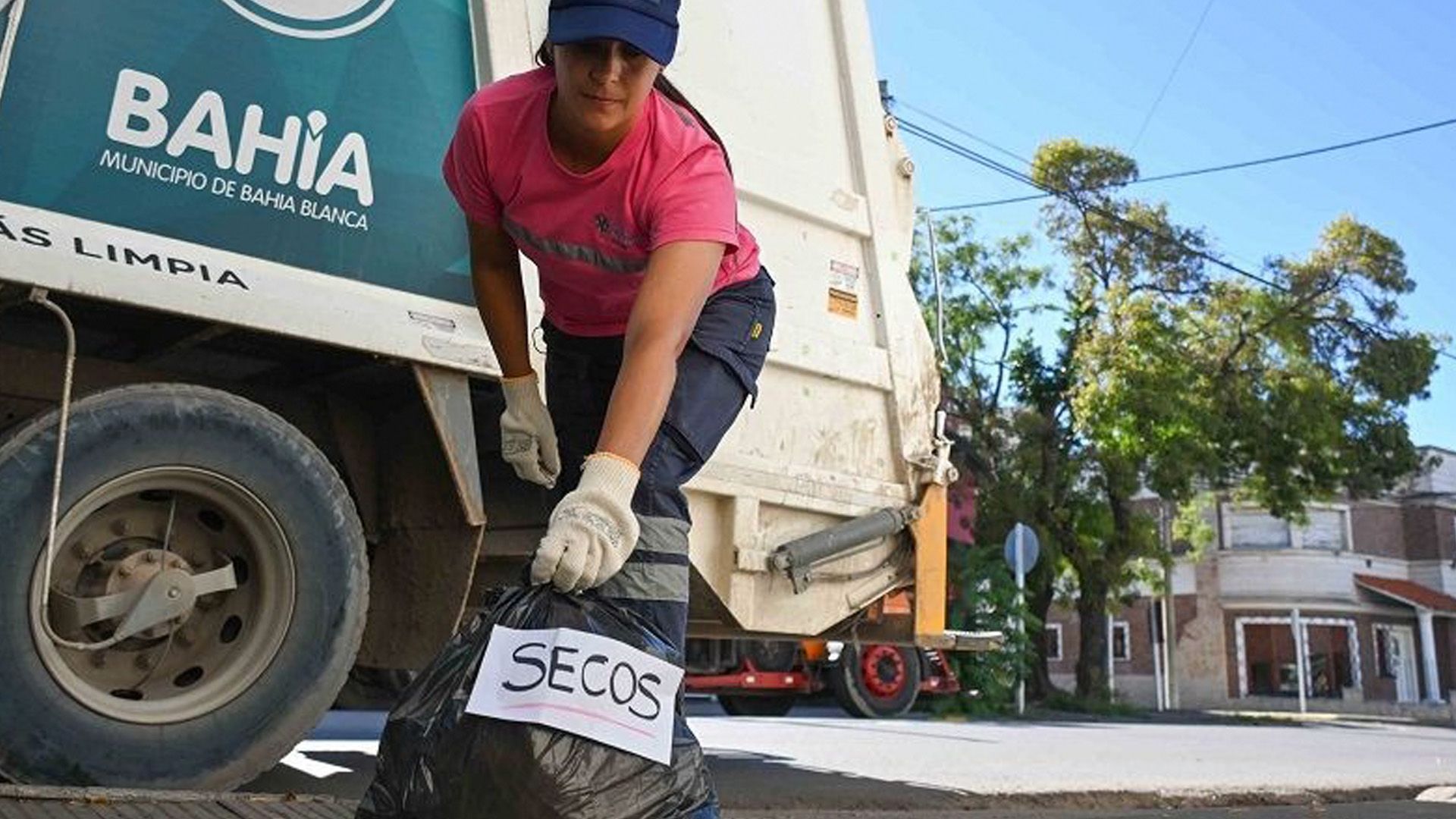
31 routes cover 95% of households, with a team comprised entirely of women.
The program has 31 selective collection routes, reaching 95% of households. This task is carried out by women, reinforcing the inclusive and community-focused approach of the management model.
“We want each recycling chain to generate economic value, more jobs, and more sustainability,” expressed the mayor.
Recycling benefits: environmental, economic, and social
Recycling conserves resources, reduces emissions, and promotes local employment
- Save natural resources: less extraction of raw materials
- Reduction of pollution: avoids waste in soil, water, and air
- Lower energy consumption: manufacturing with recycled materials requires less energy
- Climate change mitigation: fewer greenhouse gas emissions
- Job creation: from collection to reutilization
- Promotion of circular economy: extends the product lifecycle
- Landfill relief: frees up space and reduces impacts



