



The Deliberative Council of San Miguel declared Rafael Chehin’s work of cultural interest, a local artist who uses recycled materials to create giant sculptures.
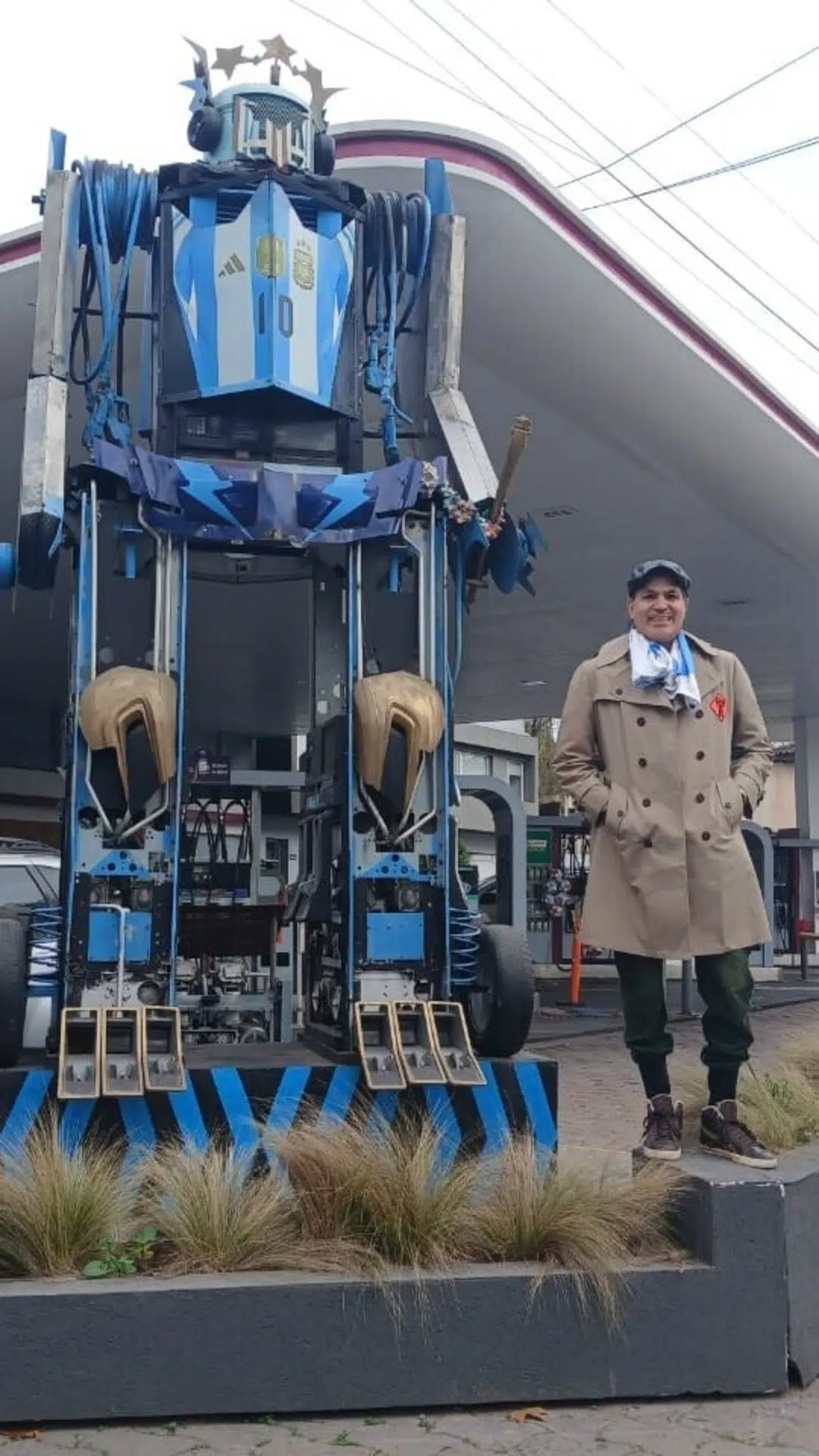
His most recognized piece is a six-meter robot dressed in the Argentine National Team jersey, installed at the service station on Gaspar Campos Avenue and Ernesto Scott.
The work became a neighborhood symbol: “The station lost the company’s identity, and everyone started to know it as the robot station,” recalls the sculptor.
From Barcelona to New York, and back to the Suburbs
Born in San Miguel, Chehin discovered his passion for sculpture in Barcelona, visiting the Drap Art fair in 2005, dedicated to art with recycled materials. To acquire technical knowledge, he enrolled in an industrial school and learned welding and assembly. In 2007 he participated in the fair with four of his own works while working at the Factory Club, the oldest rock venue in Spain.
His career then took him to New York, invited by a family linked to the Hollywood industry. There he recycled pieces in a Vermont warehouse, consolidating his style based on upcycling: transforming waste into artworks with greater value than the original.
Raw Material: The Discarded
Chehin uses everything from cassette modules and typewriters to disused gas pumps, car rims, plow discs, and air tanks.
With these materials, he builds monumental sculptures like the six-meter robot. To give hierarchy to his works, he applies the lost wax technique, which allows him to cast in bronze pieces originally made with recyclables.
Suburban Identity
Back in San Miguel, Chehin seeks to endow his works with a “suburban entity.” The robot is not a Transformer: it wears Messi’s jersey and has become an icon of Bella Vista.
“It’s no longer mine, it’s everyone’s, so I’m happy,” said the artist, who believes his work was born from a child who played and dreamed in San Miguel and now lives off his art in the Suburbs.
Recycling as Art and Environmental Awareness
The recycling applied to art fulfills multiple functions:
- Reduces waste: prevents plastics and metals from ending up in landfills.
- Social denunciation: highlights the problem of garbage and ecosystem damage.
- Creative saving: demonstrates that it’s not necessary to buy new materials to create beauty.
- Valorization: turns everyday objects into unique pieces.
Contemporary artists like Elisa Insúa also work with empty containers and obsolete technology to create murals and sculptures. In Buenos Aires, community workshops teach upcycling, a process that adds more value to already used objects, promoting the circular economy and environmental awareness.
Rafael Chehin’s work demonstrates that art can transform waste into cultural and community symbols. His six-meter robot not only beautifies the urban landscape but also invites reflection on consumption, recycling, and the identity of the Suburbs.
Artistic recycling thus becomes a powerful tool to reduce pollution, educate, and build a more sustainable future.


